


FDA Compliant vs FDA Approved Food: What Brands Must Know

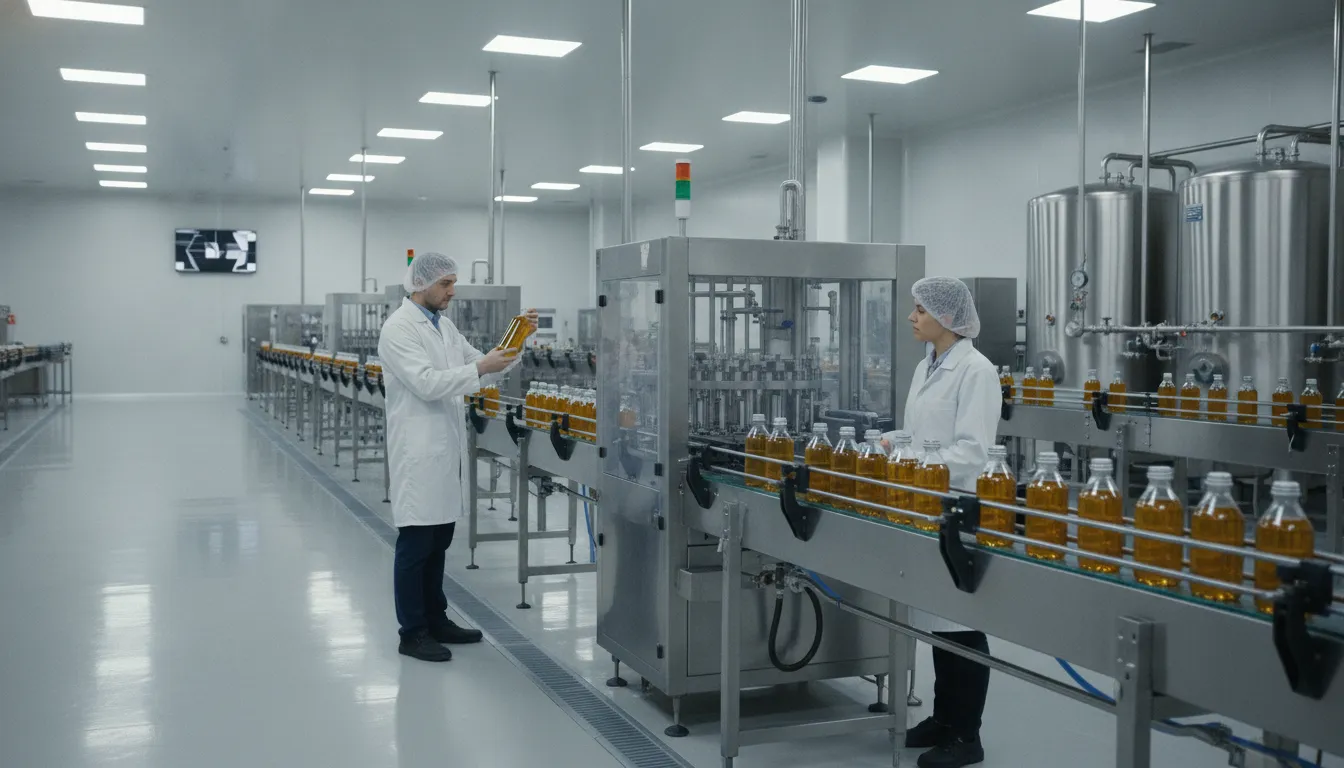
Food brands often hear “FDA approved” used as shorthand for a safe, properly manufactured product. That wording can blur an important regulatory distinction and create problems in marketing, vendor reviews, and retail conversations.
In the context of fda compliant vs fda approved food, FDA compliant means a manufacturer operates under applicable FDA regulations and current good manufacturing practices. While FDA approval refers to a product-specific authorization that generally does not apply to broad food manufacturing. The FDA states that it does not officially approve food facilities or manufacturing establishments: FDA guidance.
Knowing which term fits helps you evaluate a co-packer accurately and describe your production relationship without overstating what a regulator has authorized. The distinction starts with what compliance requires inside a food manufacturing facility.
Understanding FDA Compliant vs FDA Approved Food Manufacturing
FDA compliant means that a food manufacturer follows applicable FDA regulations, current Good Manufacturing Practices, and documented food-safety controls. It describes how a facility operates, not a government endorsement of a product or plant. That distinction is central to understanding fda compliant vs fda approved food and choosing a manufacturing partner responsibly.
For food facilities, compliance begins with the requirements in 21 CFR Part 117. Current Good Manufacturing Practices are mandatory for establishments that manufacture, process, pack, or hold human food, according to the FDA’s cGMP guidance. These requirements cover the conditions and controls needed to produce safe food consistently, including sanitary operations, suitable equipment, employee practices, and process controls.
Preventing adulteration and misbranding
Compliance is intended to prevent food from becoming adulterated or misbranded. In practical terms, that means controlling hazards and sanitation risks while ensuring that labels and product information are accurate and not misleading. A compliant operation therefore depends on more than a clean production room. It requires documented procedures, controlled ingredients and processes, trained personnel, and records that show those controls are being followed.
Food-safety systems such as HACCP can help manufacturers identify hazards, establish controls, and demonstrate that those controls are working. The goal is repeatable production that protects consumers and gives brand owners dependable evidence about how each batch was handled.
Compliance includes product-specific process controls
Some products require scheduled process filings. Co-Packing Express manages FDA scheduled process filings for client products as part of its manufacturing support. Those filings are part of responsible process documentation. They do not turn a food product or facility into something the FDA has endorsed.
For a brand evaluating a co-packer, the right question is how the facility maintains its systems day after day. Ask about cGMP procedures, sanitation controls, batch records, traceability, corrective actions, and staff training. A partner’s ability to explain and document these practices is more meaningful than a vague marketing label. See this guide to meeting FDA compliance standards for related facility and storage considerations.
An ongoing operational condition
FDA compliance is not a one-and-done status. It is a sustained operational condition requiring continuous monitoring, training, documentation, and process discipline. Conditions, ingredients, personnel, equipment, and customer products can change, so controls must be reviewed and maintained over time. For scaling food brands, that ongoing discipline is what supports consistent production, safer operations, and credible communication with retailers and customers.
What Does FDA Approved Mean — and When Does It Apply?
“FDA approved” describes a specific regulatory authorization, while food manufacturing is generally evaluated through compliance, registration, oversight, and enforcement. That distinction matters when comparing fda compliant vs fda approved food and writing claims for a product label or website.
What the FDA may approve
FDA approval can apply to certain drugs, medical devices, and specific food additives or color additives when the law requires a premarket review. The authorization is tied to a defined product, use, formulation, or risk category. It is not a general endorsement of every product made by a company.
What the FDA does not approve
The FDA does not officially approve food facilities, laboratories, or manufacturing establishments. Food facilities generally register with the FDA under the Public Health Security and Bioterrorism Preparedness and Response Act of 2002. Registration supports regulatory oversight, enforcement, and emergency response; it is not an endorsement or approval of the facility or its products.
- Approved: Certain drugs, medical devices, and specified additives or colors when a premarket authorization pathway applies.
- Not approved: A food facility, co-packer, manufacturing establishment, or ordinary food product as a blanket status.
- Registered: A food facility that has submitted the required information to the FDA. Registration is not a quality-approval index.
- FDA compliant: A manufacturer operating under applicable food safety regulations and current good manufacturing practices.
The FDA states that it does not approve facilities, and its food-facility registration guidance explains that registration does not constitute FDA endorsement or approval: FDA approval responsibilities and food facility registration requirements.
How should food brands describe compliance?
For food production, use precise language such as “manufactured in an FDA-compliant facility” when it is accurate and supportable. The FDA does not issue certificates for “FDA Compliance” to food manufacturing facilities. Calling a food product “FDA Approved” can mislead buyers and may trigger regulatory scrutiny. Clear wording protects your brand from overstating what registration or manufacturing controls actually demonstrate.
Q: Does FDA registration mean a food facility is approved?
A: No. Registration is a regulatory filing, not FDA endorsement, certification, or approval.
Q: Can I call my food product FDA Approved?
A: Not as a general food-manufacturing claim. Describe the facility and process as FDA compliant only when the statement is accurate and substantiated.
Why the Difference Matters for Food Brands and Co-Packers
For food brands, the language used to describe a manufacturing relationship can affect consumer confidence, retailer review, and regulatory risk. Many consumers confuse FDA facility registration with an FDA endorsement, which can lead brands to repeat claims that overstate what a regulator has determined. The FDA explains that food facility registration does not constitute endorsement or approval of the facility or its products: FDA registration is not product approval.
| Language | What it communicates | Why it matters |
|---|---|---|
| FDA-compliant facility | The facility operates according to applicable FDA regulations and food-safety practices. | Describes an ongoing operational commitment without promising a government endorsement. |
| FDA-registered facility | The facility has completed the required registration process. | Registration supports FDA oversight and emergency response, but it is not a quality-approval index. |
| FDA-approved food or facility | Suggests that the FDA has granted a product or facility authorization. | Can mislead customers and trigger regulatory scrutiny when used for ordinary food manufacturing claims. |
Clear wording supports stronger commercial relationships
A statement such as “Manufactured in an FDA-compliant facility” gives brand owners a precise way to communicate their production standards. It avoids implying that the FDA has endorsed a product while still making the manufacturing expectation visible to customers, buyers, and retail partners. Clear compliance information also demonstrates professionalism and can build confidence during vendor reviews.
Accuracy protects the brand and the co-packer
Misleading language creates risk beyond a marketing correction. If a package, product page, sales deck, or retailer submission uses an “FDA Approved” claim for food. The statement may invite regulatory attention and undermine trust when its meaning is challenged. A co-packer should provide evidence of its processes and controls, while the brand should ensure every public claim reflects those facts accurately.
That discipline should extend beyond packaging language to maintaining an FDA compliant supply chain. When brands and co-packers use the same precise terminology, they create a more credible record of responsibility from production through fulfillment.
FDA 21 CFR Part 117: The GMP Standard Co-Packers Must Follow
FDA 21 CFR Part 117 establishes the Current Good Manufacturing Practices (cGMP) requirements that apply to human food operations. Compliance is mandatory for establishments that manufacture, process, pack, or hold human food, including co-packers. It is an operating standard, not a one-time designation. A facility must consistently control its processes, train its personnel, maintain sanitary conditions, and document what happens during production.
The regulation supports the practical meaning of FDA compliant vs FDA approved food. Food manufacturers generally demonstrate compliance by following applicable regulations and maintaining effective safety systems. They do not rely on a broad FDA authorization of the facility or finished food. The FDA’s cGMP guidance for food facilities provides the regulatory reference for these requirements.
Key cGMP requirements for a co-packing facility
- Qualified personnel: Employees must have the education, training, or experience needed to produce safe and sanitary food. Training should address the employee’s responsibilities, food safety risks, hygiene, and the procedures used on the production floor.
- Sanitary facilities and operations: The facility must maintain conditions that reduce the risk of contamination. This includes appropriate hygiene practices, sanitary equipment, controlled production areas, and cleaning procedures.
- Allergen controls: Operations need procedures to prevent unintended allergen contact, including controls for receiving, storage, scheduling, equipment, sanitation, and labeling.
- Process and hazard controls: The manufacturer must identify and control food safety hazards through documented procedures. HACCP systems are critical tools for demonstrating FDA compliance because they organize hazard analysis, preventive controls, monitoring, and corrective action. Learn more about HACCP and FDA compliant manufacturing.
- Traceability and records: Production, ingredient, packaging, and distribution records should make it possible to trace affected lots. Rigorous record-keeping helps a manufacturer respond quickly to safety concerns and support an effective recall.
For a brand owner, the important question is not whether a co-packer can make a broad regulatory claim. It is whether the partner can show disciplined procedures, trained personnel, documented controls, and reliable records for each batch. These systems help turn compliance requirements into repeatable production practices that protect product quality and provide accountability throughout the supply chain.
How to Verify Your Co-Packer’s FDA Compliance Status
Do not treat a registration record or a polished certificate as a complete compliance review. Evaluate the facility’s current systems, records, and product-specific controls using this checklist.
- Check the FDA facility registration record. Ask for the co-packer’s legal facility name, address, and registration details, then compare them with the FDA’s registered food facility information. The FDA maintains this list primarily for enforcement and emergency response, not as a quality-approval index. A listing confirms registration, but it does not by itself demonstrate that the facility consistently follows food-safety requirements. Review the FDA’s food facility registration guidance so you understand what the record does and does not establish.
- Review available inspection information. Search for public FDA inspection results and ask the co-packer to explain any relevant findings, responses, or corrective actions. Inspection information is specific to one facility and one point in time, so a clean result is not a substitute for ongoing oversight. Look for evidence that findings were addressed and that the same controls remain active today.
- Request current compliance documentation. Ask for audit reports, food-safety program summaries, sanitation records, training records, and representative batch documentation. A credible partner should be able to explain how it prevents adulteration or misbranding, manages deviations, and documents corrective actions. When reviewing verifying FDA compliance, prioritize traceable evidence over broad marketing language.
- Confirm batch-level traceability. The co-packer’s responsibility extends to every batch it processes. Ask how ingredients, packaging components, production records, lot codes, release checks, and distribution records connect. These controls should support a prompt investigation or recall if a safety concern emerges, rather than relying on a facility-wide statement alone.
- Verify scheduled process filings for your product. For products that require them, confirm who prepares and manages FDA scheduled process filings, how revisions are controlled, and how the filing connects to your formulation and process. Co Packing Express manages FDA scheduled process filings for client products, but every brand should clarify this responsibility in writing before production begins.
- Ask how compliance is maintained between audits. Request the cadence for internal reviews, employee training, sanitation verification, supplier oversight, and record retention. Food compliance is an ongoing operating condition, not a one-time designation. The strongest co-packer can show how its procedures are monitored and updated as products and processes change.
Frequently Asked Questions
Is FDA compliant the same as FDA approved?
No. FDA compliant describes an ongoing operation that follows applicable food safety regulations and current good manufacturing practices. Food facilities are not granted a blanket FDA approval, so brands should describe products as manufactured in an FDA-compliant facility rather than implying a government endorsement. The FDA explains that it does not approve food facilities.
What is the difference between FDA compliant and food safe?
Food safe describes the practical outcome of preventing hazards, contamination, adulteration, or misbranding. FDA compliant is the broader regulatory standard behind that outcome, including sanitation, current good manufacturing practices, employee training, monitoring, and documentation. A strong food safety program should support both safe products and documented compliance.
Does the FDA approve food products?
Generally, no. Food facilities must register with the FDA, but registration is not an endorsement of the facility or its products. The FDA maintains registration information for oversight, enforcement, and emergency response, not as a quality-approval index. FDA facility-registration guidance explains this distinction.
What does it mean when a food manufacturer is not FDA compliant?
It means the facility or process may not be meeting applicable food safety, sanitation, labeling, record-keeping, or manufacturing requirements. The issue should be investigated and corrected through documented procedures, employee training, monitoring, and corrective action before production continues.
How can a brand verify a co-packer’s FDA compliance?
Ask for the co-packer’s food safety program, relevant records, traceability procedures, inspection information, and evidence that each batch meets applicable safety requirements. Confirm that the facility is registered where required, but do not treat registration alone as proof of compliance or product endorsement.
Schedule a Conversation About Your Co-Packing Needs
Clear regulatory language and consistent compliance practices help food brands move forward with confidence. Schedule a consultation to discuss your product, production goals, and co-packing needs with the Co Packing Express team. Call Co Packing Express at (469) 978-3889 to begin the conversation.