


Private Label Food Manufacturers: Choose the Right Partner

Private Label Food Manufacturers: Choose the Right Partner
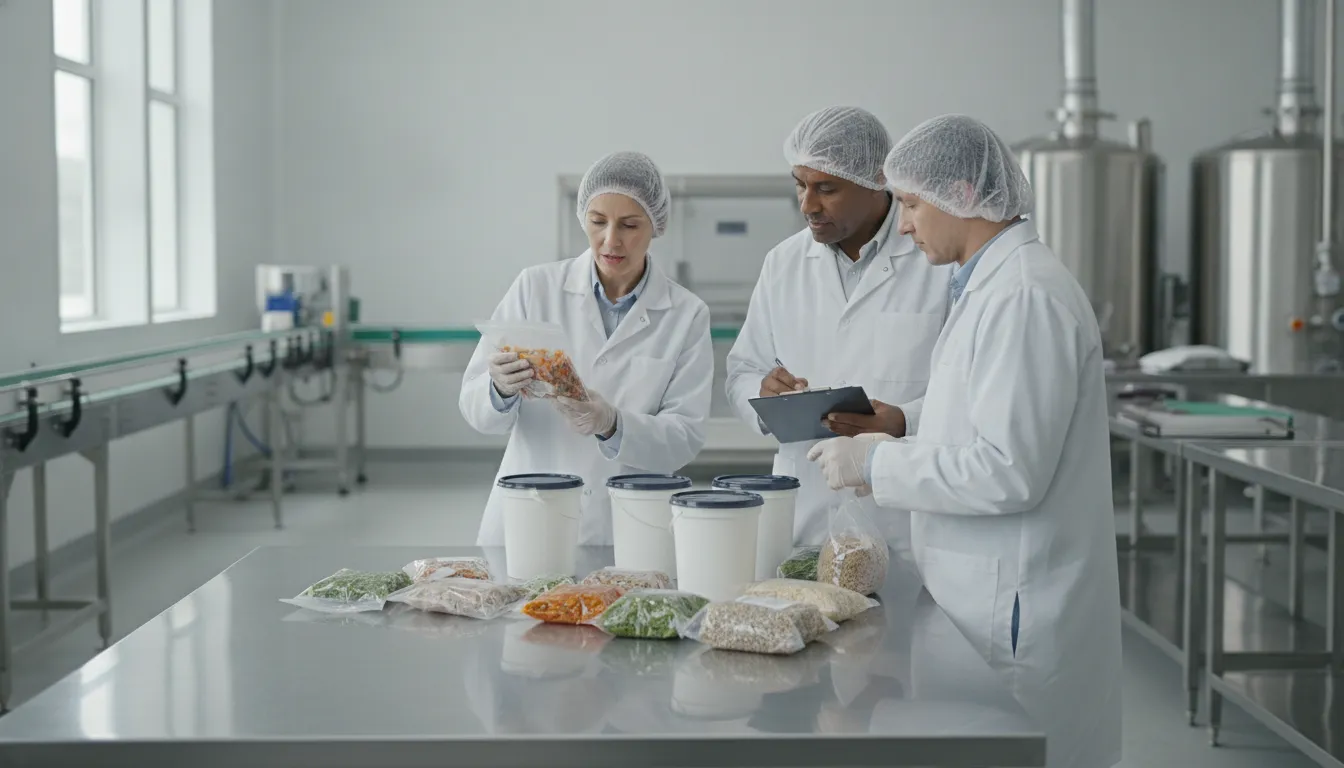
Choosing a food manufacturing partner affects more than your first production run. The right fit can protect product consistency, support marketplace requirements, and move inventory from production to fulfillment with fewer surprises. The wrong fit can create delays, unclear responsibilities, and costly rework.
Contact Co Packing Express to discuss your private label manufacturing needs.
The best private label food manufacturers match your product category, formula, order volume, quality expectations, packaging needs, sales channels, and growth plan. Before signing, verify food-safety practices, production controls, minimums, communication standards, fulfillment capabilities, and who owns each responsibility. Ask for these answers in writing before you approve a run or commit packaging spend.
Co-packing lets a brand use established manufacturing infrastructure instead of building its own facility. That does not remove the need for due diligence. FDA food-facility registration is required under the Food Safety Modernization Act, and current good manufacturing practices support the design, monitoring, and control of food manufacturing processes and facilities. Start by examining whether each prospective partner can produce your product reliably and document its controls.
For Amazon-focused planning, pair this evaluation guide with the Amazon FBA and private label food manufacturing playbook.
How to Evaluate Private Label Food Manufacturers for Your Brand
Evaluate private label food manufacturers on product fit, food-safety diligence, quality control, communication, capacity, fulfillment, and contract clarity. A manufacturer should explain how its equipment and process fit your formula, packaging, volume, and sales channels before you commit to a quote or production schedule.
Start with the product itself. Ask what product forms the facility handles regularly, what ingredients it can process, and what packaging formats it supports. Category specialization matters because the equipment, handling practices, and controls required for liquids may differ from those used for dry spices and powders. A partner with relevant experience can identify feasibility concerns earlier and reduce avoidable changes during scale-up.
Co Packing Express is based in St. Petersburg, Florida, and serves e-commerce, private-label, and Amazon FBA/FBM brands nationally. The company focuses on liquids, spices, and powders, with services that can connect production, packaging, and fulfillment. Review the private labeling service to understand how the brand-development portion of the relationship may fit your project.
Verify food-safety diligence
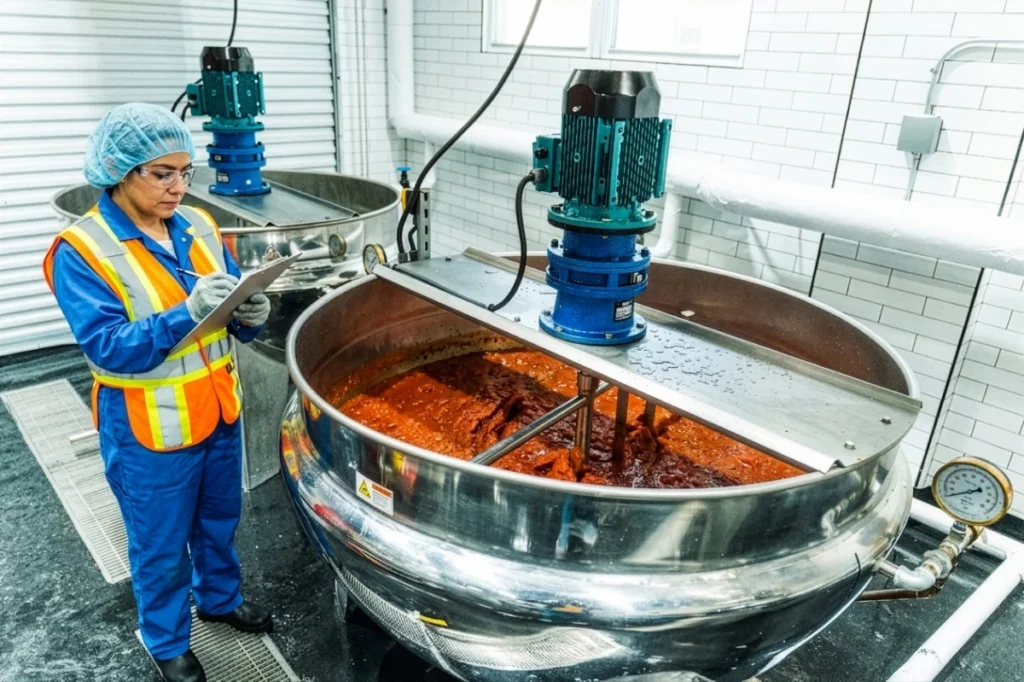
Do not accept a general statement that a facility is safe. Ask how the manufacturer documents food-safety controls, handles ingredients, manages sanitation, and responds to deviations. Review the FDA’s food facility registration guidance as part of your diligence, then ask the manufacturer which records and controls apply to your product.
Discuss whether the facility operates with FDA compliant and HACCP compliant practices that are appropriate to the product and process. HACCP is a preventive system that analyzes and controls biological, chemical, and physical hazards from raw materials through finished-product distribution. A useful manufacturing partner should explain how those controls apply to your formula, ingredients, packaging, and process rather than presenting only a generic policy.
Examine quality control and communication
Quality control should be specific to your product specifications. Ask how incoming ingredients are checked, how batches are monitored, what records are provided, and how finished products are released. FDA CGMP guidance describes systems for the proper design, monitoring, and control of food manufacturing processes and facilities. Your partner should connect those principles to checks that protect flavor, appearance, fill, packaging, and consistency.
Test communication before production begins. Identify your primary contact, approval points, escalation process, and expected update cadence. Clear handoffs reduce errors and help protect the schedule. The best partner behaves like an operating extension of your brand, with transparent limits and documented responsibilities rather than vague promises.
What Should You Ask Private Label Food Manufacturers Before Signing?
Before signing with a private label partner, ask who sources ingredients, what testing is included, and who owns the formula and artwork. Confirm how labels and changes are approved, what schedule the facility can support, and how finished goods move into storage, freight, fulfillment, or marketplace preparation.
A capable production partner should answer these questions before you commit inventory, packaging spend, or your launch schedule. Put the answers in writing. Compare them with your product and sales-channel requirements. The goal is to define who owns each decision and what happens when a specification changes.
Ingredients, testing, and product readiness
- Who sources each ingredient? Ask whether the manufacturer or your team selects suppliers, verifies specifications, manages substitutions, and handles incoming materials. Ingredient safety and sourcing responsibilities should be explicit in the agreement.
- What testing is included? Confirm which tests are performed, when samples are retained, who reviews results, and who pays for additional testing. Ask what documentation accompanies each production run.
- Can we complete a test batch first? A test batch can reveal whether the formulation is practical for the intended equipment and process. Define the approval point and the criteria for moving forward.
- Who controls the final product specifications? Establish one controlled specification for ingredients, texture, color, fill quantity, packaging, and finished-product quality. Quality standards help keep later batches consistent with the product you accepted.
Labels, schedule, and changes
- Who prepares and reviews the label? Assign responsibility for label copy, required information, artwork files, proof review, and final sign-off. Labeling responsibilities should be stated in the manufacturing agreement rather than assumed.
- What schedule can the partner support? Ask how production dates are requested, confirmed, and communicated. Clarify the information needed to reserve a run, the notice required for changes, and how delays are escalated.
- What is the change-control process? Define how a change to an ingredient, supplier, formula, package, label, or process is proposed, evaluated, priced, and authorized. A substitution should not be treated as routine if it could affect the finished product or its label.
Ownership, communication, and fulfillment
Ask who owns the formulation, process documentation, artwork, and unused materials. Identify who has access to those records and what happens if the relationship ends. These questions are practical protections for a private-label brand, not legal guarantees. Qualified legal counsel should review the final contract language for your situation.
Map the handoff after production. Who stores finished goods, coordinates freight, prepares orders, manages marketplace requirements, and handles inventory updates? Some private label food manufacturers provide production, packaging, storage, and fulfillment together, while others stop at the pallet. If you sell through multiple channels, make each division of responsibility measurable.
Use this contract packaging guide to compare the services and questions that belong in a vendor review. A partner who answers directly, documents the process, and assigns owners is easier to manage as demand grows.
- Confirm product, ingredient, packaging, and channel fit.
- Request written food-safety, quality, testing, and labeling responsibilities.
- Compare MOQ, timing, capacity, fulfillment, and contract terms.
- Proceed only after unresolved risks have an owner and a documented next step.
How Do NDA and Formulation Protection Work?
An NDA can protect confidential formulas, ingredient specifications, process instructions, packaging details, pricing, and launch plans, but it is only one part of the agreement. Define formulation ownership, access, permitted use, change control, and post-termination obligations in the broader manufacturing contract.
An NDA should identify the confidential information shared for the project. It should explain who may access it, how it can be used, and what happens when the relationship ends. An NDA is not a substitute for reviewing the full manufacturing agreement. Have qualified legal counsel review contract language for your specific situation.
Formulation ownership needs its own clear section. The manufacturing agreement should state who owns the product formulation and any process rights, including whether the manufacturer may use, modify, or reproduce them for another customer. If the brand provides a finished formula, document that fact. If the manufacturer helps develop or adapt a formula, define the ownership and usage rights before production begins.
Control access to information and inputs
Confidentiality works best when supported by practical access controls. Decide which employees, contractors, ingredient suppliers, and testing partners need product information to perform assigned work. Limit access to that group and establish a process for sharing updated specifications. Keep a controlled record of the formula, ingredient requirements, packaging components, and process steps.
Inputs are part of the product definition, not informal preferences. Document which ingredients, suppliers, grades, packaging materials, and testing requirements are acceptable. Define how substitutions are requested and authorized. A change that appears minor can affect flavor, texture, allergen controls, label accuracy, or production performance. Written authorization helps prevent an unplanned input from becoming a brand or quality problem.
Define tolerances and test-batch decisions
Production tolerances belong in the agreement because every manufacturing run can involve small variations. Co Packing Express uses a plus or minus 10% production tolerance. That figure is a commercial example for this provider, not a universal legal or manufacturing standard. Confirm how the tolerance applies, how finished quantities are measured, and how overages, shortages, or rejected product will be handled.
Co Packing Express prices test batches at $2,500 to $3,000 and consulting at $300 per hour. These are current commercial details for this provider, so request current terms and clarify what each service includes before authorizing work. Use a test batch to confirm that the formula works with the proposed equipment, inputs, packaging, and quality checks.
How Do Private Label Minimums Affect Your Launch?
Private label minimums affect cash flow, storage, packaging, launch size, and reorder timing. Evaluate an MOQ by converting the required gallons or pounds into sellable units. Add related costs. Then compare the total inventory commitment with realistic demand across your sales channels.
Minimum order quantities, or MOQs, determine how much product you must commit to before production begins. For a new private label food brand, that commitment affects more than the manufacturing invoice. It influences cash flow, storage needs, launch size, packaging choices, and your ability to test demand without overbuying inventory.
Co Packing Express sets its minimum at 100 gallons for liquid products and 400 pounds for dry products. Convert the amount into expected units using your fill size, then compare the result with a realistic first purchase order. A 100-gallon run may produce very different unit counts depending on whether the product is filled into small bottles, larger containers, or another format. The same planning applies to a 400-pound dry-product run.
Calculate the inventory commitment before approving the run
Start with expected units from the MOQ, then add packaging, freight, storage, marketplace fees, and working capital for the next production cycle. Keep an allowance for normal production variation rather than treating the calculated quantity as an exact promise. Confirm how much finished product your sales channels can absorb during the first several weeks.
This analysis helps separate a manageable launch from an expensive inventory gamble. If the MOQ is larger than your initial forecast, consider shelf life, whether you can sell through more than one channel, and whether your launch plan supports repeat demand. A manufacturer that can support a sensible initial run is often a better fit than one that requires volume your business cannot yet fund or distribute.
Match timing and packaging to your launch calendar
New products typically require 4 to 8 weeks, while repeat orders typically require 20 business days. Build those windows into your launch plan before setting a marketplace date or announcing availability. Ask what information must be complete before the schedule begins, and confirm when the repeat-order clock starts.
Packaging capacity matters as well. Co Packing Express offers pressure-sensitive labels and production capacity of 5,000 or more units per hour. Your formula, packaging specifications, and forecast must align with the facility’s capabilities. Request clear specifications for label files, container compatibility, case packing, and finished-goods handling before materials are ordered.
For liquids, spices, and powders, product fit should remain central. Co Packing Express does not handle refrigerated or frozen products. If your product falls outside the company’s stated categories, confirm capability before investing time in formulation or packaging development. For broader production planning, review the co-packing process and MOQ guide.
How to Compare Private Label Food Manufacturers With a 7-Point Scorecard
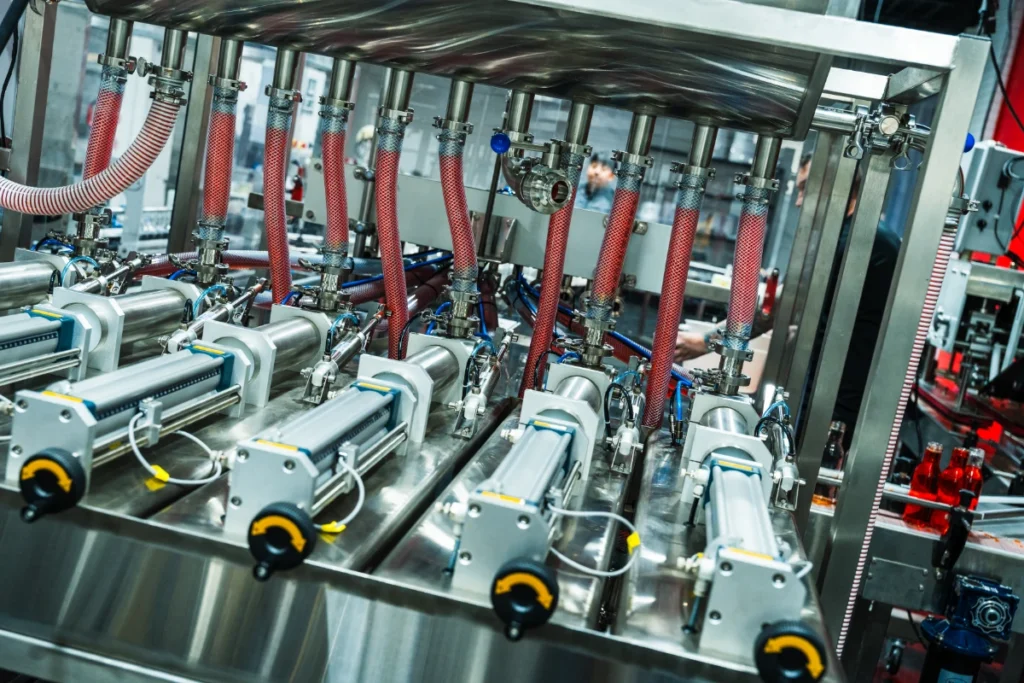
Use a seven-point scorecard to compare private label manufacturers on product fit, compliance, quality control, minimums, capacity, fulfillment, and communication. Score each candidate from 1 to 5, require evidence for every rating, and choose the provider with the clearest documented fit rather than the lowest headline price.
A useful comparison starts with your operating requirements, not a manufacturer’s sales pitch. Score each candidate from 1 to 5. A score of 1 means the provider cannot clearly meet the requirement. A score of 3 means the fit is possible but needs documented conditions. A score of 5 means the capability, process, and commercial terms are clear enough to support your launch and future growth.
| Criterion | What to verify | Score 1 | Score 5 |
|---|---|---|---|
| Product fit | Experience with your product format, ingredients, filling method, packaging, and exclusions. | Major workarounds or unclear process. | Equipment and process clearly match. |
| Compliance | Facility status, food-safety systems, documentation, and labeling responsibilities. | Vague answers or unavailable records. | Requirements and responsibilities are transparent. |
| Quality control | Specifications, testing, batch consistency, corrective actions, and change control. | No defined testing or deviation process. | Controls are documented and product-specific. |
| Minimum order quantity | Run minimums, setup costs, packaging minimums, and forecast fit. | Excessive inventory or cash risk. | Supports a realistic launch and reorder plan. |
| Capacity | Available production time, equipment throughput, scheduling, and growth support. | Capacity is unverified or constrained. | Current and projected volume can be planned. |
| Fulfillment | Packaging, storage, pick-and-pack, freight handoffs, and marketplace preparation. | Several disconnected vendors are required. | Production and downstream fulfillment connect. |
| Communication and contract clarity | Contacts, response expectations, pricing, payment terms, ownership, tolerances, and escalation. | Responsibilities or terms remain unclear. | Owners, terms, and escalation paths are documented. |
After scoring, investigate every rating below 4. Ask for a written explanation, sample record, process description, or contract clause that resolves the uncertainty. A scorecard makes tradeoffs visible. It also keeps a persuasive sales call from outweighing product fit, quality controls, or terms that affect your cash flow.
Frequently Asked Questions
What is a private label food manufacturer?
A private label food manufacturer produces food products for a brand that sells them under its own name and packaging. Depending on the partner, services may include formulation support, ingredient coordination, production, packaging, storage, and fulfillment. The model lets a brand use established manufacturing infrastructure instead of building a facility.
What services do private label food manufacturers offer?
Services vary, but may include recipe or formulation support, test batches, liquid or dry production, bottling and filling, labeling, packaging assembly, quality control, warehousing, and fulfillment. Ask each provider where its responsibility begins and ends. Co Packing Express connects private labeling with production, packaging, FBA/FBM preparation, and fulfillment services.
How do I choose the right private label manufacturer for my food business?
Choose the partner whose product capabilities, food-safety practices, quality controls, MOQ, capacity, communication model, and contract terms match your business. Request written answers and score each candidate against the same criteria. The lowest quote is not the best value if it creates quality, timing, or inventory problems later.
Can private label food manufacturers help with custom product formulation?
Some manufacturers provide formulation support, prototyping, or test batches before commercial production. Use that stage to confirm the recipe is feasible for the facility, define the inputs and process, and document who owns the formulation and process rights. A written scope prevents assumptions during scale-up.
What food-safety compliance should I verify?
Verify that the facility’s practices are FDA compliant and HACCP compliant for the product and process. Ask for documentation describing controls, testing, training, sanitation, and deviation handling. Review FDA food facility registration and CGMP guidance as part of your diligence, then have qualified counsel review any contract language that concerns your obligations.
Ready to Evaluate Your Private Label Partner?
Choosing among private label food manufacturers means confirming that the production, packaging, fulfillment, and communication model fits your brand before you move forward. A focused conversation can clarify your product requirements, expected volume, packaging format, and the questions that still need documented answers.
Contact Co Packing Express to evaluate your private label food manufacturing requirements.