


How to Launch a Private Label Food Brand on Amazon

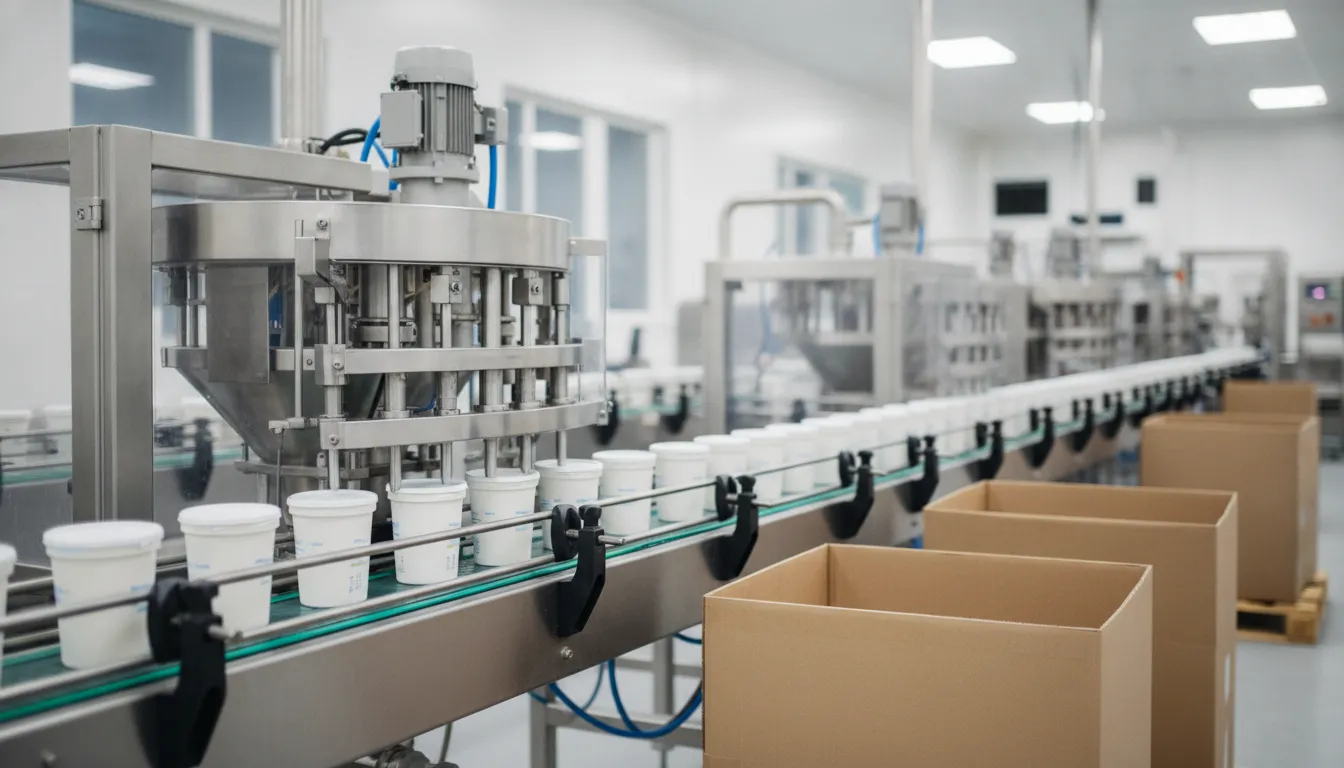
Launching a private label food brand on Amazon is an operations project before it is a listing project. Product demand, formulation, labels, production volume, inventory, and the FBA or FBM handoff must agree before you commit cash to a first run.
Contact Co Packing Express to discuss your private-label food launch plan
The practical answer to how to launch a private label food brand on amazon is to validate demand and margins first. Then build a documented production and fulfillment plan. Define the product brief, confirm label requirements, vet a co-packer, and schedule inventory around realistic sales and lead-time assumptions.
Private labeling lets you own the brand and customer relationship while a third party manufactures the food to your specifications. Co Packing Express supports brands from its facility in St. Petersburg, Florida, with production, packaging, and FBA/FBM preparation. Start with the responsibilities and decisions that shape every later step. This Amazon FBA and private label manufacturing guide provides additional context.
What Sellers Need to Know About How to Launch a Private Label Food Brand on Amazon
Private labeling means a third party manufactures a product while another business owns the brand, controls the offer, and sells it to customers. For an Amazon food seller, that usually means you develop the product concept and market position. Then work with a qualified co-packer to turn that concept into a packaged product ready for FBA or FBM. Amazon describes private-label products as goods made by one company and branded and sold by another. That makes the business model different from simply reselling an existing national brand.
The practical advantage is access to production without the capital investment of building and operating your own food facility. Co-Packing Express provides food and beverage production, packaging, and fulfillment support from St. Petersburg, Florida, serving emerging brands that have outgrown kitchen production but are not ready for a national-scale manufacturer. This article focuses on the Amazon-specific decisions that determine whether the product can move from concept to listing, inventory, and reorder.
The seller owns the brand strategy, while the co-packer executes the production plan
The seller remains responsible for the commercial direction. That includes selecting a product opportunity, defining the target customer, setting the intended retail price, managing the Amazon listing, building brand assets, forecasting demand, and choosing FBA or FBM. You also need to provide accurate product information and make sure the finished offer meets applicable federal, state, local, and Amazon requirements.
The co-packer translates that direction into a repeatable manufacturing workflow. Depending on the product and agreed scope, this can include sourcing or receiving approved inputs, batching, filling, labeling, packaging, inventory coordination, and preparation for the chosen fulfillment route. The co-packer should clarify what information is needed before production, what specifications govern the run, and what documentation or handoff materials the seller will receive.
This division of responsibility is not a hands-off arrangement. Your product brief should connect the formulation, package format, target quantity, cost assumptions, and Amazon fulfillment plan. It should also identify product categories the facility does not handle. Co-Packing Express does not produce frozen or refrigerated products, meat, poultry, fish, potable alcohol, or tin cans, so confirming product fit early prevents avoidable delays.
The broad private labeling services page explains the available production relationship. This guide goes further by organizing that relationship around Amazon execution: validating demand, selecting a co-packer, preparing the label and packaging, building the listing, and planning inventory. If you need a plain-language explanation of the manufacturing relationship itself, review the site’s co-packing services guide, then return to the Amazon workflow for the decisions that affect launch readiness.
How Do You Validate a Food Product Before Production?
Validation should reduce commercial and production risk before you commit inventory to Amazon. Move through the following sequence before requesting a full production run:
- Check demand and competition. Review comparable grocery listings, price points, pack sizes, review patterns, and recurring customer complaints. Look for a specific gap your product can serve rather than assuming a crowded keyword represents demand. Confirm that the product fits Amazon’s grocery requirements and that you can provide supply-chain and product-safety documentation if requested. Amazon’s guidance for private-label sellers also addresses product specifications, brand registration, storefront setup, and compliance: review the relevant private-label requirements before you finalize the concept.
- Create a written product brief. Put the formulation or approved recipe, ingredients and allergens, package format, target net quantity, expected volume, target unit cost, and intended FBA or FBM route in one document. Include the product’s storage requirements and any shelf-life or expiration-date assumptions. This brief gives a co-packer a usable production starting point and prevents cost discussions from relying on incomplete information.
- Build the unit economics. Calculate more than the ingredient cost. Include packaging, development, production, freight, storage, Amazon fees, advertising, and expected waste or production variance. Compare the resulting contribution margin with your selling price and reorder plan. For a fuller planning framework, review these new product development costs before approving a budget.
- Resolve label constraints early. Confirm the ingredient statement, allergen declarations, nutrition information, net quantity, and responsible business name and address. Food labeling must clearly identify ingredients and allergens, and the final label should be checked against applicable FDA requirements. Do not wait until artwork is complete to discover that the formulation, claims, or package dimensions need revision.
- Run a small test batch. Use a limited run to evaluate taste, texture, fill consistency, seal integrity, packaging performance, and customer response before scaling. Co-Packing Express lists test batches at $2,500 to $3,000. Treat that amount as a defined development investment, not as a substitute for demand validation or a guarantee of marketplace performance.
- Map the Amazon fulfillment route. Decide whether inventory will go to FBA, remain under FBM control, or use both channels. Confirm carton, labeling, expiration-date, prep, and shipment requirements before production so the finished goods can move directly into the planned workflow. A co-packer that supports FBA/FBM compliant preparation can help align the production handoff with the fulfillment destination.
Once these decisions are documented, you can evaluate production partners against a defined product, budget, volume, and fulfillment requirement instead of comparing facilities on capacity alone.
How Do You Choose a Co-Packer for Private Label Food Production?
Choosing a co-packer is an operating decision, not simply a search for the lowest production quote. Your partner must be able to translate a product brief into repeatable batches, protect food quality, meet Amazon handoff requirements, and communicate clearly when volume or specifications change. Start by checking capacity, minimums, compliance practices, service scope, and the fit between the facility and your product category.
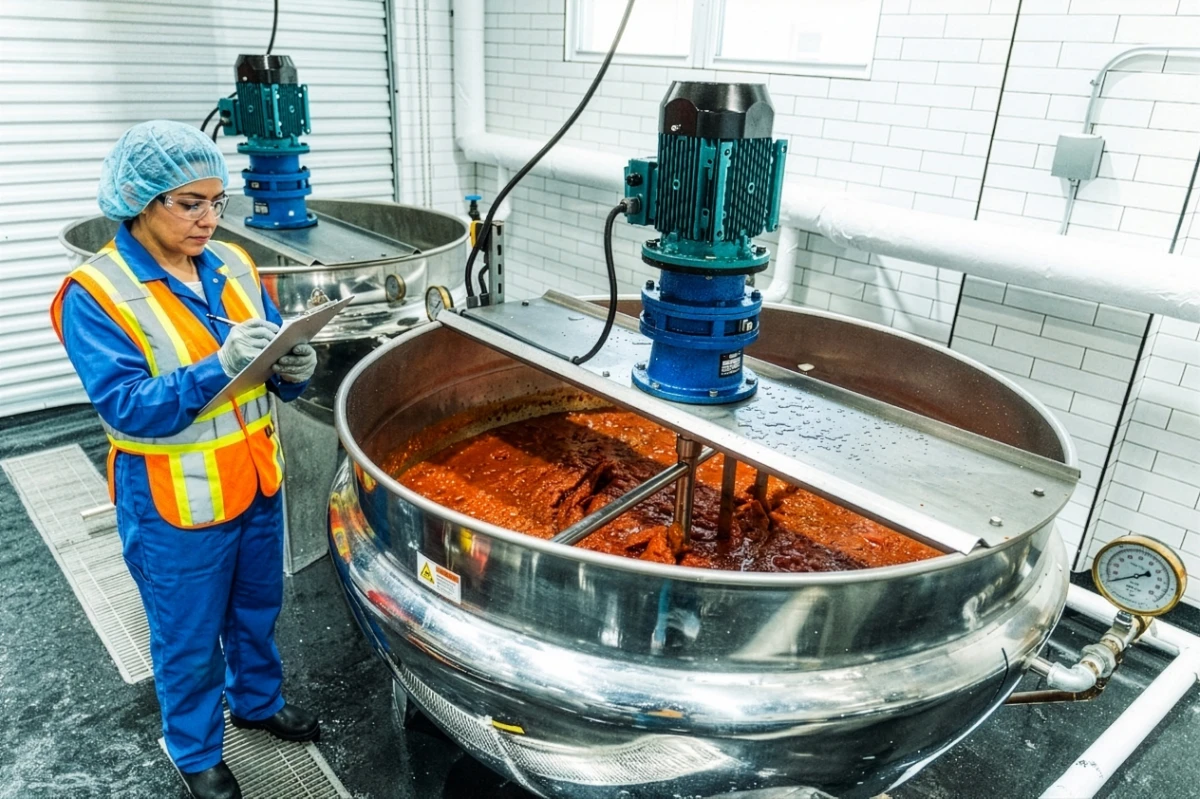
For an Amazon food brand, ask for evidence that the co-packer can support the full path from production through shipment preparation. Co Packing Express is based in St. Petersburg, Florida, and serves emerging and scaling brands with national capabilities. Its current published capacity is 5,500 units per hour for liquid goods, which gives a growing seller a practical path beyond small-batch production without requiring a private factory.
| Vetting checkpoint | What to confirm | Why it matters |
|---|---|---|
| Product fit and minimums | Confirm whether the facility handles your format and whether your first run meets 100 gallons for liquids or 400 pounds for dry products. | A clear minimum prevents an attractive quote from becoming an unusable production plan. |
| Capacity and repeatability | Ask about documented throughput, batch controls, quality checks, and how repeat orders are scheduled. | Capacity must support both launch inventory and future Amazon reorders without sacrificing consistency. |
| Compliance controls | Verify FDA compliant and HACCP compliant operating practices, along with the records and process information relevant to your product. | Food brands need a partner that can support responsible documentation and marketplace requirements. |
| Service handoff | Review whether the partner provides filling, bottling, labeling, kitting, warehousing, logistics, and FBA/FBM preparation. | Fewer disconnected handoffs can reduce errors between production, inventory, and Seller Central delivery. |
| Scope boundaries | Confirm excluded categories before sharing a final formula or forecast. | Co Packing Express does not handle frozen or refrigerated products, meat, poultry, fish, or potable alcohol. |
Ask questions that reveal the working relationship
A reliable partner should explain what information it needs from you, including the formula, package format, target volume, labeling status, and fulfillment route. It should also make production tolerance, deposits, completion payments, and change-management expectations explicit before work begins. That clarity matters when Amazon demand changes and you need to adjust a reorder without losing control of costs or inventory.
Review the company’s co-packing services alongside your product brief. Look for a provider that can own the manufacturing details while keeping your brand accountable for accurate specifications, listing information, and demand planning. The right co-packer is not just a production vendor. It is an operating partner whose systems support the next stage of your private label food business.
How Do You Prepare Compliant Packaging and an Amazon Listing?
Packaging and listing data should be built from one approved source of truth, not recreated separately by a designer, manufacturer, and Amazon operator. Start with the final product specification: product name, ingredients, allergen declarations, net quantity, lot or date coding, storage instructions, package dimensions, and the exact brand identity that will appear on the label and in Seller Central.
That record makes revisions easier to control. If the formula, serving size, package count, or responsible business changes, update the master specification first. Then review the physical label, case configuration, product detail page, and fulfillment instructions together.
Build the label around the responsible business and net quantity
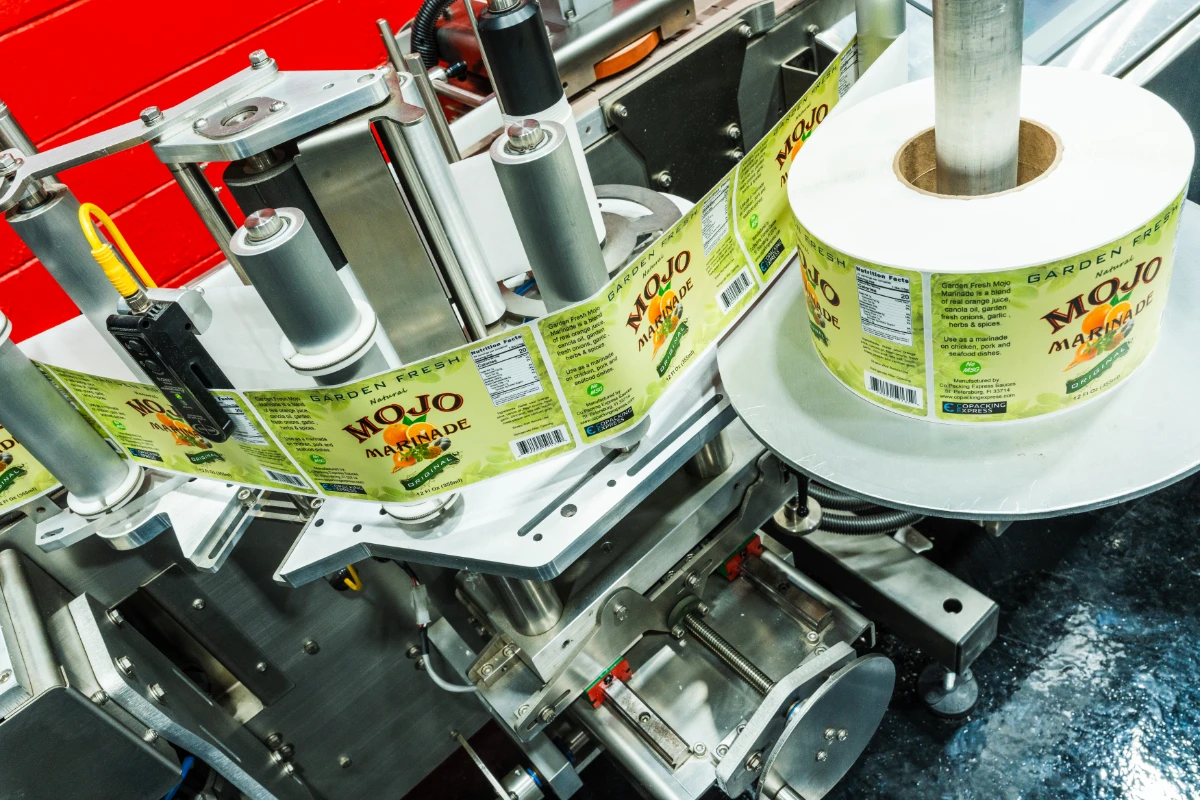
Under 21 CFR 101.5, a food label must identify the name and place of business of the manufacturer, packer, or distributor. If the brand owner is not the company physically making or packing the product, the relationship may require language such as “Manufactured for” or “Distributed by,” followed by the responsible business information. Confirm the correct relationship and wording before artwork is finalized.
Net quantity is a separate required element under 21 CFR 101.105. It needs to match the actual product specification and the Amazon offer. The same discipline applies to ingredients, allergens, nutrition information where required, country-of-origin details, and any applicable expiration or lot coding. Amazon grocery sellers may be asked for documentation supporting product safety and supply-chain information, so retain the records that connect the finished unit to its production run.
Design for the journey to the customer
Package durability is part of the product experience and the fulfillment plan. Choose a container, seal, closure, and secondary packaging that can protect the food during handling, storage, and shipment. Test the finished configuration, not only an empty package. Check for leakage, crushed cartons, scuffed labels, and barcode readability after ordinary handling. Amazon guidance emphasizes packaging that protects products during storage and transit, particularly for FBA shipments.
For practical support with the physical workflow, review Co Packing Express packaging and assembly services. The objective is a repeatable packout that matches the unit sold online, the case quantity sent to Amazon, and the inventory information maintained by the seller.
Connect brand ownership to the fulfillment handoff
Before launch, complete the brand registration and storefront work that applies to your business. Then make sure the registered brand, packaging, product images, title, bullets, and description use the same approved product facts. Do not let listing copy promise attributes that the label or formulation does not support. Keep the product identifier, case pack, dimensions, weights, and shipping plan aligned across the listing and fulfillment documents.
Finally, decide whether each shipment will use FBA or FBM. FBA requires preparation that meets Amazon’s receiving and packaging expectations, while FBM requires a dependable process for storing, picking, packing, and shipping orders directly. Co Packing Express can support the handoff through FBA/FBM compliant preparation. Confirm the destination, labeling, carton configuration, documentation, and inventory ownership before production is released.
How Do Inventory and Reorders Work After an Amazon Launch?
Inventory planning should begin before the first customer order. Build a forecast from your expected launch volume, sales velocity, promotional calendar, and the time required to manufacture, pack, transport, and receive the next batch. Treat the forecast as a range rather than a promise. Early sales data should refine the plan every week.
Set a lead-time buffer for both FBA and FBM. FBA sellers need enough finished inventory to cover inbound shipping, Amazon receiving, and possible demand spikes. A stockout can interrupt listing momentum while excess inventory can increase storage exposure. FBM sellers may carry less inventory in an Amazon fulfillment center. But they still need reliable access to finished units and enough time to pick, pack, and ship customer orders.
Your reorder trigger should be based on projected demand during the full replenishment window, plus a safety reserve. For example, if your product is selling 100 units per week and the next production cycle may take four weeks from approval through receipt, the replenishment window is substantial. Do not wait until the current batch has only a few days of stock remaining. Reorder when available inventory, inbound inventory, and the safety reserve no longer cover that projected window. Review the trigger after promotions, seasonality changes, or a meaningful shift from FBA to FBM.
Build the reorder around production realities
Confirm the planned quantity, package format, formulation, lot requirements, and fulfillment destination before production is scheduled. Production output carries a tolerance of +/- 10%, so your purchase plan should account for the possibility that the final count will vary within that range. That variance matters when allocating units between Amazon inventory, FBM stock, samples, and other channels.
Budget for the payment structure as well. Co Packing Express requires a 75% non-refundable deposit and a 25% completion payment. Align those payments with your cash-flow forecast instead of treating the reorder as a simple purchase-order event. If the product requires storage between production and shipment, confirm space, pallet or case requirements, inventory ownership, and release instructions in advance. The food warehousing service can be part of that handoff.
For Amazon-specific preparation, clarify whether units require labeling, case packing, shipment preparation, or other FBA/FBM steps. Review the FBA/FBM compliant preparation workflow before the reorder is released so finished goods do not wait for avoidable prep decisions.
Customer information lists a 20-day turnaround for repeat orders. Use that figure as a planning reference, not a guarantee. Product specifications, approvals, materials, production scheduling, storage, and shipping conditions can change the actual timeline. Set the reorder trigger early enough to absorb those variables without forcing a stockout.
Contact Co Packing Express to review your production and Amazon fulfillment plan.
Frequently Asked Questions
What minimum order should I expect for a private label food product?
For planning purposes, Co Packing Express lists minimums of 100 gallons for liquid products and 400 pounds for dry products. Confirm the applicable minimum for your formulation, package, and production run before committing inventory. Contact the team to review current minimums.
What must be included on a compliant food label?
Build the label around an accurate ingredient statement, required allergen disclosures, net quantity, and the name and place of business of the manufacturer, packer, or distributor. FDA guidance also requires the Nutrition Facts information to accurately reflect the product. Review the finished label against current FDA food-labeling guidance before printing.
How should I prepare a food product for Amazon FBA or FBM?
Decide whether each SKU will use FBA, FBM, or both before production. Confirm packaging protects the product through storage and transit, and verify any applicable expiration-date and grocery-category documentation requirements in Seller Central. Your co-packer can coordinate labeling, case packing, kitting, and the handoff to your selected fulfillment route.
When should I place a reorder after launching?
Set the reorder trigger from forecasted sales, current available inventory, inbound shipping time, and a buffer for production and receiving. Co Packing Express cites approximately 20 days for repeat-order turnaround as a planning reference, not a guarantee. Build the schedule around your actual product, volume, and fulfillment requirements, and account for a stated production tolerance of plus or minus 10%.
Contact us to plan your Amazon handoff
A focused conversation can help align your product type, packaging, production volume, and FBA or FBM handoff before the next production decision. Contact us to discuss your launch requirements with Co Packing Express.
One thought on “How to Launch a Private Label Food Brand on Amazon”