


Food Product Development Co-Packing Guide

A recipe that works in a home kitchen is only the beginning of a food brand’s product journey. Before a brand orders packaging or schedules a commercial run, it needs a clearer product brief, documented specifications, a practical manufacturing path, and a way to decide whether the concept is ready to move forward.
Contact Co Packing Express to discuss your food product development needs in Florida.
Food product development co-packing combines product-development consulting with a co-packer’s manufacturing perspective. The process helps a food brand define its formula, packaging, quality expectations, and production requirements before a test batch or commercial run. The goal is a documented product that can be evaluated and made consistently, not merely a recipe that tastes good once.
This distinction matters to private-label brands, Amazon FBA sellers, and direct-to-consumer food companies. Co Packing Express serves brands from St. Petersburg, Florida, with product development, bottling and filling, packaging, quality control, and fulfillment support. This article focuses on the development decisions that happen before routine production. It is not a substitute for legal, regulatory, or technical advice for a specific product.
What food product development consulting should accomplish
Product development consulting gives a brand and its manufacturing partner a structured way to evaluate an idea. The work is broader than filling a container. It connects the desired customer experience with the ingredients, process, package, and quality checks needed to make that experience repeatable.
A useful consultation should clarify five things:
- What the product is supposed to be, including flavor, texture, appearance, format, and intended customer.
- Which ingredients, packaging materials, and production inputs are required.
- Which characteristics define an acceptable finished product.
- What information remains unknown and needs a test or technical review.
- Which decisions belong to the brand and which the co-packer can evaluate or execute.
The brand brings the concept and commercial direction. That includes the product identity, target market, package expectations, sales channel, and decisions about what the finished item should deliver. The co-packer contributes a production viewpoint. It can help determine whether the concept fits available equipment, handling methods, packaging operations, quality controls, and expected order requirements.
Consulting is a decision service, not just a recipe edit
Some brands begin with a family recipe. Others have a formula from a food scientist, a private-label concept, or a product that is already selling in small quantities. Each starting point creates different questions. A kitchen recipe may need clearer measurements. An existing formula may need packaging and process evaluation. A growing brand may need to decide whether a new product belongs in the same production system as its current line.
The consultation is intended to surface production constraints, identify open decisions, and establish a practical next step before the brand commits to materials and inventory. Co Packing Express can confirm the current scope and rate for the project.
What a strong development brief includes
A development brief should give the project a shared reference point. It can include the formula version, ingredient list, target batch size, package format, fill size, label direction, storage expectations, sales channel, and sensory targets. It should also identify what is still undecided.
For example, a sauce brand may need to define its target viscosity, container and closure, fill size, label application, and expected production quantity. A spice or powder company may need to define blend uniformity, particle behavior, moisture expectations, container, and dispensing format. The brief does not need to answer every technical question on day one. It does need to make the questions visible so the right ones can be tested.
How food product development co-packing turns a concept into a production brief
Food product development co-packing creates a bridge between an idea and a manufacturing-ready project. It does this by organizing the product around decisions that can be observed, documented, and reviewed. The development path should answer three questions. What are we making? How should it perform? How will the team know the batch is acceptable?
The process is not a promise that a formula will work without change. It is a disciplined way to discover what needs to change while the project is still manageable. A formula, a process, and a package should be considered together because changing one can affect the others.
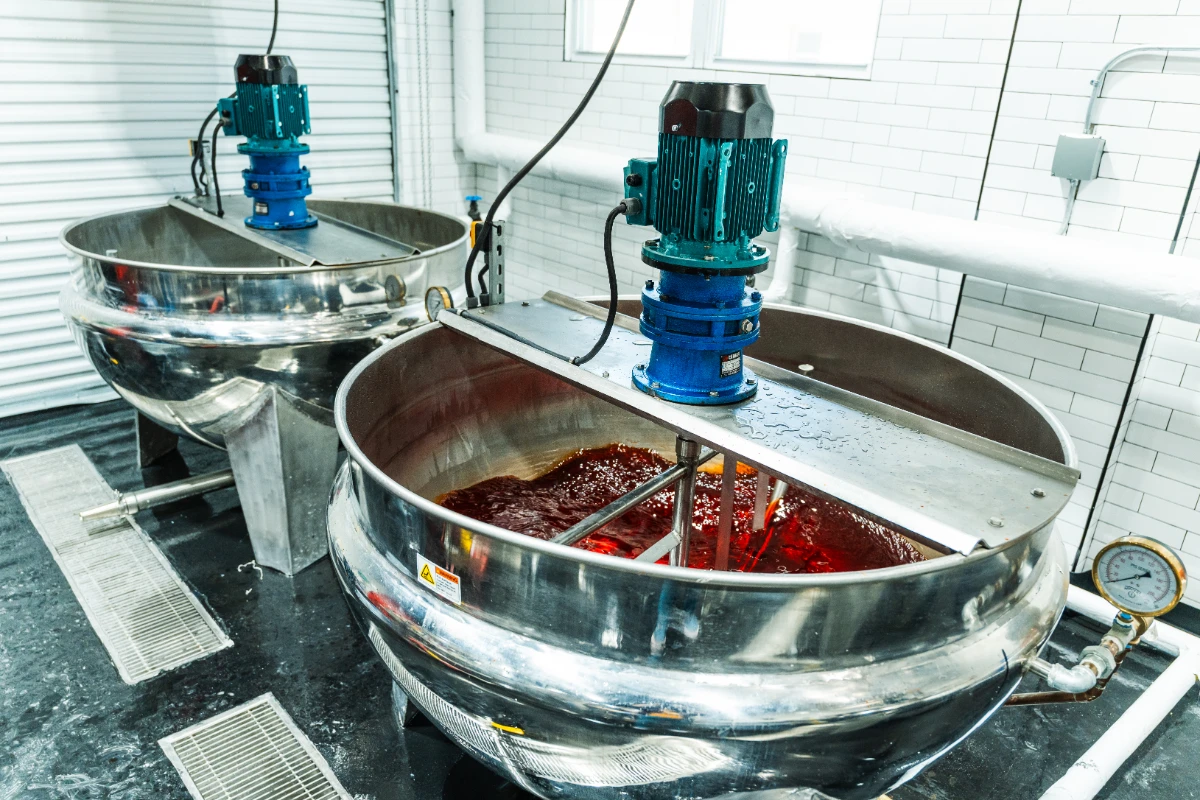
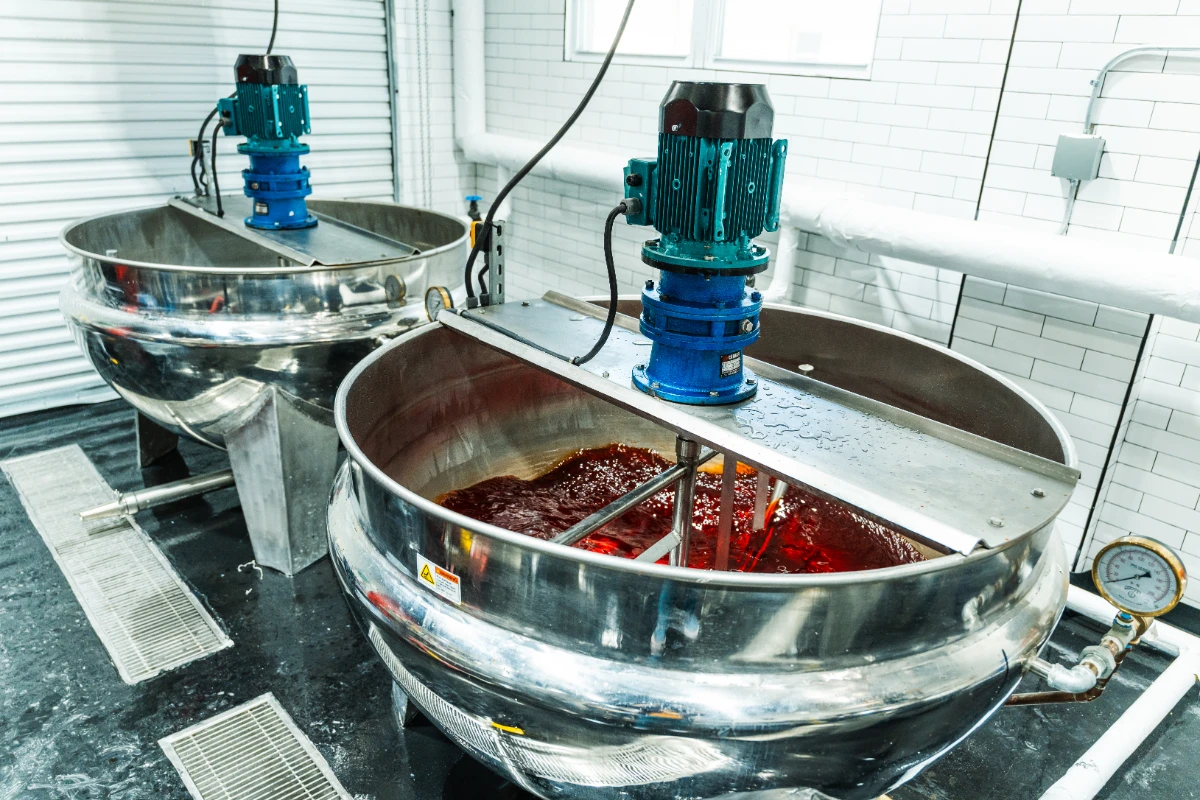
Seeing the production environment can make the development conversation more concrete. Actual equipment, available handling methods, and the intended package all affect which questions should be answered before a test batch.
Start with the product experience
Begin by describing the finished product in customer terms. What should a buyer notice when the package is opened? What flavor, texture, aroma, appearance, or use experience matters most? Which features are essential, and which are flexible? These questions prevent the project from treating every detail as equally important.
The answers then need to be translated into working specifications. “Bold flavor” may become a sensory target. “Easy to pour” may lead to a viscosity and package discussion. A consistent seasoning blend may require attention to particle size, blending order, and handling. The more clearly the desired outcome is described, the easier it is to decide what must be measured or tested.
Connect formula, process, and package
Commercial equipment does not behave exactly like kitchen equipment. Vessel size, mixing action, heating, cooling, ingredient addition, holding time, filling, and sealing can all influence a product. Scaling is therefore more than multiplying each ingredient by a larger number. It is a review of how the full system behaves.
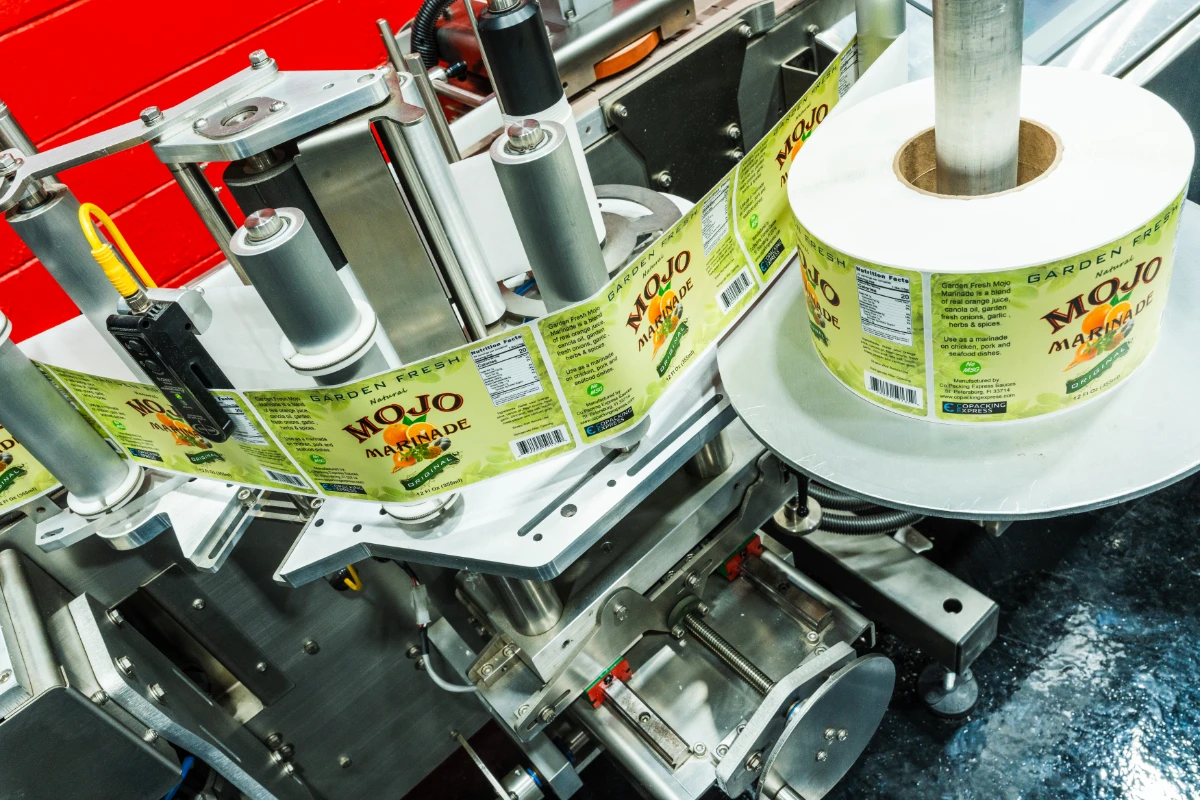
Packaging belongs in that review early. The container must suit the product and the intended channel. The closure must work with the fill and handling process. The label and case configuration must support storage, shipping, and fulfillment. Reviewing the package only after the formula is finished can create avoidable rework.
| Development question | Why it matters before production |
|---|---|
| What defines the finished product? | Creates sensory and physical targets for evaluation. |
| How will the formula be handled? | Connects ingredients and process steps to equipment needs. |
| What package will be filled? | Checks container, closure, fill, label, and case compatibility. |
| What is an acceptable batch? | Gives the brand and co-packer a shared quality reference. |
Co Packing Express lists initial minimums of 100 gallons for liquid products and 400 pounds for dry products. The company also lists a production tolerance of plus or minus 10 percent. Those parameters belong in the commercial planning discussion because they affect inventory forecasts, packaging orders, marketplace availability, and fulfillment timing.
Which development decisions belong to the brand and co-packer?
Clear ownership keeps a product development project moving. The brand should own the commercial choices that define what it wants to sell. The co-packer should evaluate the manufacturing path and communicate what is needed to make the product consistently. The two sides then make documented decisions together where product goals and production realities meet.
The brand’s responsibilities
The brand should provide the concept, intended market, product positioning, formula information, desired package, expected sales channel, and any existing customer or quality requirements. It should explain which attributes cannot change and which can be adjusted during development. The brand also needs to review samples, labels, specifications, and other project decisions within an agreed approval process.
Brands should not assume that a co-packer can infer the desired product from a name or a short description. A product called a hot sauce, seasoning, or dressing can have many acceptable interpretations. The development brief should make the intended product specific enough to evaluate.
The co-packer’s responsibilities
The co-packer should explain the information needed to assess the product, the available production approach, relevant equipment considerations, packaging constraints, and the next practical test. It should also identify where the brand’s formula or package may need more technical review.
Co Packing Express provides product development alongside co-packing, bottling and filling, packaging and assembly, quality control, and fulfillment services. That combination can reduce handoff friction when a product moves from development into production planning. It does not remove the need for the brand to make timely decisions or obtain specialized advice when a product requires it.
Use written gates instead of informal assumptions
At each decision point, record the formula version, package choice, test result, open issue, and person responsible for the next decision. Written gates help prevent a sample conversation from becoming an accidental production instruction. They also make it easier to explain why a revision was made and which version should be used next.
What should be reviewed before a food product test batch?
A test batch is most useful when the brand knows what it is trying to learn. Before scheduling one, identify the questions that cannot be answered confidently from the kitchen process or existing documentation. The test should then provide evidence about the product, process, package, and records.
Formula and sensory targets
List the attributes that will be evaluated, such as taste, aroma, color, texture, thickness, flow, particle distribution, or blend consistency. Decide how the sample will be compared with the intended product. A brand should not rely on memory alone. A written sensory description, reference sample, or agreed specification gives the review more consistency.
Manufacturing behavior
Consider how ingredients will be weighed, added, mixed, blended, heated, held, or transferred. Powders may require attention to clumping and uniformity. Liquids may require attention to dispersion, viscosity, fill behavior, and closure performance. The objective is not to prescribe a process without evidence. The objective is to identify what the production team must observe and document.
Packaging and channel fit
Review the selected container, closure, label material, fill size, case pack, and shipping needs. A package that looks right on a desk may not be efficient on a filling line or appropriate for warehouse handling. An Amazon FBA or DTC brand should also consider how the finished package will move through prep, storage, shipping, and customer delivery.
Co Packing Express describes its test-batch scope as including nutritional information, basic label design, labels, and process approval. Confirm the current scope, rate, and project requirements before starting. The test should be understood as a development checkpoint, not as a guarantee that every future run will be identical without documented controls.
Why should process and compliance questions be addressed early?
Food safety and compliance questions are part of responsible product development. They should not be left until after packaging is purchased or a commercial production date is set. The applicable requirements depend on the product, ingredients, process, facility, package, and distribution plan, so a brand should seek appropriate technical and regulatory guidance for its specific situation.
The Food Safety Modernization Act includes the Preventive Controls for Human Food Rule. The FDA Preventive Controls for Human Food overview is a useful starting point for understanding why food businesses need structured food safety controls. A broader academic discussion of food product development also explains why product specifications, process design, and scale-up need to be considered together. Review the food product commercialization overview for additional context.
Questions to raise with the project team
- Which characteristics of the product must be controlled during production?
- Does the proposed package fit the product and the filling process?
- Which ingredients or suppliers require special review?
- What records, checks, and specifications should be maintained?
- Which questions require a qualified technical or regulatory professional?
Co Packing Express describes its production practices as FDA compliant and HACCP compliant. A brand should still discuss the specific product and process with the manufacturing partner and appropriate professionals. General information cannot determine the requirements for an individual food product.
How should a brand use a test batch to make a go or no-go decision?
The best test batch ends with a decision, not just a sample. Before production, define what will count as a pass, what would require revision, and who has authority to make the decision. This helps the brand avoid approving a product simply because it is close enough on one attribute.
Evaluate the finished product
Compare the test result with the agreed sensory and physical targets. Record what matched, what differed, and whether the difference is acceptable for the brand. If the product is a sauce or other liquid, review flow, thickness, appearance, and fill behavior. If it is a spice or powder blend, review uniformity, handling, and the finished package. The specific checks should reflect the product rather than a generic checklist.
Review the production and packaging evidence
Ask what formula version, inputs, package, and process conditions were used for the test. Review the label and nutritional information included in the project scope. Confirm which decisions are complete and which remain open. If the sample is not ready for a full run, record the revision needed instead of treating the result as a failure without a path forward.
Choose one of three outcomes
- Move forward: The product meets the agreed targets, the package works, and the next production requirements are clear.
- Revise and retest: A defined issue needs correction before the product is ready for commercial planning.
- Stop or pause: The concept, package, volume, or requirements do not fit the current plan and need a business decision.
This decision structure protects both sides. The brand gains a clearer basis for investing in production. The co-packer gains a documented reference for future planning. A test batch creates value even when it identifies a problem early, before a larger quantity of ingredients, packaging, and production time is committed.
From concept to creation: a practical development sequence
A food product development project can be organized into a series of conversations and decision gates. The exact timing depends on the product and the information available, but the sequence below helps a brand prepare for a productive discussion with a co-packer.
- Define the product concept. Describe the product, customer, format, intended sales channel, non-negotiable attributes, and expected production needs.
- Gather the starting information. Assemble the formula, ingredient details, package ideas, reference samples, label direction, and current questions.
- Scope the consultation. Use product development consulting to identify manufacturing, packaging, quality, and technical questions. Co Packing Express lists consulting and recipe development at $300 per hour.
- Build the working specifications. Record the formula version, process expectations, target attributes, package, fill, case configuration, and evaluation criteria.
- Review process and compliance needs. Identify the controls, records, professional reviews, and process decisions needed for the specific product.
- Run and evaluate the test batch. Use the test to assess the formula, production behavior, packaging, label materials, and information needed for a full run.
- Document the production decision. Move forward, revise and retest, or pause. If moving forward, confirm quantity, materials, tolerance, payment terms, fulfillment needs, and the approved specifications.
Co Packing Express describes production runs as using a 75 percent deposit and a 25 percent completion payment. The deposit is non-refundable and is used to purchase materials. Brands should confirm current commercial terms and schedule requirements before authorizing production.
For a broader channel-focused overview, review the Amazon FBA and private-label seller playbook. For the manufacturing stage, see the company’s co-packing services and quality control standards.
Frequently Asked Questions
What is food product development co-packing?
Food product development co-packing combines product-development work with a co-packer’s manufacturing perspective. It can include consulting, formula review, specifications, packaging evaluation, process planning, test batches, and preparation for commercial production. The exact scope depends on the product and the information the brand already has.
What should I bring to a food product development consultation?
Bring the current formula or concept, ingredient information, reference samples, desired package, target customer, sales channel, expected volume, and a list of open questions. It also helps to identify which product attributes are non-negotiable and which can change during development.
How much does food product development co-packing cost?
Cost depends on the formula, product type, packaging, ingredients, test requirements, and production scope. Co Packing Express lists consulting and recipe development at $300 per hour. It lists a $2,500-$3,000 test batch investment that includes nutritional information, basic label design, labels, and process approval. Confirm the current scope before beginning.
When is a food product ready for a commercial run?
A product is better positioned for a commercial run when its formula, package, quality targets, process expectations, and required reviews are documented. The brand should also evaluate a test batch or otherwise confirm the production path. The brand and co-packer should also agree on quantity, tolerance, materials, payment terms, and the records needed for the run.
Ready to move from concept to creation?
A clear development brief helps a food brand make better decisions before committing to a full production run. By connecting the formula, package, process, quality expectations, and fulfillment plan, the brand can approach a co-packer with useful information and a defined next step.