


Co-Packing Minimum Order Quantity: What MOQs Mean for Your Brand

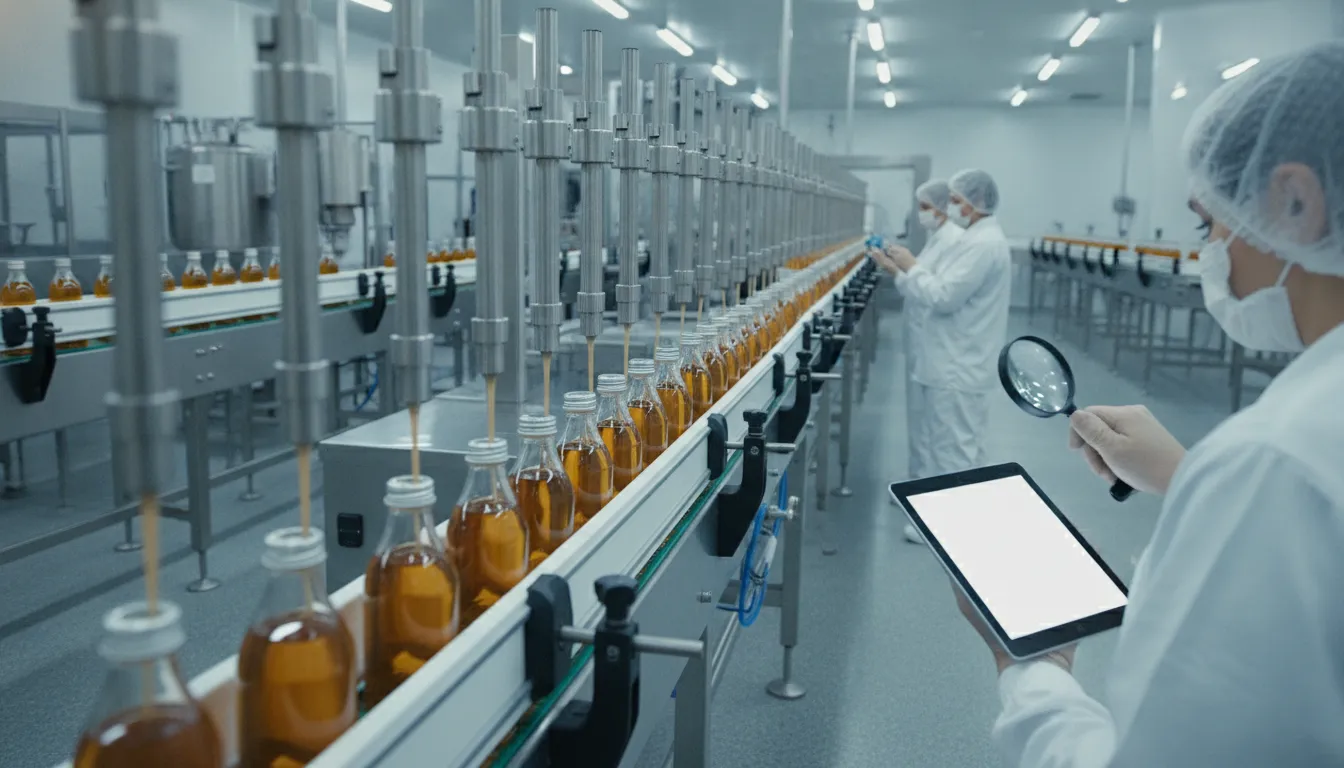
For a growing food brand, an MOQ is more than a number on a quote. It determines how much inventory you must fund, how quickly you can test demand, and whether a production partner fits your current stage.
A co-packing minimum order quantity is the smallest amount a co-packer will produce for one product in a single production run. Co-Packing Express starts at 100 gallons for liquid products and 400 pounds for dry products. Giving emerging brands a practical path to professional production without building their own facility.
That threshold reflects the real work behind each run, including line setup, sanitation, filling, packaging, and production scheduling. It also needs to be evaluated against your formula, packaging format, sales velocity, storage capacity, and expected retail demand. The right MOQ is not simply the lowest available quantity. It is the volume that supports efficient production without leaving your brand overstocked. The following sections explain what an MOQ includes, why co-packers set one, and how to determine whether a quoted minimum works for your business. For broader context, review our co-packing 101: the complete guide for food and beverage brands.
What Is a Minimum Order Quantity (MOQ) in Co-Packing?
A minimum order quantity, or MOQ, is the smallest quantity of a product a co-packer will produce during one production run. It is usually measured in units, gallons, or pounds, depending on the product and process. In practical terms, your co-packing minimum order quantity sets the starting volume for a run, not necessarily the total amount you must sell immediately.
Understanding how co-packing works makes the number easier to evaluate. A co-packer coordinates ingredients, production equipment, packaging, labor, quality checks, and cleanup. The MOQ reflects the volume needed to make that coordinated run operationally efficient.
Why do co-packers have minimum order quantities?
Every production run requires setup time, labor, equipment preparation, and cleanup. Those fixed activities can make a very small run inefficient or cost-prohibitive, even when the product itself is simple. MOQs help spread that preparation across enough finished product to keep the line productive and the project commercially viable. This setup and cleanup rationale is documented in the Oregon co-packing industry guide.
Facility capacity also matters. Equipment, floor space, staffing, and scheduling constraints influence the minimum volume a facility can handle efficiently. Automation can raise the practical MOQ because automated filling and packaging lines need significant throughput to operate profitably. A manual or small-batch line may accommodate a lower quantity, while a highly automated line may require a larger run.
What is the typical minimum order quantity for co-packing?
Most co-packers require a minimum volume ranging from hundreds to thousands of units for a production run. The exact figure depends on the product format, packaging, equipment, labor, sanitation requirements, and available capacity. Ask each potential partner whether its MOQ is based on units, liquid volume or ingredient weight, and confirm how setup fees, packaging materials, and allowable production variance are handled.
For an emerging brand, the right MOQ is not simply the lowest number available. It should align with forecasted demand, inventory space, cash flow, and the production method your product requires.
Why Co-Packers Set MOQs and How They Affect Your Cost Per Unit
A co-packing minimum order quantity is not simply a preference. It reflects the real time, labor, equipment, and space required to run your product efficiently. Before production starts, the co-packer must prepare the line, stage ingredients and packaging, calibrate equipment, and complete quality checks. Afterward, the line must be cleaned and reset. Those fixed activities can make a very small run uneconomical, even when the product itself is straightforward. The Oregon Co-Packing Roadmap identifies setup time and labor as key reasons small production quantities may not work financially for a co-packer: https://www.oregon.gov/odaroadmap/SiteCollectionImages/CoPacking%20in%20Oregon.pdf.
Fixed production costs are spread across the run
When the same setup cost is distributed across more finished units, the processing cost per unit generally falls. That is the basic economy behind higher MOQs. For example, a 100-gallon batch of BBQ sauce packaged in 12-ounce bottles may retail at approximately $7,000 for a retail-ready run. The meaningful question is not only the batch total. It is how many sellable bottles, cases, and customer orders that investment supports. A larger, well-planned run can reduce the share of setup and cleanup labor assigned to each unit.
Formula complexity can raise the minimum
Not every product requires the same production window. Complex formulas, allergen-sensitive ingredients, or products that leave difficult residues may require more extensive cleaning between runs. That increases setup time and raises the smallest batch size that makes economic sense. A co-packer evaluates the complete process, not just the number of bottles you want filled.
Look beyond the processing charge
Your total cost may include processing, packaging materials, warehouse handling, storage, and labeling services. A larger MOQ can lower the processing cost per unit while increasing the amount of inventory you must finance and store. Model both sides before committing. This co-packing cost breakdown can help you separate production costs from fulfillment and inventory expenses. For a broader framework, review co-packing 101: the complete guide for food and beverage brands.
What Low Co-Packing Minimum Order Quantities Look Like in Practice
A minimum order becomes easier to evaluate when you translate gallons or pounds into finished inventory. Co-Packing Express works with brands that need more than a test kitchen can handle, but are not ready to commit to the massive runs common at industrial facilities. Its starting points are 100 gallons for liquids and 400 pounds for dry products.
| Product type | Minimum input | Illustrative finished output | Planning example |
|---|---|---|---|
| Liquid sauce | 100 gallons | Hot sauce in 5-ounce bottles: approximately 2,400 bottles, or 200 cases | Useful for an initial retail, DTC, or Amazon launch without overloading storage |
| Liquid BBQ sauce | 100 gallons | Retail-ready BBQ sauce in 12-ounce bottles | Example project cost: approximately $7,000 |
| Dry product | 400 pounds | Final unit count depends on the formula, fill weight, and package size | Confirm the yield against your label size and sales forecast before ordering packaging |
Use the finished-unit estimate, not just the raw MOQ
The hot sauce example shows why packaging decisions matter. A 100-gallon run can represent 2,400 five-ounce bottles, giving a brand a meaningful launch quantity while keeping the commitment manageable. A 400-pound dry run needs the same analysis: a small pouch, shaker, or jar produces a different unit count. So your fill weight should be finalized before you calculate inventory, fulfillment space, and cash requirements.
Build a reasonable variance into your forecast. Co-packing agreements commonly allow a production tolerance of approximately plus or minus 10 percent because ingredient consistency and machine yields can vary. The underlying guidance describes this as standard practice in many agreements: review the source guidance on production tolerances. Confirm how that tolerance applies to your quoted run, invoice, and final shipped quantity.
Why capacity changes the meaning of a low MOQ
Low minimums do not necessarily mean slow or improvised production. Co-Packing Express reports capacity of up to 6,000 units per hour and schedules production 24/7/365. That combination lets a brand access a focused run while still working with a production partner built for commercial throughput. The company positions its 100-gallon liquid and 400-pound dry minimums as 10 to 100 times lower than many competitors. Which can reduce the risk of tying up capital in excess inventory.
To see how production, packaging, and fulfillment fit together, continue with Co-Packing 101: The Complete Guide for Food and Beverage Brands. When you are ready to map your formula, package size, and forecast to a practical run, review our co-packing services.
How to Negotiate MOQ as a Small Food Brand
Negotiating a co-packing minimum order quantity is less about asking a manufacturer to make an exception and more about reducing the risk of the first production run. A clear product brief, realistic volume forecast, and willingness to validate the process can create a practical path from small launch quantities to repeat production.
-
Start with a test batch
Ask whether a pilot or test batch can confirm the formula, packaging, yield, and production workflow before you commit to the full MOQ. Co-packers may require a test batch to verify that the process meets quality standards and can scale to projected volumes, according to the Oregon co-packing guide. At Co-Packing Express, test batches require an investment of $2,500-$3,000. Treat that cost as product validation, not as a substitute for the later production order.
-
Present a volume plan, not only an opening order
Show your expected sales channels, launch timing, reorder schedule, and inventory constraints. A co-packer can evaluate your request more accurately when it understands whether a smaller first run leads to dependable repeat orders. Include shelf-life and storage considerations so the proposed quantity matches what your business can sell and manage.
-
Ask which terms can move
The unit MOQ may be fixed, but other terms could be discussed. Ask about production timing, packaging supplied by the brand, ingredient purchasing, storage, partial releases, and the permitted production tolerance. A tolerance of plus or minus 10% is common because ingredient consistency and machine yields vary. Confirm how that range affects invoicing, finished inventory, and your customer commitments.
-
Use a stepping-stone facility when needed
If your current demand cannot support commercial production, a shared-use kitchen may help you build sales history and operational discipline before moving to a larger co-packer. Massachusetts identifies shared-use spaces as resources for food producers, and its co-packer directory illustrates how brands can evaluate options at different stages.
-
Compare the full commercial commitment
Before accepting a lower MOQ, compare the entire agreement, including setup, materials, storage, freight, testing, and payment terms. Co-Packing Express uses a 75% non-refundable deposit and 25% completion payment. Consulting is available at $300 per hour when you need help preparing specifications or evaluating co-packing partners. A structured review protects cash flow better than choosing the smallest headline quantity.
When to Scale Up Your MOQ Commitment
Increasing your minimum order quantity should follow demand, cash flow, and inventory readiness, not pressure to place the largest possible order. Many brands start with smaller quantities and grow alongside a co-packer as sales become more predictable. That progression gives you time to validate the product, understand replenishment patterns, and build an operating relationship before committing more working capital.
Look for repeatable demand before increasing volume
A higher MOQ makes sense when your sales history shows consistent reorder demand across several cycles. If customers are buying faster than your current production schedule can replenish, a larger run may reduce stockout risk. Review sales velocity, forecast accuracy, shelf life, available storage, and the cash required to fund production before changing your order size.
Economies of scale can also improve unit economics. As volume increases, fixed setup costs are spread across more units, which generally lowers the per-unit processing cost. Compare the savings against storage, handling, and the risk of holding inventory that may move slowly. The lowest quoted unit cost is not automatically the lowest total cost for your brand.
Use production capacity as a growth advantage
One benefit of outsourcing is the ability to scale production without investing in your own processing facility and equipment. Co-Packing Express can produce up to 6,000 units per hour, giving an established brand room to increase volume without building facility capacity from scratch. That capacity is most useful when paired with a realistic demand forecast and a production schedule agreed well before peak periods.
A strong co-packer relationship also helps both sides plan for seasonal demand. Share promotional calendars, retailer commitments, and expected volume changes early. Your partner can then help coordinate production windows, materials, and fulfillment requirements instead of reacting to an urgent shortage. For brands selling through Amazon, review your FBA-compliant fulfillment requirements as volume grows.
Scale in stages, not all at once
Consider increasing the MOQ when the next production tier is supported by confirmed demand, adequate storage, and enough cash to cover the run without disrupting operations. A staged approach preserves flexibility while still allowing you to capture better unit economics. For the broader planning framework, use this co-packing 101 guide to evaluate production, fulfillment, and partner fit together.
Discuss the next MOQ tier with your co-packer before demand forces the decision. The right increase should make your supply chain more efficient while keeping inventory risk under control.
Frequently Asked Questions
What is the typical minimum order quantity for co-packing?
There is no universal number. The MOQ depends on the product, packaging format, ingredients, equipment, and production schedule. For example, Co-Packing Express works with minimums of 100 gallons for liquid products and 400 pounds for dry products. Confirm whether a co-packer defines its MOQ by gallons, pounds, cases, units, or a specific production run before comparing proposals.
Can I find a low-MOQ co-packer for small-batch production?
Yes. Some co-packers serve growing brands with smaller production runs, although they can be harder to find than high-volume facilities. Ask about the smallest practical run for your formula, whether a test batch is available, and how the facility handles leftover ingredients or packaging. A test batch can help confirm that your process and product are ready before you commit to a full production schedule.
Why do co-packers have minimum order quantities?
Each production run requires line setup, ingredient preparation, labor, sanitation, quality checks, and cleanup. Those fixed activities can make very small runs inefficient or cost-prohibitive. Facility capacity and equipment limitations also influence the minimum scale a co-packer can run efficiently. The Oregon co-packing guidance identifies setup time, labor, and facility infrastructure as key MOQ drivers: Oregon co-packing guidance.
How do processing technologies affect minimum order quantities?
More complex processing or packaging can require specialized equipment, longer sanitation procedures, additional labor, or a minimum volume to keep the line efficient. Formula complexity matters too, especially when ingredients increase cleaning time between runs. Ask the co-packer to explain which part of your process sets the MOQ and whether changing the package size, formula workflow, or production schedule would create a more workable run.
Ready to Plan Your Co-Packing Run?
Schedule a consultation to discuss your co-packing MOQ needs with the Co-Packing Express team in St. Petersburg, FL. We can help you evaluate whether your liquid or dry product is ready for a production run. Clarify the preparation steps, and build a practical path toward scalable fulfillment. From concept to creation – we handle production, packaging, and fulfillment so you can grow without limits.