


How Much Does Co-Packing Cost? Pricing Breakdown and Examples

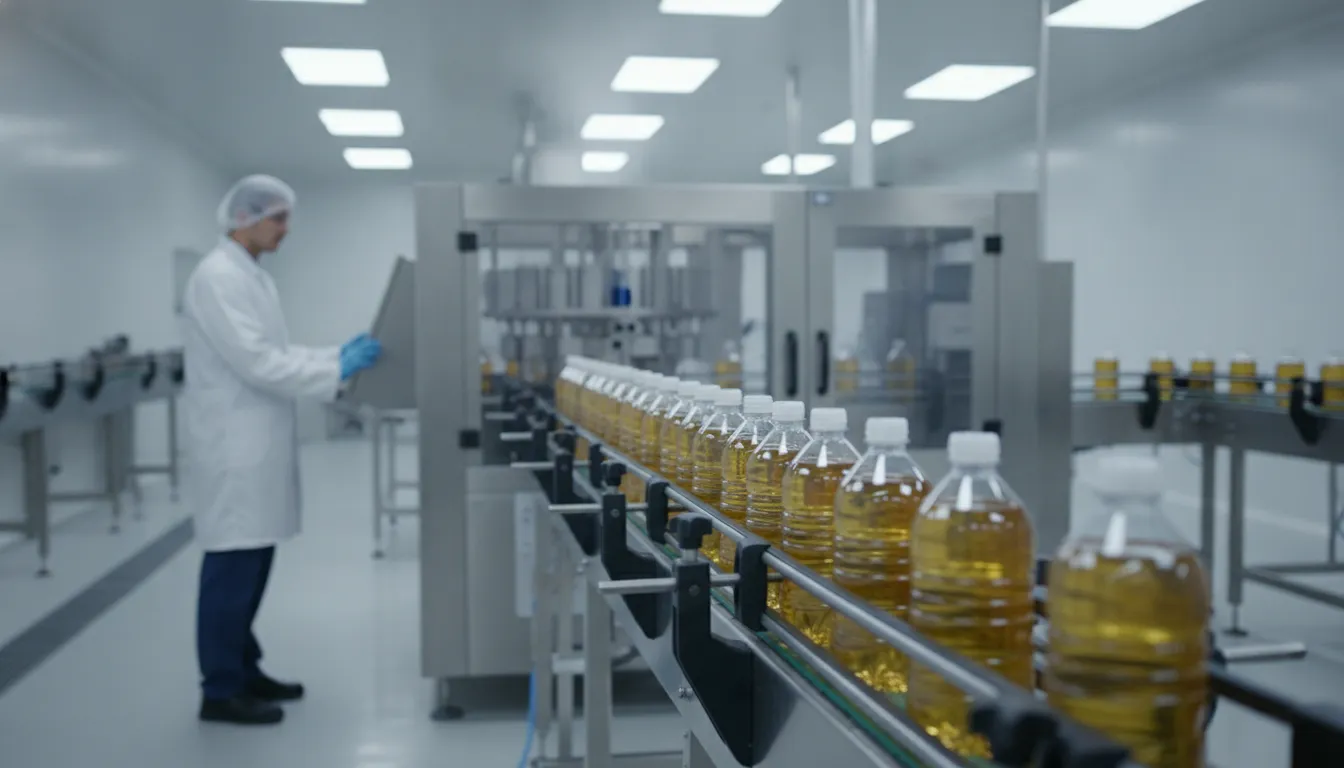
Co-packing costs are shaped less by a single per-unit rate than by your product, packaging, production volume, and required setup. A clear estimate should account for testing, ingredients, labor, packaging materials, line time, and fulfillment rather than hiding those costs inside a vague quote.
So, how much does co-packing cost? Co Packing Express charges $2,500-$3,000 for a test batch, with production pricing determined by the product and run requirements. Minimums are 100 gallons for liquids and 400 pounds for dry products, while consulting is $300 per hour.
Beyond the immediate invoice, working with a co-packer can reduce the capital required for facility construction and equipment purchases, as Penn State Extension explains. Reviewing how co-packing costs are structured will help you compare quotes with the full scope in view. The first step is understanding which project variables move the price.
How Much Does Co-packing Cost: What Factors Determine Co-Packing Costs?
Co-packing pricing is based on the work required to prepare, run, package, and complete your product, not on a single flat industry rate. A co-packer may provide food manufacturing, packaging, and labeling for a fee, allowing a brand to outsource production instead of building an entire operation in-house. How co-packing costs are structured depends on several practical variables:
- Product type: Liquids, dry products, and spices require different handling, blending, filling, and packaging processes. Viscosity, particle size, batch preparation, and sanitation requirements can all affect the time and resources needed for a production run.
- Packaging complexity: A straightforward bottle and cap generally involves fewer production steps than a package that requires a specialized bottle, multiple labels, a tamper-evident seal, or additional components. Bottle selection, labeling, capping, and case packing should be evaluated together because each step can affect labor and line setup.
- Labor intensity: The more hands-on work a product requires, the more labor contributes to the total. Manual assembly, frequent changeovers, detailed quality checks, kitting, and special handling can increase the time required per unit.
- Production volume: Larger runs can spread setup and line preparation across more units, which may improve the unit economics. Smaller projects still have to account for preparation, sanitation, and production time, even when the final quantity is limited.
Capital costs also shape the value of co-packing
The invoice is only one part of the financial comparison. Hiring a co-packer can reduce startup capital requirements by eliminating the need to construct a facility and purchase production equipment, according to Penn State Extension. It can also help a brand avoid taking on facility-related expenses before demand is established.
For planning purposes, Co Packing Express works with minimums of 100 gallons for liquids and 400 pounds for dry products. Test batches are priced at $2,500-$3,000, and consulting services are $300 per hour. These figures are useful starting points, but the final quote depends on your formula, packaging components, production quantity, and required services. Review the co-packing pricing factors for a project-specific view of the variables to discuss before requesting a quote.
Co-Packing Test Batch Pricing: What to Expect
At Co Packing Express, a test batch costs $2,500-$3,000. This price is non-negotiable because even a small run requires the same essential preparation, controls, and production coordination as a larger order. A test batch is not simply a few units pulled from a production line. It is a controlled way to evaluate your product before committing to full-scale manufacturing.
That approach reflects how many growing brands use co-packers. Penn State Extension reports that 34% of brands hire co-packers to test the market for a new product. Equal to the share that cite a lack of in-house product expertise. Read the source research from Penn State Extension.
What the test batch price covers
- Line setup: Production equipment must be prepared for your formula, package, and run requirements. Setup takes time whether the batch is large or small.
- Sanitation: The line and applicable production areas require cleaning and sanitation before the run. This protects product quality and supports consistent manufacturing practices.
- Ingredient procurement: Ingredients and packaging components must be sourced, received, and prepared for your specific batch. Small quantities do not eliminate those coordination steps.
- Small-batch line time: Your product still occupies labor and equipment capacity while it is blended, filled, packaged, or labeled. That production time has a real cost even when the finished quantity is limited.
- Quality assurance testing: The batch gives your team an opportunity to evaluate the product, packaging, and process before scaling. Findings can inform adjustments before a larger production commitment.
Why a test batch reduces production risk
The $2,500-$3,000 investment can reveal practical issues early, including formula behavior, packaging fit, fill performance, and process requirements. Correcting those issues at test-batch stage is generally less disruptive than discovering them after purchasing materials for a full run or reserving extensive production capacity.
For brands moving from development into commercial production, the test batch creates a clearer basis for planning quantities, timelines, packaging, and budget. It also lets the co-packing team assess how your product performs in a real manufacturing environment before both sides commit to the next stage.
Example: What a 100-Gallon Sauce Production Run Costs
A 100-gallon run is the minimum liquid order size for Co Packing Express, making it a practical starting point for a hot sauce or pasta sauce brand. The final quote depends on the recipe, fill size, bottle, cap, label, ingredient costs, and production requirements. The following example shows how the estimate is assembled, not a guaranteed price.
Illustrative cost categories
| Cost category | Estimated range | Notes |
|---|---|---|
| Line setup and sanitation | Flat fee included in run cost | Prepares equipment for your formula; same cost for small or large runs |
| Ingredients | Varies by formulation | Sauce base, vinegar, spices; supplier pricing affects total |
| Packaging (bottles, caps, labels) | $0.75-$1.25 per unit | Industry reference for multipack-style packaging; exact cost depends on specs |
| Production labor | Included in per-unit pricing | Batching, filling, labeling, quality checks; up to 6,000 units/hour capacity |
- Line setup and sanitation: The run includes preparation, equipment setup, and sanitation between products. Setup labor is a meaningful part of a small run because the line must be prepared whether the order is relatively small or much larger.
- Ingredients: The estimate accounts for the sauce base, vinegar, spices, and any other recipe-specific components. Ingredient prices vary with formulation, supplier, pack size, and whether the brand supplies approved materials.
- Packaging: Bottles, caps, labels, and case materials are priced separately from the formula. As a broad contract-packaging reference, multipacks and club packs may run $0.75-$1.25 per unit, while kitting and assembly may run $0.40-$0.60 per unit. Those figures describe secondary packaging work, so they should not be treated as a direct quote for filling and labeling a sauce.
- Production labor: Labor covers batching, filling, labeling, quality checks, and handling. Co Packing Express has a stated production capacity of up to 6,000 units per hour, but actual throughput depends on the container, fill volume, changeovers, and inspection requirements.
Packaging alone can therefore become a substantial line item. For example, packaging priced at $0.75-$1.25 per finished unit would total $750-$1,250 for 1,000 units, before ingredients, setup, labor, freight, or other services. The number of units produced from 100 gallons depends on the fill size, so a quote must confirm the planned bottle volume before calculating a per-unit cost.
Why the first run often costs more per unit
A first production run usually carries more fixed setup and coordination cost across fewer units. Recipe review, ingredient purchasing, packaging procurement, sanitation, and line preparation are not repeated in exactly the same way on every reorder. Once the formula and packaging specifications are established, repeat production can distribute those costs across a larger or more predictable run, often reducing the unit cost.
Production quantity is also subject to a stated tolerance of plus or minus 10%. So the final count and related materials should be planned with that range in mind. A detailed quote is the right way to determine how much does co-packing cost for a specific sauce, rather than applying a generic packaging benchmark.
Minimum Order Quantities and How They Affect Your Unit Cost
A minimum order quantity, or MOQ, is the smallest production volume a co-packer will run for a product. It is not an arbitrary barrier. The minimum must make the production line, sanitation process, ingredient purchasing, and quality checks commercially workable.
At Co Packing Express, the standard minimums are:
- Liquids: 100 gallons per production run.
- Dry products: 400 pounds per production run.
These thresholds help cover fixed work that occurs whether the line produces a small or large quantity. A liquid run may require line setup and sanitation before and after production. Dry products may require equipment preparation, blending, and ingredient purchases that suppliers sell only in minimum quantities. Those costs need to be allocated across the finished units.
Why larger runs usually reduce per-unit cost
Suppose a production run has $1,000 in combined setup and sanitation costs. Spread across 1,000 units, that fixed portion equals $1 per unit. Spread across 5,000 units, it equals $0.20 per unit. Materials, packaging, labor, and freight still affect the final quote, but a larger run gives fixed costs more units over which to spread.
This is the basic economy of scale behind MOQ planning. A brand ordering only slightly above the minimum may pay more per unit than a brand with enough demand to schedule a substantially larger run. That does not mean ordering excess inventory is always wise. Holding costs, shelf life, cash flow, and sales velocity matter too.
Planning the right MOQ for your growth stage
MOQs are especially important when a product is moving from a home kitchen or pilot concept toward commercial production. Co-packers can help brands make that transition toward mass production while the owner retains control of the product idea, as explained by Oklahoma State University Extension. Start with a demand forecast, then compare the cost per unit at the minimum and at larger volume tiers.
For Amazon sellers, managing co-packing production budgets also means coordinating the MOQ with storage, replenishment timing, and available working capital. A clear volume plan helps you avoid paying for unnecessary inventory while still capturing the savings available from a well-sized production run.
Co-Packing Payment Structure: Deposits and Final Balances
A clear payment schedule helps brands understand where their co-packing budget goes before production begins. Co Packing Express uses a straightforward structure that separates the initial production commitment from the final balance, giving both sides a defined financial plan.
Why the deposit is required
The deposit funds the work that must happen before a production line can run. It supports raw material procurement and ingredient purchasing, while also allowing the facility to reserve line time for the scheduled project. Once ingredients, packaging components, labor, and production capacity are committed, a last-minute cancellation can create costs that cannot easily be recovered. The non-refundable deposit protects that investment and keeps scheduling predictable.
This approach is especially important for emerging brands that are moving from small-batch development into repeatable commercial production. Instead of treating the deposit as an unexplained upfront charge, a reputable co-packer should explain which operational commitments it covers and when the remaining balance becomes due.
How the final balance reflects production tolerance
Production runs can vary slightly from the planned quantity. Co Packing Express works with a production tolerance of plus or minus 10%. The final invoice reflects the completed run within that agreed tolerance. So the balance is reconciled against actual production rather than an assumption that every run will land at an identical unit count. Confirm the expected quantity, packaging scope, and invoicing basis in the project quote before approving production.
For brands evaluating co-packing services, transparent terms are a practical trust signal. The same applies to consulting: consulting services are billed at $300 per hour. Making it important to distinguish advisory work from the costs of ingredients, packaging, line time, and fulfillment. A detailed quote should make those categories clear so you can compare providers on more than a headline price.
Frequently Asked Questions
What are the typical pricing factors for food co-packing?
Pricing usually depends on the product format, ingredient requirements, packaging complexity, production volume, labor, and fulfillment needs. Liquids, spices, and powders can require different equipment, setup, sanitation, and packaging materials. A co-packer may provide manufacturing, packaging, and labeling for a fee, which can reduce the need to purchase a facility or production equipment. Penn State Extension explains the co-packer service model.
How much do test batches cost for co-packing?
At Co Packing Express, test batches cost $2,500 to $3,000. This price is non-negotiable and covers the controlled work needed to prepare and evaluate a production-ready batch before a larger run. A test batch can help confirm the formula, process, packaging, and expected production requirements before you commit to full-scale manufacturing.
Do co-packing services have minimum order quantities?
Yes. Co Packing Express typically requires a minimum of 100 gallons for liquid products or 400 pounds for dry products. Minimums help make setup, sanitation, ingredient handling, and line scheduling practical. Larger runs may also improve the per-unit economics by spreading fixed production costs across more finished units.
What is the standard payment structure in the co-packing industry?
Co Packing Express requires a 75% non-refundable deposit, with the remaining 25% due upon completion. The deposit supports ingredient procurement, production planning, and line scheduling. Consulting services are billed at $300 per hour. Confirm the final scope, quantities, and payment terms in your project quote before production begins.
Are there additional costs beyond the per-unit co-packing price?
Potential additional costs can include consulting, ingredients, packaging components, labels, storage, fulfillment, and special setup requirements. Ask for these items to be listed separately in the quote so you can compare the full project cost rather than only the manufacturing line item. Production quantities may vary by plus or minus 10%.
Ready to Get Your Co-Packing Quote?
Clear project details make it easier to discuss your product, packaging needs, and expected production volume. Contact us to review your requirements and get practical guidance for planning the next step. Contact Co Packing Express for a free consultation and quote.