


Co-Packing for Amazon FBA: Scale Without a Factory

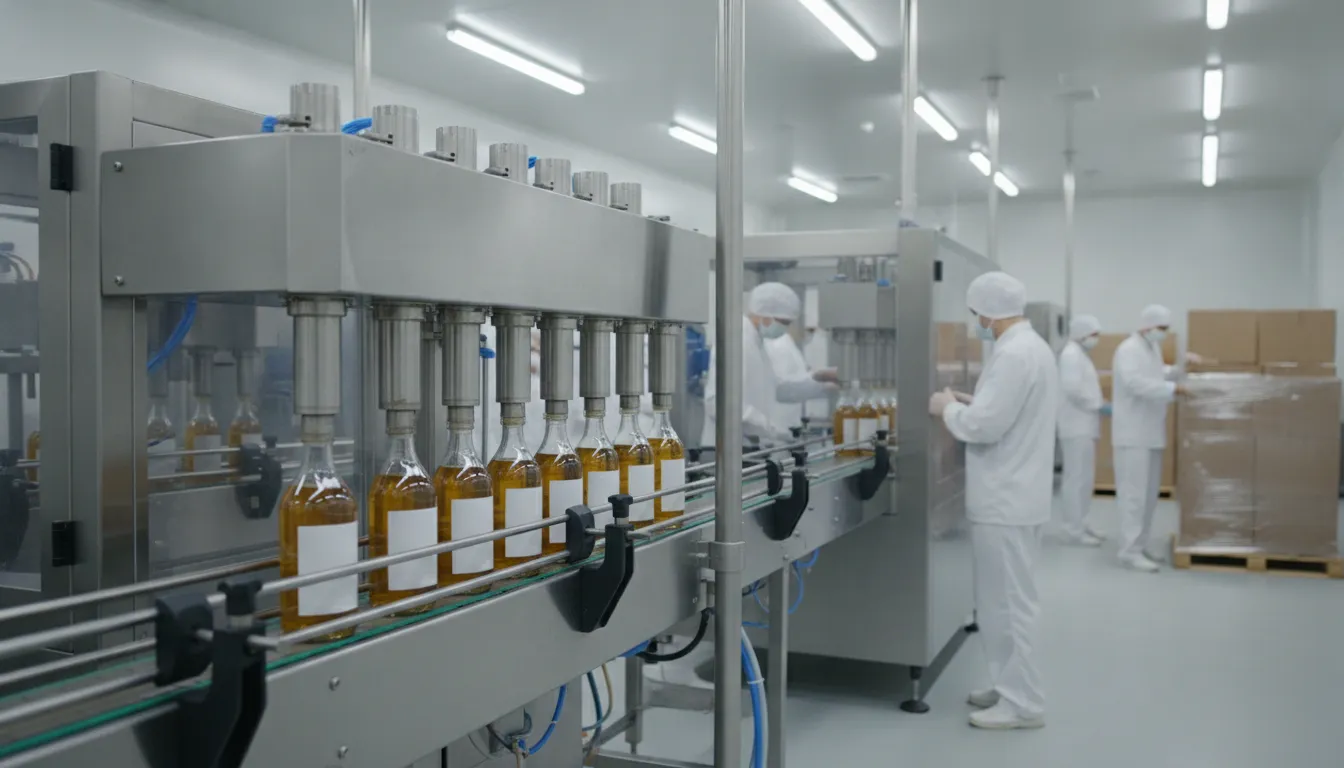
For an Amazon food brand, growth can stall long before demand does. Filling bottles, applying labels, assembling cases, and preparing every shipment in-house can turn the founder into the production line. While Amazon still expects inventory to arrive with the correct packaging, labels, and shipping preparation.
Co-packing for amazon fba lets sellers scale production without building or staffing their own factory. A qualified partner can manufacture, package, apply the required seller or product barcodes. And prepare finished inventory for the next step in the fulfillment process, so the brand team can focus on demand, merchandising, and expansion.
That model is different from simply handing off labor. It creates a repeatable operating system for moving from small-batch production to larger runs while keeping Amazon requirements in view.
Amazon routes fulfillment through a defined sequence: inventory is received at a fulfillment center, shelved, and then shipped to the customer. When preparation is done correctly, that sequence runs smoothly. When packaging, labeling, or barcoding is wrong, inventory can be refused or incur fees. A co-packer that knows the FBA requirements removes that risk before the container ever leaves the facility.
This Amazon FBA and private label food manufacturing playbook covers the broader framework; here, the focus is the practical path from manual fulfillment to factory-free scale. The sections ahead explain why sellers choose co-packing, what an FBA-compliant setup requires. The labeling and prep your partner handles, how to vet a provider, and what 1,000 units truly cost.
Contact Co Packing Express to review the FBA compliance standards your product requires.
Why Sellers Choose Co-Packing for Amazon FBA Instead of Self-Fulfilling
Early growth often makes in-house fulfillment feel practical. Owners mix, bottle, label, pack, and ship each order themselves.
That model changes when demand becomes consistent. Manual production can turn the founder into the slowest part of the supply chain.
Move beyond the hand-bottling ceiling
Hand-labeling and bottling are manageable for early test sales. They become a daily production constraint when purchase orders and marketplace demand increase.
One documented food-business example describes mixing spice blends by hand, bottling them, labeling them, and writing on each package. The process was highly manual and labor-intensive.
Outsourcing those steps gives the brand a repeatable production workflow. It also reduces the risk that every sales increase creates another block of owner-managed labor.
A co-packer can coordinate batching, filling, labeling, and packing within a defined process. That structure helps sellers plan inventory instead of reacting to each order.
Give the owner time to grow the brand
Production work competes directly with the activities that grow an Amazon business. Owners need time for product strategy, listing improvements, advertising, customer research, and retail expansion.
Co-packers handle labor-intensive manufacturing so business owners can focus on growth and strategy. This is especially important for food brands scaling beyond early founder-led operations.
Amazon FBA adds another operational layer. Products must meet specific packaging, labeling, and shipping requirements before reaching a fulfillment center.
Amazon states that FBA prep covers those requirements, and noncompliant inventory can face fees or refusal. A defined prep workflow reduces the chance that production and marketplace requirements are managed separately.
For sellers comparing Amazon FBA and private label food manufacturing playbook options, the key question is not simply who can make the product. It is who can make, prepare, and release it consistently.
Improve the path from production to shipment
Self-fulfillment can add avoidable handling between finished goods and the customer. The owner may need to move inventory, prepare cartons, apply labels, and arrange outbound shipments personally.
Professional co-packing services can shorten shipping times by using established facility networks. One industry provider reports average reductions of two to three days.
That speed matters when replenishment timing affects marketplace availability. Faster movement also gives sellers more flexibility when planning inventory for FBA or FBM orders.
Co-packing for Amazon FBA is therefore an operating decision, not only a manufacturing decision. It replaces improvised manual work with a production and prep system built for repeatable volume.
What an FBA-Compliant Co-Packing Setup Looks Like
A dependable setup connects food production, quality controls, packaging, labeling, and fulfillment preparation in one operating system. The goal is not simply to fill containers. It is to produce consistent inventory that can move from the facility to Amazon or your own fulfillment channel without avoidable compliance issues.
Co-Packing Express operates from St. Petersburg, Florida, with national service capability for Amazon FBA and FBM sellers. Its facility is FDA compliant and HACCP compliant, giving growing brands a structured production environment for liquids and spices. The operating model is designed for businesses that need professional capacity without building and staffing a private factory.
Compliance built into production
Food production should follow documented processes rather than depend on informal handoffs. A serious co-packing operation accounts for sanitation, ingredient handling, batch controls, packaging specifications, and finished-product checks. For applicable food products, the setup should align with FDA 21 CFR Part 117 requirements and maintain clear records throughout production.
That foundation matters because Amazon compliance begins before inventory reaches a fulfillment center. Amazon requires products to meet specific packaging, labeling, and shipping requirements before shipment. Poor preparation can create delays, added work, or rejected inventory. A facility that combines manufacturing with FBA prep can address these requirements while the product is still under controlled supervision.
Co-Packing Express specializes in prep services, labeling, and logistical requirements for Amazon sellers. Review the details of its FBA and FBM compliant manufacturing services when evaluating whether your current process covers both sales channels.
Capacity with defined production expectations
Capacity must be measurable. Co-Packing Express can produce up to 6,000 units per hour for its co-packing services, supporting brands that have outgrown manual bottling, filling, or packing. That throughput can help sellers plan purchase orders and replenishment around a repeatable production schedule.
Volume alone is not enough. Production expectations should also be documented before a run begins. Co-Packing Express works with a production tolerance of plus or minus 10%. That range should be included in inventory planning, purchase-order forecasting, and cash-flow decisions so your team understands the expected finished quantity.
One roof for FBA and FBM fulfillment preparation
FBA and FBM may use different fulfillment paths, but both depend on accurate product information, durable packaging, and consistent labeling. Keeping those steps with the manufacturing partner reduces the risk of disconnected instructions between a producer, prep warehouse, and fulfillment team.
The appropriate scope depends on the product. Co-Packing Express focuses on liquids and dry products such as spices. Its service scope excludes frozen and refrigerated products, meat, poultry, fish, potable alcohol, and tin cans. Confirm product specifications, packaging format, and order quantities early, including the minimums of 100 gallons for liquids and 400 pounds for dry products.
FNSKU Labeling, ASIN Configuration, and Prep Requirements Your Co-Packer Handles
Amazon fulfillment begins before inventory reaches an FBA warehouse. Each sellable unit needs the correct scannable barcode, product configuration, packaging, and shipping preparation.
Amazon uses barcodes to identify inventory, track movement, and attribute each sale to the correct seller. Depending on the product and account setup, that barcode may be a manufacturer UPC or EAN, or an Amazon-specific barcode.
Barcode selection and FNSKU labeling
Consumable and topical products commonly require Amazon barcodes rather than manufacturer barcodes. This requirement can also apply to restricted products, dangerous goods, and products without eligible brand registration.
An FNSKU identifies a specific seller’s offer and connects the physical unit to its Amazon listing. Your co-packer can review the assigned FNSKU, confirm its placement, and apply labels consistently across the production run.
That review matters when a product has several flavors, sizes, bundle configurations, or seller-specific offers. A label mismatch can send inventory into the wrong listing or interfere with accurate sales attribution.
The operational workflow should begin with the correct ASIN and SKU configuration. Before production, confirm the product identity, variation structure, pack count, expiration information, and barcode assignment in Seller Central.
ASIN configuration and FBA prep
Your co-packer can align production specifications with the FBA shipment plan. That includes unit packaging, case quantities, carton labels, protective materials, and preparation for products that could leak, break, or become loose during transit.
FBA prep exists to meet Amazon’s packaging, labeling, and shipping requirements before inventory reaches a fulfillment center. Amazon’s guidance explains that sellers must follow product-specific preparation instructions and secure loose items.
Proper prep reduces the risk of refused inventory, rework, relabeling charges, receiving delays, and stranded stock. It also gives your team a documented handoff between manufacturing, shipment creation, and fulfillment.
For brands outsourcing production, these controls belong inside the manufacturing workflow, not as a last-minute warehouse task. Co-Packing Express provides packaging and assembly services alongside labeling and fulfillment preparation.
Transparency and the fulfillment handoff
If your brand uses Amazon Transparency, item-level authentication codes must be applied to individual units. These codes help protect brands and customers from counterfeit products.
Transparency labels feature a specific T logo. They must not cover another label or be covered by another label, so placement requires a controlled packaging step.
Once prepared, inventory moves through a straightforward fulfillment path. Amazon receives the shipment, unpacks and shelves the units, then ships orders to customers.
Improper preparation can interrupt that path before products become available for sale. A co-packer that manages FNSKU labeling, ASIN-specific configuration, and prep requirements helps protect the inventory investment behind each shipment.
Amazon’s packaging and labeling guidance provides the current requirements for FBA sellers: FBA packaging, prep, and labeling guidance.
How to Find a Co-Packer That Specializes in Amazon FBA Compliance
The right partner for co-packing for Amazon FBA should understand production, food safety, labeling, prep, and fulfillment requirements as one connected operation.
Start with a structured qualification call. Ask the co-packer to explain how its facility protects product quality while preparing inventory for Amazon or FBM orders.
Verify FDA and HACCP compliance
Ask for current documentation showing that the facility is FDA compliant and HACCP compliant. Confirm which facility will manufacture, package, and store your products.
Do not accept vague statements about general industry standards. Your partner should explain its quality controls, production records, lot tracking, and process for addressing deviations.
Co-Packing Express operates from St. Petersburg, Florida, with a facility described as FDA compliant and HACCP compliant. That provides a concrete starting point for diligence.
Confirm Amazon-specific operating experience
Ask whether the team handles FBA and FBM requirements directly, rather than sending labeling or prep work to an unknown third party.
Questions should cover FNSKU application, product-specific packaging, shipping cartons, inventory preparation, and coordination with Amazon fulfillment requirements.
Amazon requires products to meet packaging, labeling, and shipping requirements before they reach a fulfillment center. Noncompliant preparation can result in fees or refused inventory.
Request a sample workflow from finished product through shipment. The answer should identify who reviews specifications, applies labels, checks finished units, and releases each shipment.
Co-Packing Express identifies prep services, labeling, and logistical requirements for Amazon sellers as part of its FBA and FBM focus. Review our co-packing process to understand the proposed handoffs.
Match minimums, capacity, and business stage
Minimum order quantities should fit your product economics and launch plan. Co-Packing Express lists minimums of 100 gallons for liquids and 400 pounds for dry products.
Ask how those minimums apply to flavor variations, package sizes, test runs, and repeat orders. A clear answer prevents surprises after formulation or packaging decisions are complete.
Also discuss throughput and production tolerances. Co-Packing Express reports capacity of 6,000 units per hour and a production tolerance of plus or minus 10 percent.
For sellers generating $1 million to $10 million annually, ask how the partner supports growth without creating a bottleneck. Request realistic lead times and capacity assumptions.
Protect your formulation and identify red flags
Before sharing a proprietary recipe, ask for a mutual NDA or the provider’s confidentiality agreement. Confirm who owns the formulation, specifications, test results, and approved revisions.
Clarify whether subcontractors, ingredient suppliers, or storage partners can access confidential information. Those responsibilities should be documented before development work begins.
Red flags include unclear compliance documentation, no Amazon-specific workflow, minimums presented only after quoting, resistance to confidentiality terms, or promises without written specifications.
Choose the co-packer that answers operational questions precisely. A partner that documents requirements early is more likely to protect your inventory, timeline, and brand reputation.
Cost Breakdown: Co-Packing and FBA Prep for a 1,000-Unit Food SKU
A 1,000-unit food SKU is large enough to expose the true cost of self-fulfillment, but small enough to require disciplined planning. The right comparison is not simply a per-unit quote. It is the total cost of equipment, labor, compliance, preparation, storage, and operational risk.
| Cost driver | Co-packing partner | Build or self-fulfill in-house |
|---|---|---|
| Equipment | Use existing production, filling, labeling, and packing equipment. This avoids purchasing machinery for a single SKU or early production run. | Purchase, lease, maintain, and eventually replace equipment. The investment may remain underused when demand changes. |
| Labor | Convert repetitive batching, filling, labeling, and case-packing work into a contracted production cost. | Pay employees or temporary labor to complete manual work. Hand-bottling and hand-labeling can consume substantial owner and staff time. |
| Compliance | Work with a facility that follows FDA compliant and HACCP compliant processes. Co-Packing Express also supports FBA and FBM preparation requirements. | Carry responsibility for procedures, documentation, food safety controls, and correcting noncompliant inventory before shipment. |
| Labeling and FBA prep | Coordinate product labels, Amazon barcodes, case preparation, and shipment readiness through one operating partner. Amazon requires scannable barcodes for inventory tracking. | Manage barcode decisions, label placement, packaging instructions, carton preparation, and shipment creation internally. Errors can delay receiving or create avoidable rework. |
| Warehousing | Use partner production and fulfillment workflows instead of adding dedicated space immediately. Confirm storage and outbound requirements during quoting. | Add warehouse rent, utilities, shelving, insurance, material handling, and labor capacity as inventory grows. |
| Scalability | Access established capacity without building a factory. Co-Packing Express reports capacity of 6,000 units per hour, subject to product and scheduling requirements. | Scale by adding shifts, equipment, floor space, supervisors, and quality controls. Each increase creates another fixed operating commitment. |
For a first production run, separate development costs from recurring production costs. Co-Packing Express lists consulting at $300 per hour and test batches at $2,500 to $3,000. These are planning inputs, not a per-unit price for the finished SKU.
Payment timing also affects working capital. The stated structure is a 75% non-refundable deposit, followed by a 25% completion payment. Confirm what the quote includes, such as ingredients, packaging, labeling, FBA prep, storage, freight, and applicable setup work.
Finally, check whether the planned 1,000 units meet the product’s minimum order quantity. Co-Packing Express lists minimums of 100 gallons for liquids and 400 pounds for dry products. A practical quote should map the SKU’s formula, package size, batch yield, and expected production tolerance before comparing alternatives.
For an accurate comparison, request a line-item scope rather than relying on an assumed per-unit rate. That approach shows whether in-house fulfillment is genuinely cheaper or merely shifts labor, equipment, and compliance costs onto your team.
Scale Without a Factory: Build Your Amazon Brand With a Co-Packer
Building an Amazon food brand does not require buying production equipment, leasing a factory, or managing every batch yourself. A qualified co-packer gives you access to production infrastructure while you concentrate on demand, merchandising, and customer growth.
That model turns manufacturing into a growth lever. Instead of spending each week mixing, filling, labeling, and coordinating shipments, your team can improve the product, expand the catalog, and make better inventory decisions. Co-packers handle labor-intensive production processes so owners can spend more time scaling the business, a pattern documented by Forbes.
For a practical overview, review what co-packing is before comparing providers. The right partner should fit your product, order volume, packaging requirements, and Amazon operating model.
Use production capacity without carrying factory overhead
Co-Packing Express supports sellers in the $1 million to $10 million annual revenue range. This is the stage where demand may be established, but owning a facility can still create unnecessary fixed costs and operational risk.
Co-Packing Express offers a production capacity of 6,000 units per hour for its co-packing services. That capacity gives a growing brand room to plan larger production runs without rebuilding its own operation every time sales increase.
Minimum order quantities also matter. Co-Packing Express accepts liquid products starting at 100 gallons and dry products starting at 400 pounds. Those thresholds can provide a more practical bridge between small-batch testing and factory-scale commitments.
Make Florida production part of a national growth plan
Co-Packing Express is based in St. Petersburg, Florida, and serves businesses building brands for broader markets. A Florida-based production partner can support a national sales strategy without requiring your company to relocate its team or construct a manufacturing site.
Geography is only one part of the decision. Evaluate how the partner manages production planning, packaging coordination, fulfillment preparation, and communication as your volume changes. The objective is a repeatable operating system that keeps products moving toward Amazon fulfillment.
Every batch should also remain aligned with documented specifications. Co-Packing Express states a production tolerance of plus or minus 10%, which gives sellers a concrete standard to discuss during planning and quality reviews.
Before choosing a provider, map your next growth stage: expected monthly units, product formats, packaging needs, target launch dates, and inventory destinations. Then compare those requirements against the partner’s capabilities and minimums.
For a deeper operating framework, use this Amazon FBA and private label food manufacturing playbook. A co-packer should not simply take orders. The strongest relationship helps you build reliable production capacity around the commercial plan for your Amazon brand.
Contact Co Packing Express to review the FBA compliance standards your product requires.
Frequently Asked Questions
What are the packaging requirements for Amazon FBA?
Products must arrive at Amazon fulfillment centers with secure packaging, accurate labels, and scannable barcodes. Amazon may require a manufacturer barcode or an Amazon-specific barcode, such as an FNSKU, depending on the product and seller setup. Consumable products may require Amazon barcodes. Review Amazon’s packaging, prep, and labeling guidance for the current requirements before production.
Is FBA still profitable in 2026?
Profitability depends on your product margin after manufacturing, packaging, prep, referral fees, fulfillment, storage, advertising, and returns. A co-packer can help you model those costs before a larger run. But the decision should be based on your SKU’s actual contribution margin and reorder volume, not sales growth alone.
What are the biggest FBA mistakes to avoid?
The most expensive mistakes are sending inventory with the wrong barcode, overlooking product-specific prep rules. Using packaging that fails fulfillment requirements, and ordering more units than your demand supports. Confirm the ASIN, FNSKU assignment, carton configuration, labeling location, and shipment plan before the production run begins.
Does Amazon still use commingled inventory?
Amazon’s barcode and inventory settings determine how units are identified and attributed. Do not assume that inventory will be commingled or that a manufacturer barcode is sufficient. Confirm the current requirements for your ASIN in Seller Central and use the assigned Amazon barcode when required, so each sale is attributed to the correct seller.
Scale Your Amazon FBA Brand With a Partner Who Already Knows the Rules
You do not have to own a factory, hire a production crew, or master Amazon’s labeling rules to grow. A focused co-packing partner brings the equipment, the FDA and HACCP compliant facility. And the FBA and FBM prep experience that turns a good product into a dependable listing.
Co-Packing Express helps Amazon sellers in the $1M to $10M range scale without a factory. With a 6,000-unit-per-hour line for liquids and spices, low minimum order quantities, and a team that prepares. Labels, and ships to Amazon’s standards, the heavy lifting is handled before inventory ever reaches a fulfillment center.
One thought on “Co-Packing for Amazon FBA: Scale Without a Factory”