


Co-Packing Packaging and Assembly Services for Food Brands

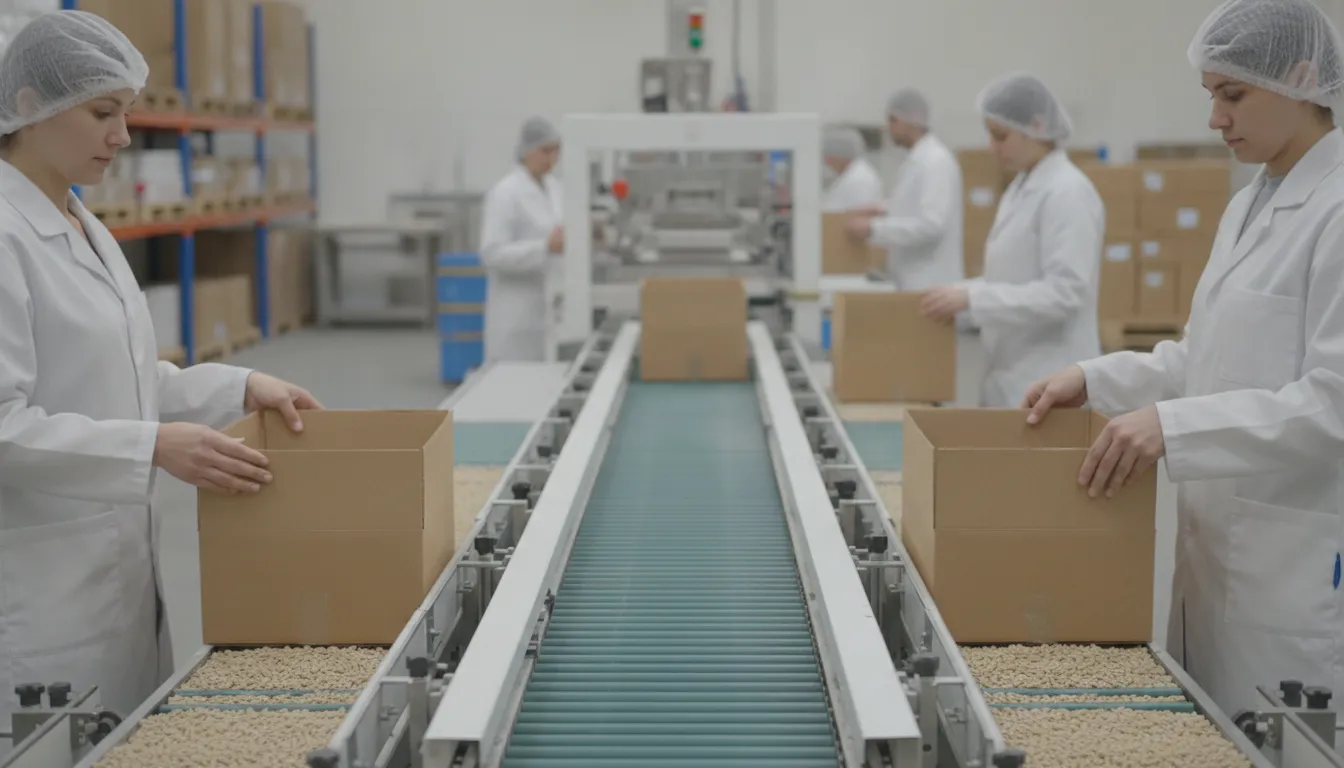
For a food brand, packaging is not the last task after production. It is the point where product safety, labeling, presentation, and fulfillment readiness must come together without slowing your launch or overloading your internal team.
Talk to a food co-packer about your packaging and assembly needs.
Co-packing packaging and assembly services can cover filling, bottling, labeling, bundling, kitting, cartoning, shrink wrapping, and other steps that turn a finished food product into a consistent, shelf-ready unit. The right partner can also help coordinate FDA compliant labeling and HACCP compliant production practices.
Outsourcing these steps gives growing brands a practical way to move from small-batch production toward commercial volume without investing immediately in specialized equipment, labor, and facility space. Co Packing Express supports food brands in Florida with liquids and spices, including production capacity of up to 5,000+ units per hour. For a broader foundation, review this co-packing services guide. Next, the specific tasks included in a food co-packer’s packaging workflow deserve a closer look.
What packaging and assembly services include in food co-packing
Food co-packing packaging and assembly services turn a finished product into a consistent, shelf-ready unit that can move into distribution or fulfillment. Depending on the product and packaging format, the work may include:
- Filling and bottling: portioning liquids, powders, or other food products into the selected container.
- Sealing: applying caps, heat seals, films, or other closures to protect product integrity.
- Labeling: applying product labels or relabeling existing units with the required information.
- Cartoning: placing individual units into cartons for retail, wholesale, or e-commerce distribution.
- Shrink wrapping: securing products or multipacks with protective film.
- Bundling: combining multiple items into variety packs or promotional groupings.
- Kitting: assembling several components or SKUs into one coordinated package.
- POP display assembly: building point-of-purchase displays for retail placement.
These capabilities are commonly presented across contract packaging operations, including bottle and pouch filling, secondary packaging, shrink wrapping, cartoning, kitting, bundling, and point-of-purchase display building. The right combination depends on the product, container, sales channel, order configuration, and how the finished unit must arrive at a retailer or fulfillment center.
Packaging is part of food safety and compliance
Packaging is not simply an appearance decision. The University of Maryland Extension explains that processed or value-added foods must be manufactured in a licensed commercial kitchen and follow applicable federal and state food preparation requirements. The same guidance identifies working knowledge of Good Manufacturing Practices and the Hazard Analysis Critical Control Point system as essential for commercial food processing businesses. Read the food processing guidance for the underlying requirements.
Final assembly also connects directly to labeling. Product development includes packaging, labeling, and Food and Drug Administration regulations. The physical application of labels should be reviewed as part of the production process rather than treated as an afterthought. A co-packer should be able to define what it handles, what the brand must supply, and which checks occur before release.
For a broader overview of production, packaging, and fulfillment decisions, review our co-packing 101 guide. It can help you prepare the product specifications, packaging components, and assembly requirements needed for an accurate project discussion.
Shelf-ready packaging: what retailers and Amazon require
Shelf-ready packaging (SRP), also called retail-ready packaging, is designed to move from receiving dock to sales floor with minimal handling. Instead of opening individual cases and arranging each unit by hand. A retailer can place the display carton or tray directly on the shelf, remove the outer layer, and begin selling. That design reduces stocking labor, limits handling, and helps stores replenish products faster.
Effective SRP starts with the case, tray, or display format, but it does not end there. The package must protect the product during transport, open cleanly, remain stable on the shelf, and present the brand consistently. A co-packer may support secondary packaging, cartoning, shrink wrapping, labeling, bundling, and point-of-purchase display building. These capabilities are common across contract packaging providers, but the correct combination depends on the product, retailer instructions, case dimensions, and distribution process.
Retail-ready details that prevent receiving and stocking problems
Before production, confirm how retailers want cases labeled, opened, stacked, and replenished. Check tear-away perforations, display orientation, case counts, pallet patterns, and whether shelf-facing artwork must remain visible after the outer carton is removed. A package that looks attractive but is difficult to open or unstable in a retail environment can create extra labor and damage the customer experience.
Food safety remains part of the packaging decision. Processed or value-added foods should be manufactured in a licensed commercial kitchen, and working knowledge of GMPs and HACCP is essential for commercial food processing. Shelf-life testing and pathogen control also matter because packaging must help preserve product quality throughout its intended distribution period. University of Maryland Extension guidance identifies these considerations as important in developing and commercializing food products.
Amazon FBA units must be ready to ship
Amazon FBA preparation adds a separate layer of operational detail. Each sellable unit should arrive ready for fulfillment, with the required barcode clearly scannable, packaging sealed appropriately, and any multi-unit bundle assembled as one compliant offer. Loose components, exposed product, unreadable labels, or bundles that separate in transit can create receiving delays, relabeling work, or inventory problems. Confirm the current FBA requirements for your category, product type, barcode method, and bundle configuration before the production run.
Co Packing Express can coordinate the packaging and assembly work needed for retail and marketplace channels. Review the FBA and FBM compliant services or explore the broader packaging and assembly services available for your product format.
Kitting and multi-SKU bundle assembly for food brands
Kitting combines multiple products or packaging components into one finished retail or promotional package. Instead of shipping separate units for a retailer, marketplace, or campaign. A co-packer assembles the required items into a defined kit, verifies the configuration, and prepares it for distribution. For a food brand, that may mean grouping several spice blends into a variety pack. Pairing a liquid product with a companion item, or building a shelf-ready display containing multiple SKUs.
What kitting looks like in practice
Bundle assembly starts with a clear bill of materials and pack-out specification. The team identifies which SKUs belong in each bundle, the quantity of each item, the outer packaging, labels, inserts, and any protective materials. Operators then stage the components, assemble the kits consistently, and apply the required labels or shrink wrap. They then perform a final count and visual check before the order moves to fulfillment.
Common configurations include variety packs, promotional multipacks, sampler sets, subscription boxes, and retail display builds. The service menu offered by Dynamic3PL, for example, lists variety packs and bundling, shrink wrapping, secondary packaging, point-of-purchase display building, cartoning, and kitting and assembly. WestRock similarly identifies display design and assembly, packaging kitting, co-packing, and automated packaging among its capabilities, illustrating how assembly can extend beyond simply placing products in a carton.
For food brands, the assembly process must also protect product integrity. Components should be handled under documented procedures, with packaging and labeling requirements reviewed before production. A licensed commercial kitchen is required for processed or value-added foods. Working knowledge of Good Manufacturing Practices and HACCP is essential for commercial food processing businesses, according to the University of Maryland Extension guidance. Review the food processing guidance when developing a new kit or promotional format.
When bundle assembly pays off
Kitting can help a brand introduce a new concept or extend its product line without building a separate assembly area, purchasing specialized equipment, or adding permanent labor. Outsourcing the work can reduce in-house capital expenditure and labor demands while giving the brand a practical way to test a variety pack or seasonal promotion. It also keeps the founder’s team focused on sales, product development, and channel growth rather than repetitive manual pack-out.
When evaluating packaging and assembly services, provide the proposed SKU list, bundle configuration, expected volumes, packaging materials, labeling requirements, and destination channels. That information allows the co-packer to confirm the workflow, identify component constraints, and build a repeatable assembly process for the next production run.
How co-packers handle labeling compliance during final assembly
Final assembly is the point where the product, container, closure, and label become one finished unit. That makes it a critical control point for preventing packaging errors before cases are sealed and shipped. A co-packer should verify that the label applied to each SKU matches the product inside and presents the required information clearly and consistently. Packaging, labeling, and FDA regulations are part of product development and commercial food processing, not an afterthought. University of Maryland Extension guidance identifies packaging and labeling support as part of bringing a food product to market.
Labeling checks built into the assembly line
Before production begins, the assembly team confirms the current label version, product identity, and packaging specifications. During the run, operators check that the ingredient statement reflects the formula being produced, nutrition facts correspond to the product, and required allergen declarations are present when applicable. They also verify the net weight statement and inspect label placement, readability, adhesion, and orientation.
These checks help catch common but costly failures, such as a label from a related SKU being loaded onto the line. A packaging change not reflected in the artwork, or a net quantity statement that does not match the fill process. A practical review includes the first completed units and repeat checks throughout the run, especially when products, labels, or packaging components change. The goal is consistent, traceable execution, not merely a visual check at the end.
Documentation and traceability
Label control works best when it is tied to the production record. The co-packer should record the product and label identifiers used, the lot or batch information, inspection results, and any discrepancy found during assembly. If a mismatch occurs, the affected units can be isolated while the team determines the proper corrective action. This documentation gives the brand a clear record of what was assembled and helps support reliable fulfillment to retail, DTC, or Amazon channels.
Good Manufacturing Practices and the Hazard Analysis Critical Control Point system are essential knowledge for commercial food processing businesses. Those principles connect labeling control with broader food-safety practices, including protecting product quality, considering shelf life, and controlling risks from molds, bacteria, yeast, or other pathogens. Co Packing Express operates as an FDA compliant and HACCP compliant partner, applying disciplined checks to liquids and dry products during packaging and assembly.
Choosing the right packaging format for your product
Packaging is part of the product experience, operating plan, and fulfillment model. The right format protects the formula, supports efficient production, and gives customers a practical way to store and use the product. Use this decision flow before requesting a packaging quote.
| Format | Best for | Common trade-off |
|---|---|---|
| Bottle | Pourable liquid sauces and oils. | Heavier, so fill and cap steps add handling. |
| Jar | Thicker products, dry blends, and spices. | More label and closure surface to manage. |
| Pouch | Powders, spices, and single servings. | Seal and barrier quality drive shelf life. |
| Bag | Bulk powders and dry products. | Needs liners for moisture and dust control. |
- Evaluate the product form. Start with the physical characteristics of the formula. Liquids may require a bottle, jar, or another container that manages viscosity, filling accuracy, and leakage risk. Powders and spices need packaging that limits dust, protects freshness, and supports consistent filling. Confirm whether the product is free-flowing, hygroscopic, oily, or sensitive to light before selecting materials.
- Choose the primary package. Match the container to the serving size, opening method, storage needs, and brand positioning. Bottles can suit pourable liquids, while jars may work well for thicker products or dry blends. Pouches and bags can provide efficient volume-to-package ratios for powders and spices. The format should also leave enough room for required label information without making the package awkward to handle.
- Consider the retail and fulfillment channel. A package designed for a store shelf may need different protection from one shipped directly to a consumer. E-commerce and Amazon FBA products must withstand handling, transit, and storage while remaining easy to identify and open. Think through case packs, individual unit protection, barcode placement, and whether an outer carton or bundle is needed. Co Packing Express outlines its packaging and assembly services for brands that need production and final preparation coordinated.
- Weigh unit economics against minimums. Compare packaging material, labor, setup, storage, and freight costs rather than judging the container by purchase price alone. Co Packing Express has minimum order quantities of 100 gallons for liquids and 400 pounds for dry products. Ask how the selected format affects changeovers, case quantities, and the usable production run. For broader planning, review how much co-packing costs before finalizing specifications.
- Confirm compliance and shelf-life fit. Packaging must work with the product over its intended shelf life and support FDA compliant and HACCP compliant production controls. Validate material compatibility, seal integrity, lot coding, label space, and protection from moisture, oxygen, or light where applicable. Confirm the expected production tolerance as well. Co Packing Express plans around a +/-10% production tolerance and has capacity of up to 5,000+ units per hour. So the final format should support accurate, repeatable filling at commercial volume.
A clear packaging brief should include the formula type, target fill size, preferred materials, sales channel, forecasted volume, and compliance requirements. That information lets a co-packer identify practical options before tooling, materials, and production scheduling are committed.
Talk to Co Packing Express about your packaging and assembly needs.
Frequently Asked Questions
What packaging services do food co-packers provide?
Depending on the product and production plan, services may include filling, bottling, pouching, bagging, labeling, bundling, kitting, cartoning, shrink wrapping, and final packaging assembly. A co-packer can coordinate these steps so your product moves from production to a retail-ready or fulfillment-ready format through one controlled workflow.
Can a co-packer assemble multi-SKU food bundles?
Yes. Kitting and bundle assembly can combine multiple food products, package sizes, or promotional components into one sellable unit. Before production, confirm the SKU combinations, unit counts, packaging materials, labeling sequence, and whether the finished bundle is intended for retail shelves, direct-to-consumer shipping, or Amazon fulfillment.
How does a co-packer support food labeling compliance?
A co-packer can provide labeling support during product development and final assembly, including applying the correct label to the correct package and coordinating the packaging workflow. Food brands should review label content and regulatory requirements with qualified professionals. Commercial food processing also requires a licensed commercial kitchen, while working knowledge of GMPs and HACCP is essential for food processing businesses. Source: University of Maryland Extension.
What minimum order should I expect for food co-packing?
Minimums vary by product, packaging format, and production requirements. Co-Packing Express lists minimums of 100 gallons for liquid products and 400 pounds for dry products. Request a project review before ordering so the team can confirm the appropriate batch size, packaging components, and assembly scope for your product.
How much do packaging and assembly services cost?
Pricing depends on product volume, materials, packaging format, labeling, kitting complexity, and any setup or testing requirements. Co-packing Express charges $300 per hour for consulting, while test batches range from $2,500 to $3,000. A quote should separate product, packaging, assembly, and fulfillment costs so you can evaluate the full project accurately.
Ready to plan your packaging and assembly project?
A focused consultation can help you map the packaging, labeling, and assembly support your food brand needs before the next production step. Book a consultation with Co Packing Express to discuss your project and determine a practical path forward.