


Bottling and Filling Services for Food Brands

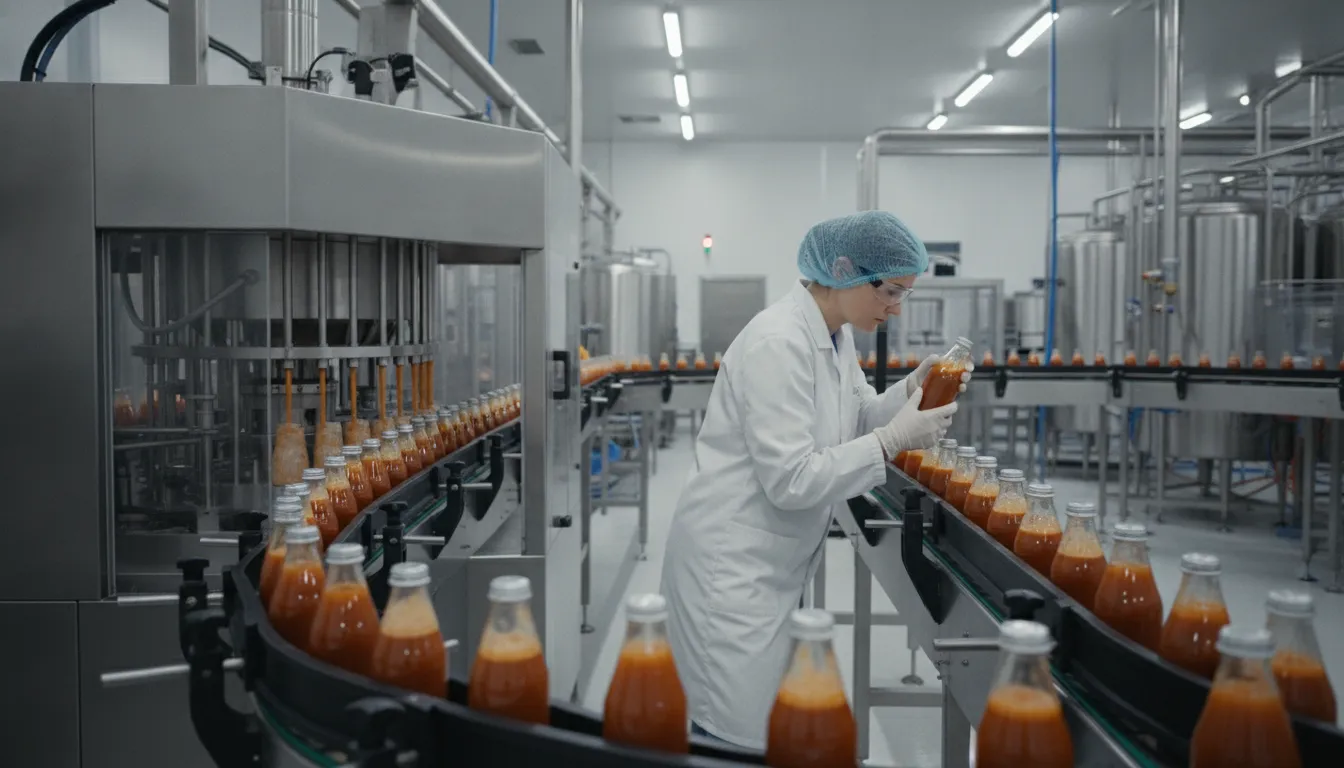
Turning a sauce, cooking oil, dressing, or marinade into a retail-ready product involves more than putting liquid into a bottle. Your co-packer must manage container fit, fill consistency, food-safety controls, production timing, and the handoff to fulfillment without losing sight of your brand requirements.
Schedule a free consultation for your liquid bottling and filling project today.
Bottling and filling services for food give growing brands a practical path from finished formula to packaged product. Liquid minimums start at 100 gallons, production capacity reaches 5,000+ units per hour, and scheduling is designed to support commercial growth.
For acidified sauces and other shelf-stable products, process details matter. pH control, clean food-contact surfaces, and allergen management all protect product integrity. Documented HACCP procedures keep the process consistent. A capable partner keeps the run aligned with your packaging and sales plan. If you’re evaluating options, start with this complete guide to food co-packing. The right production partner can then turn a proven recipe into a repeatable operation.
What Bottling and Filling Services for Food Deliver for Your Brand
For an emerging food brand, bottling and filling services for food should do more than transfer product into containers. A capable co-packer helps you move from a validated formula and packaging plan into a repeatable commercial run. The right production controls protect consistency as demand grows.
That support can include liquid filling for sauces, oils, dressings, marinades, and other food products, as well as precision filling for dry goods such as spices and powders. Dry products often require careful handling because moisture can affect product integrity. The right process also accounts for the container, fill volume, product characteristics, labeling requirements, and production schedule before the run begins.
Capacity that supports growth
Production capacity matters when a product moves beyond test sales. Co-Packing Express operates production lines with a maximum capacity of more than 5,000 units per hour. That gives brands a path to increase output without immediately investing in their own facility. Scheduling is also designed for flexibility, with 24/7/365 production available for brands managing promotions, retail demand, or changing inventory needs.
Precision across product formats
Filling requirements vary widely. Some products need precise small-volume fills, while others use larger industrial volumes. Dry spice and powder products may require high-precision filling and moisture-sensitive handling. Discussing the product viscosity, particle size, and container format early helps the production team select a suitable process. Target fill volume matters too. The team can then avoid forcing every product into the same setup.
Food safety is part of the service, not an afterthought. HACCP systems identify and control biological, chemical, and physical hazards through critical control points, monitoring, corrective actions, and record keeping. Food brands should also confirm that the partner’s process is FDA compliant and HACCP compliant. For additional context on how production partners fit into the broader manufacturing process, see this plain-language guide to co-packing.
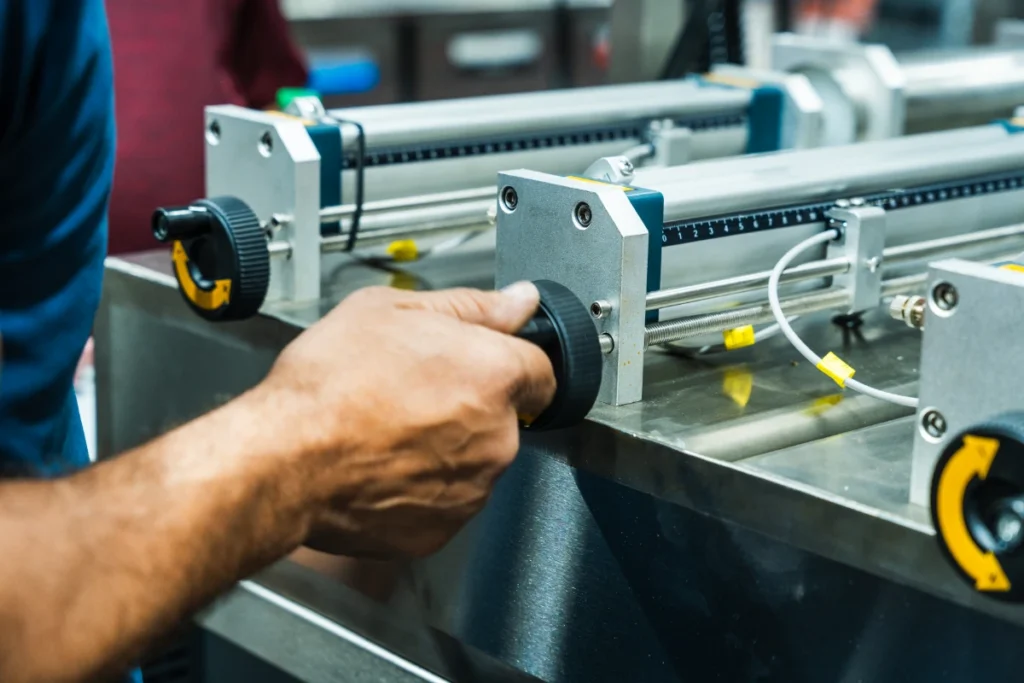
Types of Containers Co-Packers Can Fill: Bottles, Jars, Pouches, and More
Container selection affects product protection, shipping efficiency, shelf presentation, and the production process. The right format depends on whether the formula is liquid or dry, how customers use it, and how the finished product moves through ecommerce, retail, or fulfillment channels. A co-packer should evaluate the product and package together rather than treating the container as an afterthought.
| Container type | Best-fit products | Key considerations |
|---|---|---|
| Bottles | Sauces, dressings, marinades, oils, and other pourable liquids | Useful for controlled pouring, branded shelf presentation, and ecommerce-ready packaging. Closure selection must match the product’s viscosity and use. |
| Jars | Thick sauces, spreads, relishes, seasonings, and dry blends | Wide openings can support spooning or scooping. Product viscosity, headspace, closure, and shelf-stability requirements should be reviewed before a production run. |
| Pouches | Dry spices, powders, seasoning blends, and selected liquid products | Flexible packaging can reduce package weight and shipping volume. Moisture-sensitive dry goods require precise filling and handling to protect product integrity. |
| Stick packs | Single-serve powders, drink mixes, spice portions, and other dry formulations | Best suited to portion-controlled products with consistent flow characteristics. The formula, fill weight, seal, and barrier requirements must work together. |
| Drums | Bulk liquid ingredients, concentrates, and larger-volume dry products | Appropriate when the customer needs industrial or downstream manufacturing quantities rather than consumer-facing units. Handling and logistics planning are essential. |
Production planning should account for minimum quantities: 100 gallons for liquid products and 400 pounds for dry products. Co-Packing Express can support production at a maximum capacity of 5,000+ units per hour, helping brands move from a validated format toward larger runs as demand develops. For a more detailed explanation of how production, packaging, and fulfillment fit together, review this plain-language guide to co-packing.
Container choice does not expand the product scope. Co-packing programs should be planned around shelf-stable food and beverage products, including liquids, spices, and powders. Frozen or refrigerated products, potable alcohol, and tin cans are not included.
How Precision Liquid Filling Ensures Volume Accuracy
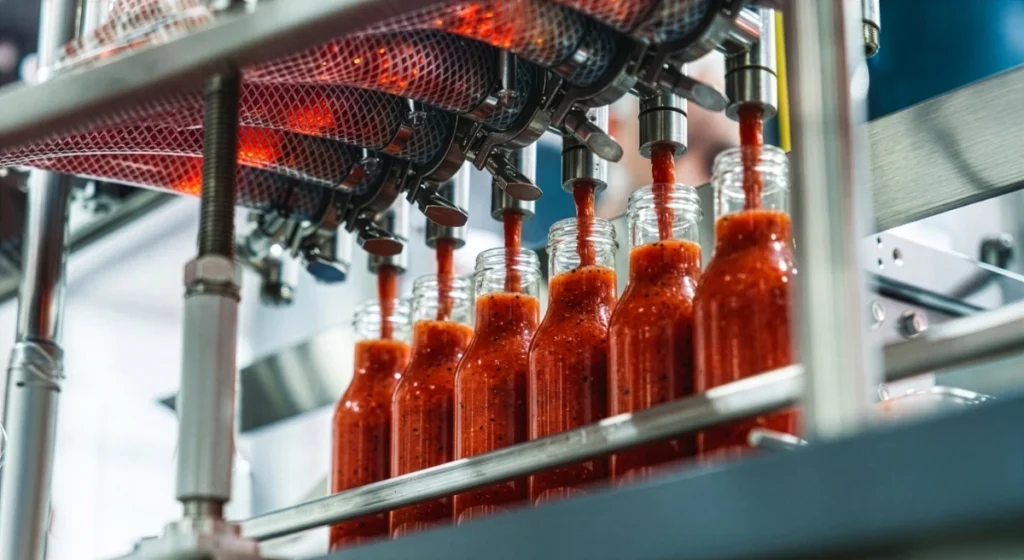
Volume accuracy starts with matching the filling method to the product, container, and intended fill size. Liquid filling systems can handle everything from small dropper-style volumes to larger consumer-product formats, with the equipment selected for controlled, repeatable dispensing rather than a one-size-fits-all process. Food-grade filling examples show why the right setup matters when a brand needs consistent product quantity across a production run.
Equipment and process controls work together
A reliable fill is not created by the machine alone. Product viscosity, container dimensions, nozzle selection, line speed, and setup verification all influence how consistently each unit is filled. The co-packer should confirm the target fill volume before production, monitor the run, and account for the agreed production variance. For Co-Packing Express projects, the stated industry-standard variance is plus or minus 10% for liquid and dry products. That tolerance should be part of the commercial conversation before a purchase order is finalized. It matters most when packaging claims, shipping weight, or marketplace requirements depend on the finished quantity.
Food safety is part of liquid-filling accuracy
Quantity control and food safety are connected. Acidified foods, including many sauces and condiments, require specialized processing and strict pH control when they are packaged as shelf-stable products. University of Wisconsin food safety guidance identifies sauces and other acidified foods as products that require special care. A filling plan should therefore account for the product specification and its validated process, not simply the volume going into the bottle.
HACCP planning adds another layer of control by identifying biological, chemical, and physical hazards, then defining critical limits, monitoring procedures, corrective actions, and records. FDA CGMP requirements also establish expectations for sanitary bottled-water processing, including controls related to unsafe source water and adulteration. FDA guidance on bottled-water CGMP illustrates why documented sanitation and process controls matter.
For brands evaluating bottling and filling services for food, ask how the facility verifies fill consistency, manages product-specific controls, documents the run, and communicates its stated tolerance. Those answers provide a more useful basis for supplier selection than throughput claims alone.
Get a quote for your liquid filling run today.
Minimum Quantities for Liquid Co-Packing: What 100 Gallons Looks Like
A 100-gallon minimum is large enough for a commercial launch, but manageable for an emerging food brand testing demand. Co-Packing Express lists a minimum order quantity of 100 gallons for liquid products and 400 pounds for dry products. That distinction helps you plan the right production format before requesting a quote.
How many units can 100 gallons produce?
One U.S. gallon contains 128 fluid ounces, so 100 gallons represents approximately 12,800 fluid ounces of finished liquid before accounting for normal production considerations. Your selected package size determines the approximate unit count for the run.
- 8-ounce bottles: approximately 1,600 units
- 12-ounce bottles: approximately 1,067 units
- 16-ounce bottles: approximately 800 units
- 32-ounce bottles: approximately 400 units
These figures are planning estimates, not a guaranteed shipment quantity. Sauce, oil, dressing, marinade, and other liquid products may require different container sizes, fill specifications, or handling procedures. Your co-packer should confirm the expected yield after reviewing the formula, packaging, and production requirements.
Plan for a normal production variance
Co-packing runs typically carry a production variance of plus or minus 10% for liquid and dry products. In practical terms, a 100-gallon run may produce somewhat more or less than the estimate based on the agreed specifications and actual production results. Build that range into your inventory forecast, purchase orders, marketplace listings, and fulfillment plan instead of assuming an exact unit count.
The best time to resolve these details is before production. Provide your target package size, formula, expected sales volume, and preferred launch quantity so the team can determine whether the 100-gallon minimum fits your channel strategy. For broader context on production models and responsibilities, review this plain-language guide to co-packing.
How to Prepare Your Liquid Product for a Commercial Bottling Run
- Finalize the formula and stability requirements. Provide the complete recipe, ingredient specifications, processing instructions, expected fill volume, and intended shelf life. Identify allergens and any ingredients that could affect viscosity, separation, or filling performance. If the formula is still evolving, address those variables before scheduling production rather than making changes on the line.
- Confirm pH and shelf-stability parameters. Sauces, dressings, and other acidified foods require specialized processing and strict pH control when they will be packaged as shelf-stable products. The University of Wisconsin Food Safety Extension identifies sauces and condiments among acid or acidified foods that require special care in shelf-stable packaging: review its acidified-food guidance. Supply any available laboratory results and agree on the required testing before the run.
- Build the food-safety documentation. Prepare the records needed to support an FDA compliant, HACCP compliant process. HACCP plans identify biological, chemical, and physical hazards, then establish critical control points, limits, monitoring, corrective actions, verification, and record keeping. Include allergen information, sanitation expectations, and handling instructions. The HACCP planning resource from Michigan State University provides useful background on these controls.
- Approve the package and label before production. Confirm the bottle or jar material, closure, liner, tamper evidence, case pack, dimensions, and fill size. Submit final label artwork and verify required product information, lot coding, and placement. Packaging delays can hold a completed batch, so treat approval as a production milestone, not an administrative detail.
- Run a test batch before the commercial quantity. Use a test run to evaluate flow, fill accuracy, cap fit, label application, appearance, and product behavior after processing. Co-Packing Express lists test batches as a non-negotiable $2,500-$3,000 investment. This step gives the team a controlled opportunity to resolve issues before committing to a full bottling run.
- Confirm quantity, tolerance, and logistics. Liquid products have a 100-gallon minimum order quantity, and typical production variance is plus or minus 10%. Confirm ingredient delivery, packaging arrival, finished-goods destination, and launch timing in writing. For a plain-language overview of how these responsibilities fit together, see this guide to co-packing.
Request a free consultation to plan your bottling run today.
Frequently Asked Questions
What liquid food products can be bottled and filled?
Common products include sauces, oils, dressings, marinades, and other liquid food products suited to commercial packaging. The right container, closure, and filling method depend on viscosity, ingredients, target serving size, and shelf-stability requirements. Frozen and refrigerated products are outside this service scope.
What is the minimum order for liquid co-packing?
The minimum order quantity for liquid food products is 100 gallons. Production planning should also account for a typical industry-standard variance of plus or minus 10%, so your finished unit count may differ from the initial estimate.
How should I prepare a sauce before a bottling run?
Have a finalized formula, ingredient specifications, packaging requirements, expected fill volume, and handling instructions ready for review. For sauces intended to be shelf stable, confirm the required process and pH controls before production. Acidified sauces and condiments require specialized care and strict pH control when packaged for shelf stability, according to the University of Wisconsin Food Safety Extension.
How quickly can a co-packer fill liquid food products?
Available throughput depends on the product, container, run configuration, and production schedule. Co-Packing Express lists maximum capacity of 5,000 or more units per hour and supports 24/7/365 production scheduling. A consultation can confirm whether your packaging format and volume fit the planned run.
Schedule a Free Consultation for Your Liquid Product
A focused consultation can help you clarify your product, packaging, and filling requirements before planning the next step. If you’re evaluating bottling and filling services for sauces, oils, or other liquids, schedule a free consultation with the Co Packing Express team. You can also call +1 (469) 978-3889. We’ll discuss your needs and confirm whether the project is a practical fit.