


Co Packing 101: The Complete Guide for Food and Beverage Brands

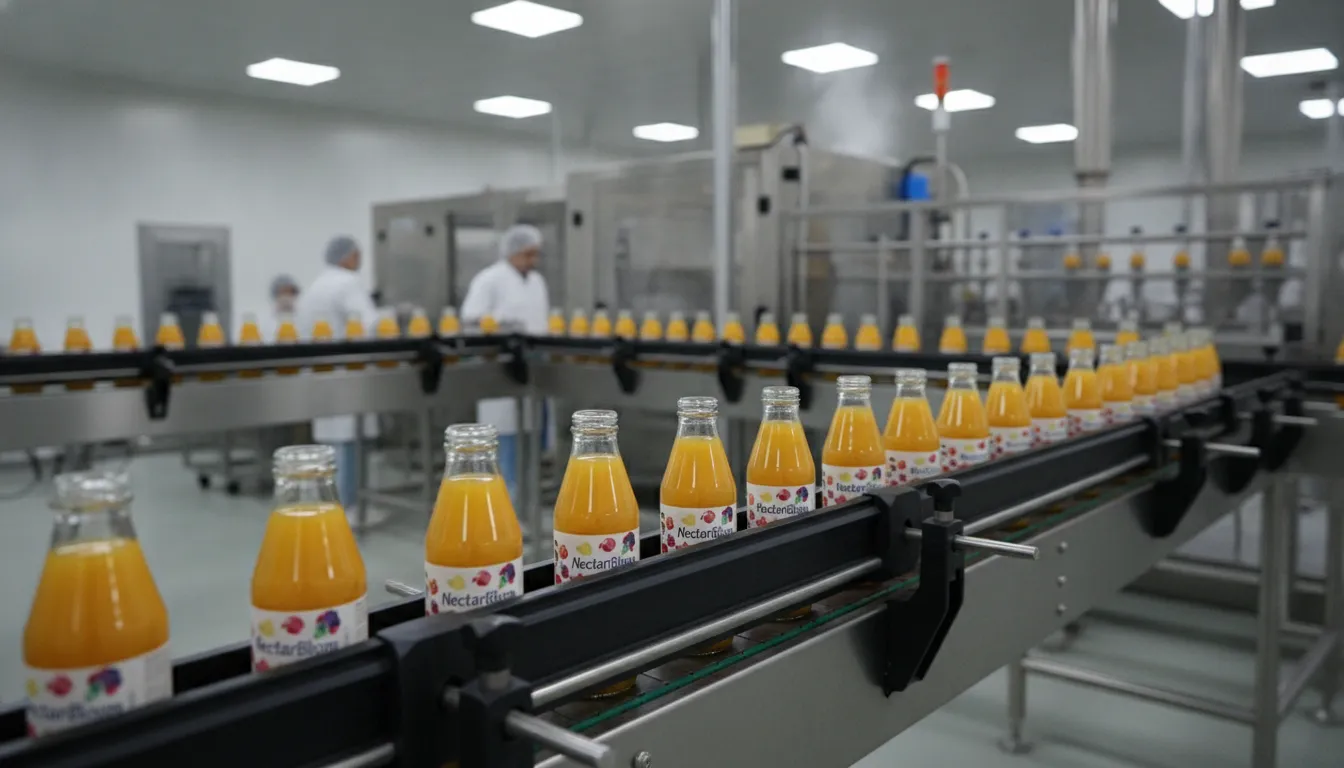
Scaling a food or beverage brand past a home kitchen requires a major shift in how you make your product.
Schedule your free co-packing consultation today , our team will review your product and provide a customized production plan with transparent pricing and timeline.
Our guide to co packing 101 shows how working with a contract partner lets you scale up from small-batch production to high-volume commercial runs. A co-packer handles the complex work of sourcing ingredients, mixing, filling, labeling, and palletizing your products in a certified facility. This outsourced production model lets you grow your business without spending money on expensive factory space, heavy machinery, or production staff. By using a contract manufacturer, you can keep your focus on sales, marketing, and expanding your retail presence. Food brands can find a detailed list of these production and logistical capabilities on our services page.
Before you sign a contract or send over your formulation, you must understand the basics of this business model. Let us look at what these manufacturers do and how they can help you grow. We will start with a clear answer to our first main question, What Is a Co-Packer?
Co Packing 101: What Is a Co-Packer?
A co-packer is a contract manufacturing company that produces, packages, and ships food and beverage products for client brands. Unlike private labeling, co-packing means your brand owns the unique recipe while the manufacturer handles mixing, bottling, labeling, and distribution. This model lets you scale production without investing in factory space, equipment, or a dedicated production team.
A co-packer, also known as a contract packager, is a manufacturing company that turns raw ingredients into finished, packaged products for client brands on a contract basis. Growing food and beverage brands often use these partners to scale up their production without buying expensive factory machinery. By outsourcing the physical manufacturing, brands can focus their time and capital on marketing, sales, and product design.
The Core Services of Contract Packaging
Working with a co-packer lets you hand off the complex steps of physical production. A provider of full-service co-packing manages the entire lifecycle of a production run once you deliver the recipe. These companies handle raw ingredient mixing, filling, custom labeling, and final box packaging. Many partners also provide warehousing and logistics so your finished goods are ready to ship to retail shelves or fulfillment centers.
Co-Packing Versus Private Labeling
Many business owners confuse co-packing with private labeling, but there is a major difference in product ownership. In a co-packing partnership, you own the unique formula or recipe, and the manufacturer simply mixes and packages it to your exact specifications. With private label manufacturing, you buy a pre-made product that the manufacturer already makes, and you put your brand label on it. Private labeling is faster to launch, but co-packing gives you complete control over your ingredients and taste.
| Feature | Co-Packing Partnership | Private Labeling Model |
|---|---|---|
| Recipe Ownership | The brand owns the unique formula. | The manufacturer owns the recipe. |
| Customization | Fully custom taste and ingredients. | Limited to preset flavor options. |
| Setup Costs | Higher due to test batches and scale-up. | Lower because the product is ready. |
| Brand Protection | High; your recipe is protected by NDAs. | Low; competitors can sell the same item. |
Why Brands Outsource Food Production
Building an in-house manufacturing plant requires major capital, real estate, and staff. Working with an outsourced producer lets brands bypass these massive startup hurdles to achieve a faster time-to-market. Established regulatory standards, like those set by the U.S. Food and Drug Administration, are complex to navigate on your own. A professional co-packer already has compliant facilities, trained staff, and quality control systems in place to keep your food products safe and legal.
How Does Co-Packing Work?
Co-packing works by taking your proprietary recipe through a six-step process: formulation development, ingredient sourcing, production batching, filling and packaging, labeling and palletization, and warehousing and distribution. Your brand owns the recipe while the contract manufacturer handles the entire manufacturing workflow in a certified facility.
The path from a kitchen recipe to retail shelves has many steps. A contract packer acts as your production team. They take your product idea and scale it to commercial size. This lets you grow your brand without buying expensive factory machines.
The Commercial Scale-Up Process
Working with a contract packager is a step-by-step partnership. First, you bring your recipe to the manufacturer. Experts then adjust your home recipe so it works in large commercial batches. This scale-up step ensures your product tastes the same and stays safe in every batch. Once the formula is set, the actual production process can begin.
An elite partner handles more than just mixing. The full workflow covers everything from raw ingredients to final shipping. This includes sourcing ingredients, batching, filling, packaging, labeling, and palletization. For safe storage and shipping, the process connects directly with co-packing and fulfillment services. Let us look at the specific steps in this workflow.
The Steps from Recipe to Retail
- Formulation Development: Food scientists scale your recipe for commercial equipment. This step protects your taste and texture while ensuring safe production under federal rules.
- Ingredient Sourcing: The team gathers bulk ingredients and packaging materials. You can supply your own raw goods or have the team source them from certified vendors.
- Production and Batching: Ingredients are measured and mixed in large commercial vats. The facility uses automated systems to run liquid production lines at speeds of up to 5,500 units per hour.
- Filling and Packaging: High-speed machines fill bottles, jars, or pouches with exact amounts. Strict weight checks keep every unit consistent and within your target specifications.
- Labeling and Palletization: Automated machinery applies labels to the containers. The finished goods are packed into cases, stacked on pallets, and wrapped for transport.
- Warehousing and Distribution: Pallets move to secure, temperature-controlled storage. The goods are then shipped directly to retailers, distribution hubs, or Amazon fulfillment centers.
Speed and Flexibility for Growing Brands
Modern production needs speed and flexibility to meet market demand. Fast liquid lines can output thousands of units quickly to keep your shelves stocked. Highly flexible plants can run lines on a 24/7/365 production schedule to handle sudden spikes in orders. This high-speed capacity means you can scale up your business without delays.
Rigid quality control is maintained throughout every single step of this process. The facility must follow FDA regulations closely to keep food products safe. Regular checks ensure each batch meets your high standards before it leaves the warehouse.
Technology and Production Management Systems
Modern contract manufacturers use advanced production management software to track every phase of a production run. Enterprise resource planning (ERP) systems manage ingredient inventory, production scheduling, quality control checkpoints, and shipping logistics in real time. This technology ensures that every batch meets the same exacting standards and that production timelines remain predictable for your brand’s launch calendar.
Flexible Scheduling and Peak Season Production
Growing brands often face demand spikes during holiday seasons or promotional periods. A co-packer with 24/7/365 production capacity can scale output to meet these surges without requiring you to invest in additional capacity that sits idle during slower months. This flexibility is particularly valuable for brands selling on Amazon FBA or via major retailers where stockouts damage rankings and relationships.
Hidden Costs to Factor Into Your Budget
Beyond the direct production fees, brands should account for several secondary costs in their co-packing budget. Raw ingredient price fluctuations can affect per-unit costs, especially for commodities like oils, spices, and glass packaging. Shipping and freight costs vary by distance and fuel prices. Some co-packers charge storage fees for finished goods held beyond an agreed period. Requesting a comprehensive quote that itemizes these potential charges helps you build an accurate total cost picture before committing to a production run.
Cost Comparison Across Product Types
Different product categories carry different cost profiles. Liquid products like sauces, dressings, and beverages require specialized filling equipment and typically have lower per-unit costs at scale due to faster line speeds. Dry blends and powder products involve precision weighing equipment and stricter cross-contamination protocols. Spice blends require dedicated equipment to prevent flavor transfer between runs. Understanding how your specific product category affects pricing helps you evaluate quotes from multiple providers on an apples-to-apples basis.
How Much Does Co-Packing Cost?
Co-packing costs vary by volume, recipe complexity, and packaging type. A typical 100-gallon batch of BBQ sauce in 12-ounce bottles runs approximately $7,000. You pay a 75% non-refundable deposit upfront, with the remaining 25% due on completion. Test batches cost $2,500 to $3,000, with consulting at $300 per hour.
When you plan your food brand budget, you need a clear picture of manufacturing costs. Many brand owners assume that outsourcing is just as expensive as building their own kitchen, but the numbers tell a different story. In co packing 101, understanding the cost structure is essential to making smart financial decisions for your business.
The True Cost of Building In-House
Setting up your own commercial kitchen or food plant requires massive capital. You must lease or buy a facility that meets strict health codes. You need to purchase industrial mixers, bottling lines, labeling machines, and packaging stations. Each machine can cost tens of thousands of dollars. You also need to hire and train a full production staff. Worker wages, insurance, and compliance training add ongoing costs that strain your monthly budget. In contrast, a contract manufacturing agreement lets you bypass nearly all of these startup expenses.
Consulting and Test Batch Fees
Every successful production run starts with preparation. Your recipe needs to be scaled up from a home kitchen formula to a commercial-grade formula that works in large industrial equipment. Professional food scientists charge a consulting rate of $300 per hour to review your recipe and plan the production workflow. Following this, a test batch run is critical to validate your taste, texture, and shelf stability at scale. These trial batches typically cost between $2,500 and $3,000. This small upfront investment helps you avoid costly mistakes during full production. You can learn more about the broader financial picture of launching a new product in our guide to product development costs.
Full Production Run Pricing
Once your test batch passes quality checks, the real production costs kick in. These costs depend on several factors including the total volume of your order. The complexity of your recipe, the cost of your specific ingredients, and the type of packaging you choose. To give you a concrete reference point, a 100-gallon batch of specialty BBQ sauce filled into standard 12-ounce bottles costs approximately $7,000. Understanding the cost breakdown helps you plan your budget and pricing strategy effectively.
Several variables influence your final price per unit. A higher total volume typically lowers your per-unit cost because the setup and cleanup expenses are spread across more units. Simple recipes with fewer ingredients cost less than complex formulations with rare spices or expensive extracts. Glass bottles cost more than plastic containers, and custom label designs add to the packaging line. Your partner should give you an itemized quote before you commit to a production run so there are no surprises on your final invoice.
Payment Terms and Industry Standards
Contract manufacturers follow a standard B2B payment model to protect their costs. You pay a 75 percent deposit upfront when you book your production slot. This deposit is non-refundable because the packager orders your specific raw ingredients and reserves plant floor time that cannot be sold to another client. The final 25 percent balance is due upon successful completion of your run.
Food manufacturing also operates within a standard production tolerance of plus or minus 10 percent. This means your final yield may vary slightly from the amount you ordered. For a 100-gallon order, you might receive 90 or 110 gallons depending on natural variance during the production process. This tolerance is a standard industry practice, and a transparent partner will discuss it with you before you place your first order.
Minimum Order Quantities and Scalability
Minimum order quantities (MOQs) in co-packing range from 100 gallons for liquids and 400 pounds for dry goods at flexible facilities. Up to 100,000 units at large industrial manufacturers. Low-MOO partners bridge the missing middle for growing brands that have outgrown kitchen incubators but cannot commit to massive production runs.
A contract packaging setup can help your business grow. But many brands face a big wall when they look for a partner. That wall is the Minimum Order Quantity, or MOQ. Understanding how MOQs work is a key part of co packing 101. It helps you plan your growth and avoid costly manufacturing mistakes.
The Challenge of the Missing Middle
Many food and beverage brands find themselves in what industry experts call the missing middle. These are businesses that have proven their product on a small scale. They have outgrown local kitchen incubators and shared spaces, but they are still too small for national manufacturers. Large industrial operators often demand an MOQ of 100,000 units or more. This massive requirement shuts out growing brands that need to scale up without taking on massive financial risk.
High minimums force young brands to spend too much money on inventory. Buying 100,000 units of a new product can drain your cash flow. It also fills up warehouse space and raises the risk of waste if the product does not sell fast. This is why finding a partner with low minimums is so vital for emerging brands.
Bridging the Gap with Low MOQs
Low minimum order quantities bridge this production gap. Co-Packing Express offers highly accessible entry points for growing food and beverage businesses. Our liquid production lines require a minimum of only 100 gallons. For dry goods and powder products, our minimum is just 400 pounds. These low thresholds let you transition smoothly from hand-crafted batches to commercial-grade runs.
These lower minimums mean you do not have to risk your entire budget on a single production run. You can test new flavors, adjust your packaging, and respond to real market demand. If you want to launch a new private label spice business, you can start with a 400-pound batch of your signature blend. This keeps your upfront costs manageable while giving you a professional product that is ready for retail shelves.
Scaling with the Same Partner
True scalability is about more than just starting small. It is about having room to grow. You need a partner who can support you when your sales take off. Moving from one packer to another is costly and slow. It requires new trials, new quality checks, and shipping your custom formulas to a new facility. It can disrupt your supply chain and hurt your brand reputation.
Co-Packing Express solves this issue by offering custom batch sizes above our minimums. As your sales grow, your production runs can scale up with us. This lets you grow with the same trusted partner, keeping your product quality and taste identical across every run. Whether you need a 100-gallon batch of a specialty marinade or want to scale up to large industrial runs, you can stay in one place. This flexible model lets you invest your cash into marketing and sales instead of heavy machinery, which gives you a clear path to long-term success.
Lowering Risk While You Scale
Scaling a food brand requires smart risk management. A report by the National Institutes of Health outlines how outsourcing production helps small businesses avoid high startup costs (PMC7152221). By working with a contract packer, you do not have to buy expensive bottling lines, rent a massive factory, or hire a large production team. You pay only for the units you need.
This approach protects your capital. It turns fixed manufacturing costs into variable costs that match your sales. You can use your cash to build your brand while we handle the complex tasks of mixing, filling, and packing. If you are exploring private label manufacturing, using our low MOQs lets you build your product line safely and steadily.
FDA, GMP, and Quality Compliance in Co-Packing
FDA compliance means following 21 CFR Part 117 regulations including Hazard Analysis and Risk-Based Preventive Controls (HARPC), strict sanitation protocols, complete lot traceability, and passing regular GMP audits. An FDA-registered facility is not the same as an FDA-compliant facility , true compliance requires documented daily adherence to all federal safety standards.
When you start food and beverage manufacturing, regulatory rules can feel like a maze. Working with a qualified partner simplifies this burden. Navigating these rules is a core part of quality control standards in a professional facility. In co packing 101, safety rules are just as critical as mixing ingredients or choosing labels.
The Real Meaning of FDA Compliance and Registration
Many brands confuse being FDA-registered with being FDA-compliant, but these are two very different standards. Any food facility can pay a small fee to register their building with the government. This registration simply tells the agency that food is being made at that location. It does not mean the facility has been inspected or approved by federal agents.
Compliance, on the other hand, means the facility actually follows all federal safety laws every single day. True compliance requires passing hands-on inspections and keeping precise records of every batch. Co-Packing Express handles compliance complexity as a professional industry operator. The facility maintains active registration, passes routine inspections, and follows complete food safety protocols under FDA guidelines.
Deep Dive into FDA 21 CFR Part 117 Rules
The main federal rule governing food contract packagers is FDA 21 CFR Part 117. This regulation lays out current good manufacturing practices and preventive controls for human food. Under these rules, a co-packer must maintain a complete Hazard Analysis and Risk-Based Preventive Controls (HARPC) plan. This plan finds physical, chemical, and biological hazards before they can harm your product.
The law requires strict record-keeping for every step of production. A compliant partner tracks the temperature of ingredients, the sanitation of machines, and the exact lot numbers of all raw materials. These detailed records ensure full product traceability. If an issue ever arises, the facility can trace any ingredient back to its source within minutes, as required by the U.S. Food and Drug Administration.
The GMP Audit Process
Good Manufacturing Practice (GMP) audits are intensive, third-party inspections that verify whether a facility actually follows its written safety plans. During a GMP audit, professional inspectors walk the production floor to check every detail of the operation. They examine machine sanitation, employee hygiene, pest control systems, and water quality.
Inspectors also audit the facility’s documentation. They review training logs to prove that staff members know how to handle food safely. They check calibration records to ensure that temperature probes and scales are accurate. Passing a GMP audit proves that a co-packer does not just talk about safety, but practices it on every single shift.
Protecting Your Food Recipes with NDAs
Your custom recipe is the heart of your brand, and sharing it with an outside manufacturer can feel risky. That is why professional co-packers use strict Non-Disclosure Agreements (NDAs) to protect your proprietary formulations. A legal NDA ensures that your recipe remains your exclusive property. The co-packer cannot share your formula with other brands. They cannot use it for their own products or disclose your production methods to anyone else.
At Co-Packing Express, NDA protection is a standard part of doing business. Your product developers can rest assured that your brand secrets are legally secure. The facility isolates ingredient scaling and mixing processes. This system ensures that only authorized personnel have access to your proprietary blend.
Understanding Production Tolerances
In commercial food production, physical variables mean that every batch will have slight differences. The industry-standard production tolerance for co-packing is +/- 10%. This tolerance applies to both the package weight and the total volume of the run. For example, if you order a 100-gallon run of BBQ sauce, the actual yield may range between 90 gallons and 110 gallons. This variance occurs due to natural loss in pipes and pumps or evaporation during hot-filling.
These minor physical differences are normal in commercial bottling. A transparent partner discusses these tolerances upfront so you can plan your inventory with confidence. It is a key operational standard that keeps your supply chain running smoothly.
Questions to Ask Before Signing an Agreement
Before committing to a contract manufacturing partnership, schedule a facility tour and prepare a list of specific questions. Ask about their current production capacity utilization, typical lead times from order to delivery, and their process for handling quality deviations. Request references from brands in a similar product category and production stage. A transparent partner will welcome these questions and provide detailed answers. The relationship between your brand and your co-packer is a long-term strategic partnership, and the vetting process sets the foundation for that relationship.
Location and Logistics Considerations
Geographic proximity to your target market affects shipping costs, delivery times, and your ability to visit the facility for quality inspections. A co-packer based in the Southeast, for example, offers strategic advantages for brands distributing along the Eastern Seaboard or through southeastern distribution hubs. Co-Packing Express serves clients nationwide from its St. Petersburg, Florida facility, providing convenient access for brands throughout the United States while maintaining short shipping lanes to major southeastern markets.
How to Choose the Right Co-Packer
Choose a co-packer by evaluating four factors: whether they match your production volume and MOQ needs, hold current FDA and GMP compliance certifications. Offer NDA protection for your proprietary formulations, and provide integrated services such as warehousing, fulfillment, and nationwide distribution across your target market.
Finding a manufacturing partner is a critical step for your growing business. The right company acts as an extension of your brand, helping you maintain product quality while scaling your production. When evaluating options, you must look at minimum order quantities, production capabilities, and safety certifications to ensure a perfect match.
Key Criteria for Your Evaluation
Your search should focus on finding a partner that fits your current size and future goals. Many brands with proven product-market fit outgrow home kitchens or shared spaces but are still too small for massive national factories. You need a mid-market partner that offers low minimum order quantities, such as 100 gallons for liquids or 400 pounds for dry products, to bridge this growth gap. Ensure they have the equipment to handle your specific packaging needs, whether you make bottled sauces, dry rubs, or spices.
Safety compliance is non-negotiable in the food and beverage industry. Look for a partner that operates under strict FDA 21 CFR Part 117 rules and holds current Good Manufacturing Practice (GMP) certifications. Your partner must also respect your intellectual property, so always confirm they offer non-disclosure agreements (NDAs) to protect your secret recipes and formulations.
A Step-by-Step Selection Process
To find the best fit for your brand, follow this structured process to evaluate potential contract manufacturing partners:
- Verify production capabilities and capacity. Ask about hourly output and machine limits to ensure they can handle your orders. For example, check if they have high-speed lines that can fill thousands of units per hour to support your peak sales seasons.
- Confirm compliance and food safety certifications. Ensure the facility meets all federal standards. You can verify their status on the U.S. Food and Drug Administration (FDA) website to ensure they follow current sanitary and quality rules.
- Evaluate the minimum order quantities (MOQs). Choose a partner with MOQs that align with your sales volume so you do not tie up too much cash in excess inventory.
- Assess geographic location and logistics. Shipping heavy ingredients and finished goods over long distances adds major freight costs. Look for a partner located near your main markets, such as the Southeast United States, to keep shipping costs low.
- Review their service and partnership model. Look for a partner that offers an integrated model combining manufacturing, fulfillment, and compliance under one roof. Working with one team simplifies your supply chain and speeds up your logistics.
The Benefits of an Integrated Partner
Choosing a partner that handles both production and distribution can give your brand a major edge. Our services include full-service co-packing to help you scale your business. Selecting an integrated partner helps you coordinate production and shipping without managing multiple vendors. This setup is perfect for brands that sell online, as it simplifies FBA/FBM compliant fulfillment and ensures your stock is always ready for fast shipping.
Ultimately, selecting a co-packer is about building a long-term business relationship. Taking the time to research, verify certifications, and test production runs will prevent costly mistakes. If you want to learn more about the technical details of choosing a partner for dry goods, read our guide on selecting a co-packer for powders.
Frequently Asked Questions
What are the benefits of co-packing vs in-house manufacturing?
Co-packing lets you scale your business without the massive cost of building your own factory. You do not need to buy expensive commercial equipment or hire a large production staff. According to MRPeasy, this outsourced model cuts your overhead costs and speeds up your time-to-market. It lets you focus on sales while experts handle compliance and manufacturing.
How do I find a co-packer that fits my brand?
Start by looking for a partner that matches your production volume and product type. You should check their minimum order quantities, compliance certifications, and location. For example, some regional operators serve the Southeast with national reach. It is also wise to ensure they offer non-disclosure agreements to protect your recipes before you share any product details.
What types of products can a co-packer handle?
Co-packers can process a wide variety of liquid and dry foods. This includes sauces, beverages, spices, powders, and dry blends. A flexible partner can scale from small test batches to high-speed runs. For instance, top liquid lines can fill up to 5,500 units per hour. Always confirm that the facility has the specific filling equipment your packaging requires.
What is the typical minimum order quantity for food co-packing?
Many large industrial co-packers require minimum runs of 100,000 units or more. However, mid-market partners offer much lower entry points to help growing brands scale. Flexible operators have minimum order quantities as low as 100 gallons for liquid products or 400 pounds for dry ingredients. This low threshold helps brands transition smoothly from home kitchens to commercial production.
How much does it cost to start working with a co-packer?
Initial costs often include a consulting fee and a test batch fee to scale your recipe. Professional consulting is about $300 per hour, and a trial run usually costs between $2,500 and $3,000. For production, a 100-gallon batch of liquid product like BBQ sauce in 12-ounce bottles costs about $7,000. Manufacturers typically require a 75 percent deposit before work begins.
How is co-packing different from private labeling?
In co-packing, your brand owns the custom recipe and formulation, and the manufacturer simply mixes and packages it for you. In private labeling, the manufacturer already makes the product using their own recipe. You simply buy their stock formula and put your brand name and label on the packaging. Co-packing gives you complete control over your ingredients.
Ready to Scale Your Food or Beverage Production?
Delaying your production scale-up means losing market share to competitors who can meet retail and e-commerce demand today. Partnering with a professional contract manufacturer allows you to transition seamlessly from small-batch trials to high-volume distribution without supply chain disruption. Co-Packing Express provides the flexible facilities, compliance support, and rapid turnaround you need to grow your brand without limits.
Ready to get started? Schedule a free consultation with our team today to discuss your manufacturing needs.
One thought on “Co Packing 101: The Complete Guide for Food and Beverage Brands”