


Co-Packing Dropshipping Food Brands: A Complete Guide

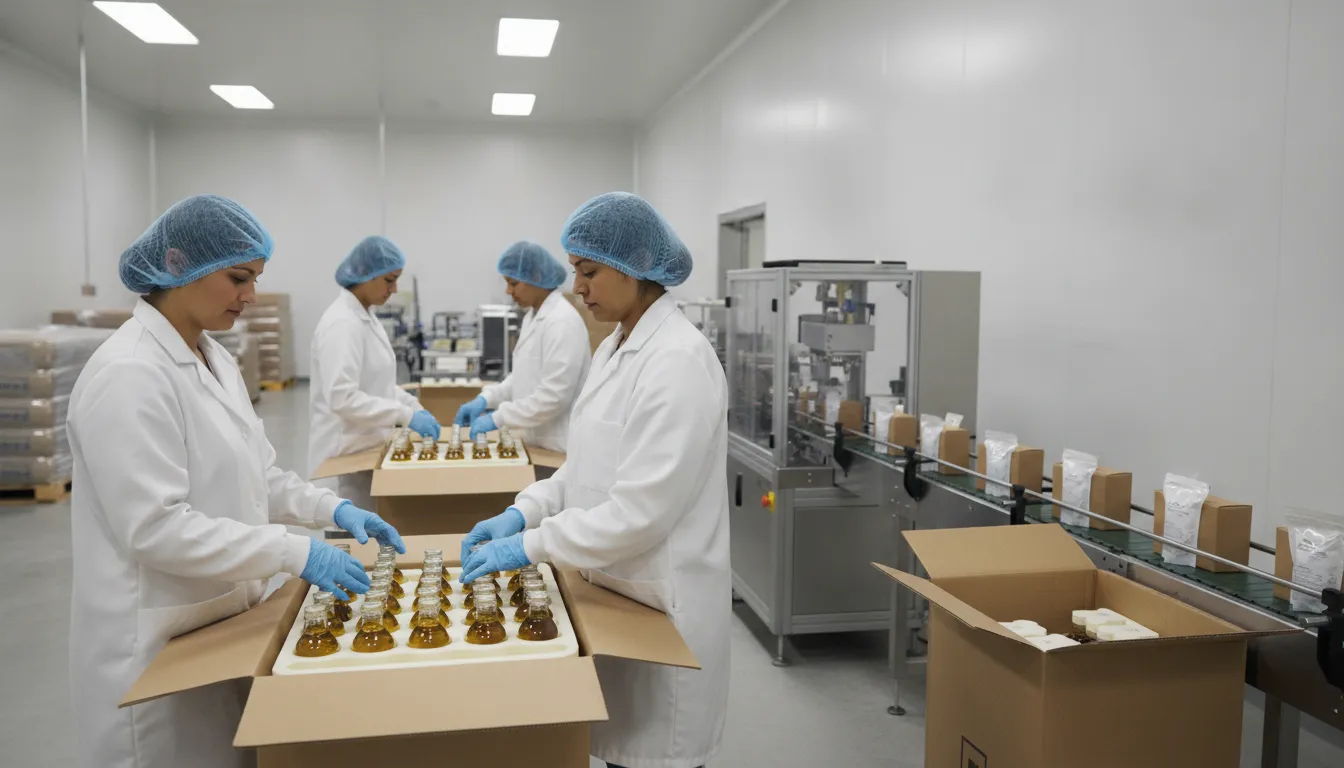
Many food and beverage brands reach a point where selling more is easier than producing, storing, and shipping every order themselves. A co-packer can fill that operational gap, giving a growing brand access to professional production and fulfillment without building its own facility.
Co-packing dropshipping food brands use a co-packer to manufacture, package, store, and ship products directly to customers on the brand’s behalf. The brand keeps control of its recipe, label, storefront, and customer relationship, while the co-packer serves as the fulfillment hub. This model can support private-label, DTC, and e-commerce brands that need to scale beyond in-house or garage-based production. For a broader foundation, see Co-Packing 101: The Complete Guide.
The arrangement still requires clear decisions about product type, minimum order quantities, inventory ownership, shipping instructions, and food-safety responsibilities. Co-Packing Express supports liquids and dry products, with minimums of 100 gallons for liquids and 400 pounds for dry products. Understanding how this model differs from conventional dropshipping is the right place to begin.
What is co-packing dropshipping for food brands?
Co-packing dropshipping combines product manufacturing with order fulfillment. Instead of buying finished goods from a generic supplier and keeping inventory at home or in a separate warehouse. A food brand works with a contract manufacturer, or co-packer, to produce its own product. The co-packer can then store that product, prepare orders, and ship them directly to the end customer on the brand’s behalf.
That distinction matters because standard dropshipping usually separates the seller from the product itself. A retailer lists an existing supplier’s item, collects the order, and passes the shipping details to the supplier. The supplier owns or controls the generic inventory, while the retailer has limited influence over formulation, packaging, production consistency, and the unboxing experience.
With a co-packing arrangement, the product is yours. You may provide the recipe, specifications, ingredients, packaging, or brand direction, while the co-packer supplies the facility, production expertise, and operational infrastructure. The finished goods carry your label and are shipped using white-label or blind-shipping processes. So the customer receives the order as a purchase from your brand rather than from an unrelated fulfillment company.
This model is particularly relevant for direct-to-consumer food brands selling through their own e-commerce store. Research on food supply chains describes co-packing as a way to combine manufacturing, fulfillment. And logistics in a dropshipping-like model, while DTC brands use the arrangement to coordinate production and shipping around the consumer experience. The underlying research on co-packing and food e-commerce supports that connection.
The financial difference can also be significant. Co-packing dropshipping for food brands can reduce the need to invest in a manufacturing facility, equipment, and a large internal operations team. Co-packers provide infrastructure and production expertise that help brands scale without taking on the full capital burden of building a plant. This is why the model often fits growing private-label and DTC businesses that have validated demand but are not ready to manufacture in-house.
To understand the manufacturing side before evaluating fulfillment, review Co-Packing 101: The Complete Guide for Food and Beverage Brands. The key idea is simple: standard dropshipping sells someone else’s ready-made inventory. While co-packing dropshipping lets your brand own the product, customer relationship, and presentation while a qualified partner manages the physical work.
| Aspect. | Standard dropshipping. | Co-packing dropshipping. |
|---|---|---|
| Product ownership. | You sell a supplier’s ready-made generic item. | You own the formulation and your brand. |
| Production. | None, you source finished goods. | Co-packer manufactures your product. |
| Labeling and packaging. | Supplier-controlled. | Your label and packaging, white-label or blind. |
| Fulfillment. | Supplier or third-party ships. | Co-packer stores, packs, and ships direct to the customer. |
| Customer experience. | Generic with limited control. | Branded presentation and relationship. |
How food brands use co-packers to fulfill direct-to-consumer orders
For a direct-to-consumer food brand, the co-packer can become the operating link between an online sale and a finished order at the customer’s door. Instead of building a production line, hiring a packing team, and coordinating a separate fulfillment center. The brand works with one manufacturing partner to produce, package, and ship its products. Research on food supply chains identifies co-packing as an effective model for DTC e-commerce brands because it supports both production and shipping in one coordinated operation: source research on DTC co-packing models.
This arrangement works especially well for private-label businesses. The brand owns the customer relationship, product positioning, and sales channel, while the co-packer manufactures the product to the agreed specifications. Private-label food brands frequently rely on co-packers as their primary production partners, rather than operating their own facility. That lets a founder or e-commerce team focus on product development, merchandising, advertising, and customer service instead of managing every production task in-house.
Packaging and shipping can also be handled without exposing the co-packer as the seller. With white-label or blind-shipping arrangements, the order can leave the facility in the brand’s packaging or under the brand’s shipping identity and go directly to the end customer. A Shopify or other DTC storefront captures the order, and the fulfillment process is structured around the brand’s customer experience. For co-packing for early-stage food brands, this can provide a practical path from initial product launch to repeatable order fulfillment.
Volume planning is another important advantage. A campaign, holiday period, influencer promotion, or sudden rise in demand can create a short-term production spike. Co-packing agreements should account for these seasonal changes instead of assuming that monthly demand will remain flat. An experienced partner can help the brand plan capacity and move from small-batch testing into commercial production as demand becomes more predictable. This is particularly valuable for products that need to respond quickly to changing consumer preferences. Since co-packing can provide production agility without requiring the brand to purchase its own industrial equipment.
The best arrangement is designed to grow in stages. A brand may begin with a limited production run, establish its packaging and order process, then increase commercial volume as sales data supports expansion. Clear expectations around production schedules, order handoff, packaging, and seasonal capacity help prevent growth from becoming an operational bottleneck.
Inventory storage, packing, and shipping: what the co-packer handles
In a co-packing dropshipping arrangement, the co-packer becomes the operational hub between your production run and your customer. You sell through your online store or marketplace, while finished goods remain in the co-packer’s inventory until an order is ready to ship. This model lets a food brand avoid holding product in its own facility while still offering a professional fulfillment experience.
Co-packing and fulfillment work together in this model. Research on food supply chains describes this combination as a practical dropshipping-like approach because the brand can outsource both manufacturing and logistics to one partner (research on co-packing and fulfillment). The day-to-day responsibilities typically include:
- Finished-goods storage: The co-packer receives completed product into inventory and manages the stock allocated to your brand. Accurate production visibility matters because your storefront needs to reflect what is actually available.
- Kitting and custom packing: Products can be assembled into the configurations your offer requires, then packed according to your packaging specifications. That may include branded presentation, multi-unit orders, or other prepared combinations defined in the project scope.
- Order packing: When a customer purchases, the fulfillment team pulls the correct items, prepares the shipment. And uses the agreed white-label or blind-shipping process so the order supports your brand relationship.
- Direct-to-customer shipping: The co-packer sends the finished order to the end customer instead of routing it through your own warehouse. Location and carrier planning can affect delivery time and shipping cost, so those details should be addressed before launch.
Inventory synchronization is not an optional extra for food dropshipping. Real-time tracking helps prevent backorders and protects the customer experience (food supply-chain inventory research). Your agreement should clarify how orders, stock levels, production status, and exceptions are communicated.
Co-Packing Express supports 24/7/365 production scheduling, giving brands more flexibility than a fixed production window. The standard minimum order quantities are 100 gallons for liquids and 400 pounds for dry products. Those thresholds help determine how much finished inventory can be produced and stored for the fulfillment cycle. For a broader look at contract packaging services, review the planning requirements before selecting a partner.
Compliance and labeling requirements for dropshipped food products
When a co-packer manufactures and ships food on your brand’s behalf, compliance remains a shared responsibility. Your agreement should identify who controls the formula, specifications, lot records, release procedures, and customer-facing label. The facility should operate in an FDA compliant environment that follows the current Good Manufacturing Practice requirements in FDA 21 CFR Part 117. With personnel trained on food safety, hygiene, and regulatory procedures. FDA guidance identifies facility GMP controls and ongoing personnel training as essential parts of safe food production.
FSMA also matters when your brand retains ownership of the recipe, packaging, or customer relationship. FDA supply-chain rules require food companies to verify that suppliers and co-manufacturers are controlling relevant hazards. That means your co-packing dropshipping food brands arrangement should include a documented supplier and co-manufacturer verification process. Defined quality expectations, and a way to review records or facility controls when appropriate. FSMA responsibilities apply to the facility making the product, regardless of who owns the recipe. See the FDA supply-chain program guidance for the regulatory framework.
What the retail label should communicate
Before a product goes live on a Shopify store, marketplace, or other DTC channel, review the label as carefully as the product itself. Retail food labeling commonly needs to address:
- The product identity and a clear statement of what the food is.
- An ingredient list in the appropriate order.
- Net quantity of contents.
- Allergen information when a major allergen is present.
- Nutrition information when required for the product and business.
- The responsible business name and address, along with any required lot, handling, or other product information.
Your co-packer can help translate approved specifications into production and packaging procedures, but your brand should review the final artwork and claims before selling. Keep the wording accurate, maintain version control, and make sure the label matches the product that is actually being filled and shipped. A partner’s FDA compliant and HACCP compliant operating practices support your process, but they do not replace your responsibility to verify the label, supplier controls, and product specifications. When evaluating a partner, ask about food-safety controls, documentation, facility reviews. And any relevant third-party audit information without assuming a particular status unless it is documented for that facility.
Co-Packing Express focuses on liquids, spices, and dry products. It does not handle meat, poultry, fish, potable alcohol, refrigerated products, or frozen products. Confirm product scope and labeling requirements before committing inventory to a dropshipping program.
How to set up a co-packing dropshipping arrangement for your brand
A successful arrangement depends on treating production, fulfillment, technology, and quality control as one operating system. Use these steps to evaluate a partner and establish clear expectations before you send traffic to your store.
- Choose a co-packer that fits your product and market. Look for experience with your product category, dependable quality-control procedures, and capacity that matches your growth plan. A St. Petersburg, Florida operation with 24/7/365 production scheduling can give an e-commerce brand more flexibility when demand changes or orders arrive outside a standard production window. Confirm that the facility can support your liquids, spices, or dry products, and ask how it handles storage, packing, and direct-to-customer shipping. Location also matters because a strategically placed facility can reduce transit time and shipping costs. Co-packing for e-commerce and FBA sellers can help you evaluate the operational questions that matter for marketplace and direct-to-consumer sales.
- Run a test batch before committing to a full launch. Use the test run to assess the formula, fill consistency, packaging fit, labeling workflow, and finished-product quality. Co Packing Express test batches are $2,500-$3,000, and that price is non-negotiable. Treat the batch as a controlled validation step, not merely a small production order. Resolve formulation, packaging, and approval questions before building a large inventory position.
- Confirm the commercial terms in writing. Verify the minimum order quantity before forecasting sales: 100 gallons for liquids and 400 pounds for dry products. Also document the production tolerance of plus or minus 10%. The payment structure is a 75% non-refundable deposit and a 25% completion payment before shipping. These details should align with your cash flow, launch calendar, and customer-order expectations.
- Lock the contract around how the relationship will operate. Define production volume, quality standards, product liability, packaging specifications, and responsibilities for damage or returns. Packaging requirements deserve precise language because they affect shipping performance. Include a process for seasonal volume spikes, lead times, change orders, and inventory ownership. A written agreement, or an initial memorandum of understanding before the full contract, prevents assumptions from becoming disputes. See the guidance on co-packer contracts from NC State Extension for additional evaluation points.
- Connect your store to the co-packer’s warehouse management system. Integrate your e-commerce platform with the WMS so orders, production status, and available inventory stay synchronized. Real-time visibility helps prevent backorders and keeps product availability accurate across sales channels. Establish rules for order routing, stock thresholds, shipment confirmation, and exception handling before launch.
- Launch with shared quality control and monitor the data. Agree on inspection points, release standards, recordkeeping, and how either party reports a quality issue. Quality control is shared between the brand and co-packer, so review production results, inventory accuracy, shipping performance, and customer feedback together after launch. Use those findings to adjust forecasts and replenishment rather than waiting for a stockout or recurring complaint.
Frequently Asked Questions
Can food brands use co-packing for dropshipping?
Yes. A co-packer can produce and package your food or beverage product, store inventory, and ship orders directly to customers on your behalf. This model lets a DTC, private label, or online retail brand sell without managing a production facility or holding finished goods at its own location. The arrangement works best when order data, inventory levels, and fulfillment expectations are clearly coordinated between the brand and co-packer.
How much does co-packing cost?
Cost depends on the formula, ingredients, packaging format, production volume, storage, and fulfillment requirements. Confirm the minimum order quantity, production tolerance, packaging specifications, and payment schedule before signing. At Co-Packing Express, minimums are 100 gallons for liquids and 400 pounds for dry products, with a standard production tolerance of plus or minus 10%.
How do I find the right food co-packer?
Compare each candidate’s product capabilities, minimums, capacity, quality-control process, packaging options, storage terms, and direct-to-consumer shipping experience. Ask how the facility handles your product category and how it verifies food-safety requirements. FDA guidance recommends that food companies verify co-manufacturers through a documented supply-chain program: FDA supply-chain program guidance.
What is the difference between a co-packer and a manufacturer?
A manufacturer may produce goods under its own operation or brand, while a co-packer produces and packages products for another company’s brand. Many co-packers also provide storage, fulfillment, and shipping, making them a practical operational partner for brands that need production and dropshipping support in one arrangement.
What does a food co-packer actually do?
Depending on the agreement, a food co-packer may source or receive ingredients, manufacture the product. Fill and label packages, store finished inventory, prepare orders, and ship them directly to customers. The brand typically retains control of its product concept, branding, and sales channels while the co-packer manages the agreed production and fulfillment work.
Schedule a consultation for co-packing dropshipping
A clear fulfillment plan can help your food or beverage brand coordinate production, storage, and direct-to-customer orders with fewer moving parts. Schedule a consultation with Co Packing Express to discuss setting up co-packing dropshipping for your brand and determine the right next step.