


Co-Packing for Food Startups: How Early-Stage Brands Get Started

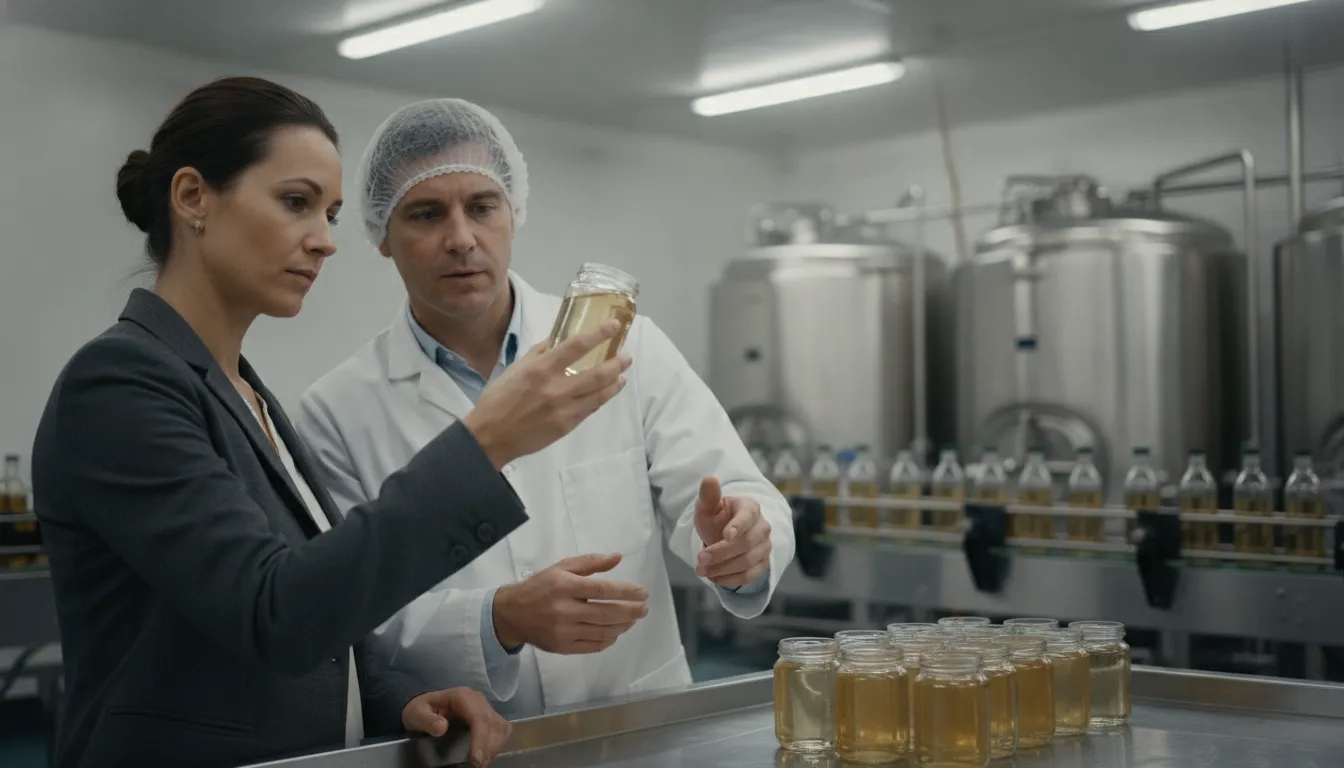
Launching a food brand is rarely limited by the recipe. The harder questions are often operational: how much product can you make, what will the first production run cost. And which partner can deliver consistent quality without forcing you into a national-scale commitment?
Co-packing for food startups can provide the production, packaging. And labeling support needed to move from a validated product to repeatable commercial runs, without building and staffing your own facility. The right partner should match your product, volume, compliance needs, and growth plan.
For early-stage brands, the decision starts with fit rather than ambition. A practical review of your formulation, sales expectations, budget, and minimum production requirements will show whether a co-packer is the right next step. If you are new to the model, begin with this co-packing guide, then use the criteria below to evaluate your readiness and partner options.
Schedule a consultation to see whether co-packing for food startups fits your launch plan.
Is Co-Packing Right for Your Early-Stage Food Brand?
A co-packer is a third-party food processor that manufactures, packages, and labels products for a fee. Depending on the partner, the relationship may also include sourcing support, production planning, and fulfillment. For a new food brand, that model can provide access to production capability without the cost and delay of building a facility from the ground up. Penn State Extension notes that co-packing can reduce initial facility and equipment investment while shortening the time needed to prepare a product for sale.
That does not mean every startup should contact a co-packer immediately. The right time is usually after you have evidence that customers want the product and a clear plan for the next production run. Early sales, repeat orders, retailer interest, or strong demand that exceeds your current capacity are useful signals. If you are still changing the recipe, package, or audience every week, a kitchen or pilot environment may be a better fit while you validate the concept.
Three signs your brand is ready
- Product-market fit: Customers are buying, returning, or asking when the product will be available again. A co-packer can help you test demand with real sales data before you make a permanent manufacturing investment.
- Demand is outgrowing production: Manual batches, limited workspace, or inconsistent output are beginning to restrict sales. Moving production to a capable partner lets the founder focus on sales, distribution, and customer relationships.
- You need specialised capability: Your product requires equipment, packaging processes, production controls, or documentation that your current setup cannot support. Evaluate partners for the capabilities and processes needed to keep production FDA compliant and HACCP compliant.
Co Packing Express is built for the stage between a kitchen incubator and a national operator. The St. Petersburg, Florida team supports growing brands that need a practical path to repeatable production, packaging, and fulfillment without building an entire plant themselves. If your demand and operational needs have reached that point, co-packing may be the next disciplined step, not an unnecessary expense.
What to Prepare Before Your First Co-Packer Conversation
A productive first conversation starts with enough detail for the co-packer to evaluate your product, process, and production needs. You do not need a finished national launch plan, but you should be ready to explain what you want made. How much you expect to sell, and what quality standards cannot change. The preparation guidance in the Accion Opportunity Fund’s beginner guide to co-packing follows the same practical principle: arrive with clear operating information rather than a concept alone.
- Stabilize the formula or recipe. Bring the current ingredient list, batch instructions, yield, allergen information, and any known processing requirements. If the formula is still changing, identify which ingredients or characteristics are fixed and which remain under development. A co-packer can assess a defined product more accurately than an idea described in broad terms.
- Set a target volume and forecast. Estimate your first production run, expected monthly demand, and a realistic 6- to 12-month forecast. Separate confirmed orders from projections. This helps the partner assess scheduling, storage, purchasing, and whether the project fits its minimums and available capacity.
- Choose a packaging direction. Bring a preferred container, closure, label format, pack size, and shipping configuration if you have them. If you do not, explain the product’s intended channel and customer use. Co-packers may have expertise in sourcing packaging materials, which can be especially valuable for inexperienced entrepreneurs, as noted by Penn State Extension.
- Define quality and food-safety expectations. Prepare a quality specification covering texture, appearance, fill weight, shelf-life goals, testing, and acceptable production variation. Ask how the facility documents its food-safety controls, and state that your brand is seeking an FDA-compliant and HACCP-compliant facility. Confirm that the partner’s capabilities match your product category before discussing a launch schedule.
- Bring the commercial questions. Ask about minimum order quantities, test-batch requirements, lead times, ingredient purchasing, storage, packaging sourcing, fulfillment, and payment terms. Also explain your launch timeline and what decision you need from the conversation. For startups exploring how to find the right co-packing partner, these details make it easier to compare partners on capability and fit, not just quoted price.
With these materials assembled, the first call can focus on feasibility, gaps, and next actions instead of basic discovery.
How Test Batches Work: Cost, Process, and What You Learn
A test batch is a practical checkpoint between a promising recipe and repeatable production. Instead of committing immediately to a large run, your team works through a controlled production trial that exposes problems while they are still manageable. For early-stage brands, this is one of the most useful parts of co-packing for food startups because it produces operational information, not just finished samples.
At Co Packing Express, test batches cost $2,500-$3,000, and that fee is non-negotiable. Consulting is available at $300 per hour when you need additional support with formulation, process questions, or production planning. Payment is structured as a 75% non-refundable deposit and a 25% completion payment.
What the test batch validates
The trial should answer whether the product can move from your current development process into commercial equipment without losing the qualities customers expect. It can help validate:
- Scaling: Whether the recipe performs consistently at a larger production volume.
- Taste and quality: Whether flavor, texture, appearance, and other quality requirements hold through the process.
- Cost per unit: Whether ingredients, packaging, labor, and expected production quantities support your margin model.
- Equipment fit: Whether the product works with the available filling, mixing, or packaging equipment.
- Partner fit: Whether communication, documentation, scheduling, and problem-solving meet your expectations.
A useful trial also gives both sides a clearer basis for the first production run. The planned production tolerance is plus or minus 10%, so founders should account for that range when forecasting inventory and fulfillment needs. Minimums matter at this stage as well: liquid products require at least 100 gallons, while dry products require at least 400 pounds.
Before paying for a test batch, confirm what the fee includes, which ingredients and packaging you must supply. What decisions will be documented, and how results will affect the production quote. For more detail on budgeting for co-packing services, review the expected cost categories before finalizing your launch plan.
Minimum Order Quantities for Startups: How Low Is Low Enough?
Minimum order quantities are not just a production requirement. For a bootstrapped food brand, they determine how much cash is tied up in inventory. How quickly product can move, and whether the first run creates useful market data or unnecessary waste. The right MOQ is the smallest practical order that gives you enough product to validate demand, support your launch channels, and maintain a reasonable cost per unit.
Co-Packing Express works with minimums of 100 gallons for liquid products and 400 pounds for dry products. Those thresholds give early-stage brands a defined starting point while leaving room to plan around a realistic launch. If you are selling through Amazon, distributors, or a direct-to-consumer store, estimate your first 60 to 90 days of demand across each channel before committing. Then account for samples, promotional units, damaged units, and the possibility that production may vary by plus or minus 10%.
Questions to ask before placing your first order
Start with demand, not optimism. How many units can you sell without discounting heavily? Which channel will receive inventory first? Do you have purchase orders, a launch date, or only early interest? A conservative forecast can prevent a startup from spending its working capital on product that sits in storage.
Next, convert the MOQ into finished units using your package size and expected fill volume. A liquid sold in smaller containers may turn 100 gallons into a substantial number of retail units. While a dry product with a larger package may require a different sales plan. Discuss packaging, fulfillment timing, and storage before finalizing the run. Production capacity of up to 6,000 units per hour can support growth, but capacity does not replace a demand forecast.
To understand co-packing minimum order quantities, review the product, packaging, and channel assumptions together. The goal is not to find the lowest number at any cost. It is to choose an initial order that protects cash flow and gives your brand a credible path to its next production run.
Why Co-Packing for Food Startups Is the Smarter Path to Scale
For many early-stage brands, co-packing for food startups offers a more controlled route to growth than building a production facility from the ground up. A co-packer provides manufacturing, packaging, and labeling capacity for a fee, giving founders access to infrastructure and logistics without taking on the full cost of a factory. The Penn State Extension explains that this approach can help businesses avoid the initial capital costs of facility construction and equipment.
That difference matters when demand is still developing. Instead of committing scarce cash to permanent infrastructure, a startup can produce inventory, gather sales data, and use real customer demand to guide the next investment. The same source notes that working with a co-packer can shorten the time required to have a product ready for sale and help entrepreneurs evaluate market feasibility before making a long-term facility commitment.
| Consideration | Partnering with a co-packer | Building your own facility |
|---|---|---|
| Capital cost | Uses existing production infrastructure and avoids the initial cost of constructing and equipping a plant. | Requires substantial upfront spending on space, equipment, utilities, and production systems. |
| Time to market | Can shorten the path from finalized product to saleable inventory. | Requires time to select a site, install equipment, establish processes, and prepare for production. |
| Production scalability | Lets the brand use established capacity and logistics as orders grow. Co Packing Express can produce up to 6,000 units per hour. | Growth depends on the facility’s original design and further investment in labor, equipment, and space. |
| Ongoing commitment | Supports market testing with real sales data before a permanent manufacturing commitment. | Creates a fixed operating commitment even if demand, product mix, or forecasts change. |
A co-packer is not a substitute for planning. The right partner still needs to match your product, expected volume, quality requirements, and growth timeline. But for a startup that wants to validate demand while preserving working capital. Outsourced production can turn manufacturing into a flexible operating decision rather than an irreversible capital project.
Common Startup Co-Packing Mistakes and How to Avoid Them
Choosing a production partner is not a race to the lowest quote. A low price can become expensive if the facility cannot handle your product, volume, packaging format, or launch schedule. The Institute of Food Technologists identifies scale, price, trust, and shared values as important selection criteria. Evaluate all four instead of treating price as the deciding factor. Proximity alone is not enough, either. A partner farther away may be a better fit if its capabilities and logistics align with your business.
Clarify what service you actually need
Another common mistake is treating co-packer and contract manufacturer as interchangeable terms. A co-packer generally manufactures, packages, and labels a product for a fee. A contract manufacturer may take on a broader role, such as formulation and full production responsibility. Confirm which services are included before comparing proposals, especially if you need ingredient sourcing, formulation support, packaging, storage, or fulfillment.
Use a test batch to reduce avoidable risk
Skipping a test batch can leave problems hidden until you have committed to a larger run. A test gives both sides a practical way to evaluate process fit, product quality, packaging performance, and expected costs. It can also reveal whether your specifications are ready for commercial production. Ask what the test includes, how results will be documented, and what changes are possible before scaling.
Plan for minimums and verify compliance
Underestimating minimum order quantities can strain cash flow and leave a startup holding more inventory than it can sell. Confirm the minimum for your specific product and packaging before signing. Also ask direct questions about whether the facility is FDA compliant and HACCP compliant, and request documentation that supports its stated capabilities. Do not rely on a website badge or a verbal assurance.
For a broader framework, review this co-packing guide, then compare prospective partners against your product, volume, budget, and quality requirements.
Request a test batch quote and production walkthrough from Co Packing Express.
Frequently Asked Questions
When should a food startup start using a co-packer?
Consider a co-packer when your current kitchen cannot support repeatable production, larger orders, or the packaging and labeling requirements of retail and e-commerce. A partner can provide manufacturing capacity while you validate demand, instead of committing immediately to facility construction and equipment. Penn State Extension explains that co-packing can also shorten the time required to bring a product to market.
What should I prepare before contacting a co-packer?
Bring your recipe or formulation, ingredient and packaging specifications, target package size, expected order volume, process requirements, and any available compliance documentation. Be ready to explain your product format, launch timeline, storage needs, and sales channels. This information lets the co-packer determine whether its equipment, workflow, and minimum order requirements fit your launch.
How do I choose a reliable co-packing partner?
Evaluate product and volume fit before choosing based on location alone. Ask about relevant equipment, quality controls, lead times, minimum order quantities, pricing, test batches, logistics, and communication. Confirm that the partner operates in a food-safe environment and can meet FDA compliant and HACCP compliant requirements. A clear conversation about responsibilities and tolerances is essential before production begins.
What minimum order should a startup expect?
Minimums depend on the product format and facility. At Co Packing Express, the minimum is 100 gallons for liquids and 400 pounds for dry products. Build those thresholds into your launch budget and sales forecast, then ask how a test batch can help you evaluate demand before committing to a larger production run.
How does a co-packer help a startup scale?
A co-packer gives an early-stage brand access to production infrastructure, packaging capability, and operational experience without the capital burden of building its own plant. That lets the founder focus on product-market fit, sales, and distribution while production expands in a controlled way. The right partner should be able to support your current volume and discuss what happens as demand grows.
Ready to Test Your Product With a Trusted Co-Packer?
Co-packing for food startups is a decision you do not have to make alone. Co Packing Express helps early-stage food brands turn a validated recipe into repeatable commercial runs. With production capacity up to 6,000 units per hour and a combined focus on bottling, filling, spice, and powder manufacturing.
Start with a direct conversation about your product, volume, and timeline. Consulting is available at $300 per hour, and a test batch gives you real cost-per-unit data before you commit to a larger run. Because every launch is different, talk through your formulation and target order size first so you can plan with confidence.
Request a consultation and test batch quote here, and take the next step toward scale.
One thought on “Co-Packing for Food Startups: How Early-Stage Brands Get Started”