


What Is Co-Packing? A Plain-Language Guide for Food Brands

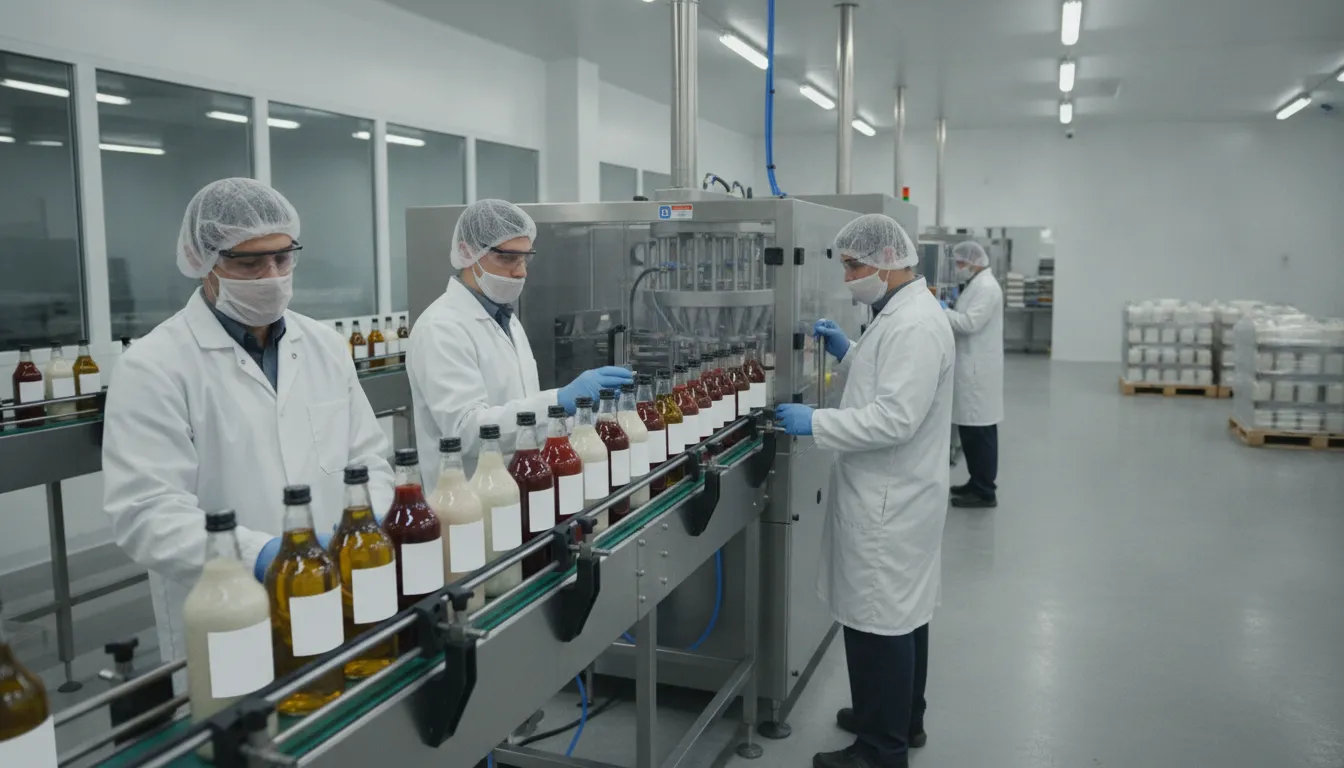
Growing a food or beverage brand does not always require building your own plant, buying specialized equipment, or hiring a production team. A co-packer can provide the operational infrastructure needed to turn an approved formula into finished, market-ready products while your team focuses on customers, sales, and growth.
Schedule a free consultation with Co Packing Express today to discuss your product and discover how a co-packing partnership can accelerate your production timeline.
In plain language, what is co-packing? It is a contractual arrangement in which a brand hires a third-party specialist to manufacture, package, label, or assemble its food or beverage products. Depending on the partner, the relationship may also include product development, quality control, warehousing, fulfillment, and distribution.
For Amazon FBA/FBM sellers, private label developers, and DTC brands, the right partner can bridge the gap between small-batch production and scalable manufacturing. This Co-Packing 101: The Complete Guide for Food and Beverage Brands provides a broader reference, while the next section explains how the arrangement works in practice.
What is co-packing and how does it work?
Co-packing is a business arrangement in which a brand outsources product manufacturing, packaging, assembly, or labeling to a third-party specialist. The co-packer provides the facility, equipment, labor, and operational expertise needed to turn a brand’s recipe or formula into finished, saleable goods. For a concise overview, see Co-Packing 101: The Complete Guide for Food and Beverage Brands.
The arrangement can cover packaging alone, or it can extend from production through fulfillment. The U.S. Food and Drug Administration describes co-manufacturing as a contractual arrangement in which a brand owner has another party manufacture or process food on its behalf. In practical terms, that means your team retains ownership of the brand, product specifications, and commercial direction while the co-packer manages the physical production work.
What does a co-packer do?
A co-packer may receive a finished product for packaging, or work from your formula and produce the product before packaging it. The exact scope depends on the facility and the agreement. Common services include:
- Filling: transferring liquids, powders, or other products into bottles, jars, pouches, or other approved containers.
- Sealing and capping: closing each package to protect the product and prepare it for distribution.
- Labeling: applying the brand’s labels and preparing finished units for retail or e-commerce channels.
- Kitting: grouping multiple products or components into one sellable unit.
- Assembly and packaging: combining product components, cartons, inserts, or promotional materials into finished shipments.
How the partnership works
The brand typically supplies the product concept, formula or recipe, packaging specifications, and label requirements. The co-packer then matches those requirements to its equipment, production line, labor, quality procedures, and facility capabilities. Before a full run, both parties should confirm the product specifications, packaging format, quantities, responsibilities, and delivery requirements.
That is why a co-packer often functions as an extension of a brand’s production department. Research from North Carolina State University notes that co-packers can provide manufacturing, packaging, and formulation-related support. Allowing a company to use established equipment and expertise instead of building every capability internally. Co-packers can range from facilities that strictly pack products for other businesses to contract manufacturers that produce and package complete product lines.
In short, co-packing connects a brand’s product requirements with a specialist’s production resources. The result is a defined path from approved formula and packaging components to consistent finished goods ready for fulfillment or sale.
Sources: FDA guidance on co-manufacturing, North Carolina State University Extension, and First Choice Packaging’s definition of contract packaging.
Co-packing vs. contract manufacturing: are they the same thing?
In food and beverage, co-packing and contract manufacturing are often used interchangeably. Both describe outsourcing work to a third-party specialist instead of operating your own production facility. The practical difference is usually the scope of work, not the type of business relationship.
Co-packing traditionally emphasizes the final packaging stage. A brand may provide a finished product or bulk product, then hire a partner to fill containers, seal them, apply labels, assemble multipacks, or prepare orders for distribution. Contract manufacturing generally describes a broader engagement in which the partner may source or process raw materials, manufacture the product, and complete the packaging.
| Comparison point | Co-packing | Contract manufacturing |
|---|---|---|
| Primary focus | Filling, sealing, labeling, assembly, or other packaging work | Producing the product, often through packaging and final preparation |
| Typical input | Bulk or finished product supplied by the brand or another manufacturer | Raw materials, a formula, or product specifications |
| Best fit | A brand that needs reliable packaging capacity or fulfillment support | A brand that wants one partner to manage production and packaging |
| Industry usage | The terms overlap, and many providers describe their complete service as both co-packing and contract manufacturing. | |
The distinction also matters when comparing these services with private labeling. Private labeling describes the brand and product arrangement, where a business sells a product under its own name. Co-packing describes the operational work performed by the outside partner. A private-label brand can use co-packing, contract manufacturing, or both.
For regulatory purposes, the FDA describes co-manufacturing as a contractual arrangement in which a brand owner has another party manufacture or process food on its behalf: FDA guidance on co-manufacturer arrangements. In practice, choose a provider based on the capabilities your product requires, then confirm whether its service scope covers formulation, production, packaging, and fulfillment.
What types of products can a co-packer handle?
Product fit depends on the co-packer’s equipment, processing capabilities, packaging formats, and compliance systems. Co-Packing Express specializes in shelf-stable liquids and dry products, giving growing food and beverage brands a practical path from a validated formula to finished, packaged inventory.
Liquid products
Liquid production can include sauces, hot sauce, barbecue sauce, beverages, marinades, dressings, and cooking oils. These products may require controlled filling, capping, labeling, and case packing, with the process matched to the product’s viscosity, package format, and production requirements. A capable partner should also be able to coordinate packaging and fulfillment rather than leaving the brand to manage separate vendors.
Co-Packing Express handles liquids at a production capacity of up to 6,000 units per hour. That capacity is designed for brands that have moved beyond small-batch production but may not need the minimum volumes or infrastructure associated with a national manufacturer.
Dry products, spices, and powders
Dry-product co-packing commonly covers spices, seasoning blends, powdered ingredients, dry mixes, and similar shelf-stable products. The work can include blending, filling, sealing, labeling, and preparing finished units for distribution. Consistent weighing and packaging are especially important for products sold through Amazon FBA/FBM or other retail and e-commerce channels.
Co-Packing Express also specializes in spices and powders at up to 6,000 units per hour. Brands can review our full service listing to see how manufacturing, packaging, fulfillment, and related support fit together.
Products outside the service scope
Not every food or beverage category is a fit. Co-Packing Express does not handle frozen or refrigerated products, meat, poultry, fish, potable alcohol, or tin cans. Confirming product type, package format, and required volume early helps avoid pursuing a production path the facility cannot support.
Food manufacturing and packaging also require disciplined food-safety practices. Co-Packing Express works with FDA 21 CFR Part 117 requirements and HACCP compliance as part of its production approach. These standards matter because a co-packer is not simply filling containers. It is helping produce and prepare food products for sale under documented operating and quality controls.
How the co-packing process works from contract to delivery
A reliable co-packing process turns a product idea or established formula into a finished, shipment-ready product through defined stages. Co-Packing Express coordinates product development, production, packaging, quality control, and fulfillment so brands can move from concept to creation with one operating partner.
- Start with consultation and recipe development. The process begins with a discussion of your product, formula, packaging goals, sales channels, and expected volume. If the recipe needs refinement, product development support can help establish a repeatable formula and production plan before a full run. Consulting services are available at $300 per hour.
- Approve a test batch. A test batch provides an opportunity to evaluate the formula, process, package, and finished product before committing to larger production. Test batches are priced at $2,500-$3,000. The standard payment structure is a 75% non-refundable deposit, followed by the remaining 25% payment at completion.
- Confirm the production scope and minimums. Once the test batch and specifications are approved, the order is planned around the required ingredients, packaging components, labor, and schedule. Minimum order quantities are 100 gallons for liquid products and 400 pounds for dry products. Brands developing spice products can also review private label spice bottling capabilities.
- Run production to the approved specifications. The production team prepares the product, fills the selected containers, and manages the run according to the approved formula and production plan. Co-Packing Express specializes in liquids and spices, with capacity of up to 6,000 units per hour for those product categories.
- Complete quality control and compliance checks. Quality control reviews the product and process against the agreed specifications. Documentation and operating practices support FDA compliance, including applicable FDA 21 CFR Part 117 requirements, and HACCP compliance. Production quantities follow an industry-standard tolerance of plus or minus 10%.
- Package, label, and prepare for retail. Finished goods are filled, sealed, labeled, and checked for presentation and order requirements. Packaging and labeling must align with the intended retail or e-commerce channel, including requirements for brands selling through Amazon FBA or FBM. Explore co-packing services for the broader packaging and production scope.
- Fulfill and distribute the finished order. After final checks, products can move into warehousing, kitting, order preparation, and distribution. This integrated handoff helps brands coordinate manufacturing and fulfillment without managing separate production and logistics vendors.
Understanding these stages helps a brand prepare accurate formulas, packaging specifications, volume forecasts, and launch timelines before signing a production agreement.
Who uses co-packing services and why
Co-packing is especially valuable for brands that have a product customers want, but do not yet need, or cannot justify, a dedicated production facility. The right partner supplies the equipment, trained labor, production systems, and packaging experience while the brand owner concentrates on demand, distribution, and growth.
Amazon FBA and FBM sellers
Amazon sellers with established demand often reach a point where hand-packing orders, coordinating multiple vendors, or managing inconsistent production slows growth. Co-packing gives FBA and FBM sellers a repeatable way to manufacture, package, and prepare products for marketplace fulfillment. Co Packing Express works with the type of growing brands that have moved beyond early-stage experimentation and need dependable production capacity without committing to a factory of their own. Brands can also use FBA/FBM compliant prep services to align production and fulfillment requirements more efficiently.
Private label brand developers
Private label operators can bring a product to market without purchasing filling equipment, building a processing space, hiring a production team, or managing every facility-related requirement internally. Oklahoma State University notes that using a co-packer can eliminate major upfront costs tied to facilities, equipment, permits, utilities, and employees. That capital can instead support product development, inventory, advertising, and sales.
DTC brands and growing food companies
Direct-to-consumer brands benefit when production can expand alongside demand. A co-packer can provide a faster path from a validated product concept to a consistent commercial run. Helping reduce the time and complexity involved in establishing a new operation. North Carolina State University identifies lower startup costs, reduced regulatory burdens, and faster market entry among the practical reasons entrepreneurs choose a co-packer.
Spice and powder companies
Spice and powder brands often need specialized handling, blending, filling, and packaging capabilities without operating their own facility. Co Packing Express supports liquids and spices with production capacity of up to 6,000 units per hour. That scalability helps a brand increase output while avoiding the daily logistics of running a production plant.
Across these segments, the central benefit is focus. Co-packing can reduce the time spent on plant inspections, labor records, workplace requirements, and production-facility administration. Those responsibilities do not disappear, so brands should choose a partner with demonstrated compliance expertise and clear quality processes. The arrangement allows the brand team to spend more time on sales, marketing, customer relationships, and distribution instead of troubleshooting production infrastructure.
Ready to start your co-packing journey? Call (727) 202-2500 to speak with our team and take the next step toward scaled production.
Frequently Asked Questions
What is a co-packer for food?
A food co-packer is a third-party company that produces, fills, packages, labels, or assembles food and beverage products for a brand. The brand retains ownership of its formula and product identity, while the co-packer supplies the facility. Equipment, labor, and operating expertise needed to turn that product into finished goods.
How does co-packing work?
The process usually begins with a review of the formula, ingredients, packaging, quality requirements, and expected order volume. The co-packer may help with product development or a test batch, then schedules production. Fills and seals the product, applies labels, performs quality checks, and prepares the finished units for delivery or fulfillment. Responsibilities should be documented in the manufacturing agreement before production begins.
What are the benefits of co-packing for a growing brand?
Co-packing lets a brand increase production without building and staffing its own manufacturing facility. It can also provide access to specialized equipment, trained production teams, repeatable processes, packaging support, and compliance expertise. That allows founders and brand teams to spend more time on sales, product development, and customer growth while a qualified partner manages production.
When should a food brand hire a co-packer?
A brand should consider a co-packer when demand exceeds its kitchen or pilot-production capacity. Production takes too much management time, or consistency and documentation are becoming difficult to maintain. It is also a practical step when the brand needs reliable packaging, larger runs. Or a path from small-batch testing to commercial distribution without making a major facility investment.
Ready to explore co-packing for your brand?
A clear conversation can help you evaluate your product, packaging goals, and next production step. Co Packing Express works with growing food and beverage brands that need a practical path from concept to creation. To discuss your co-packing needs, schedule a consultation by calling (727) 202-2500.
One thought on “What Is Co-Packing? A Plain-Language Guide for Food Brands”