


Contract Packaging for Food Brands: The Complete Guide

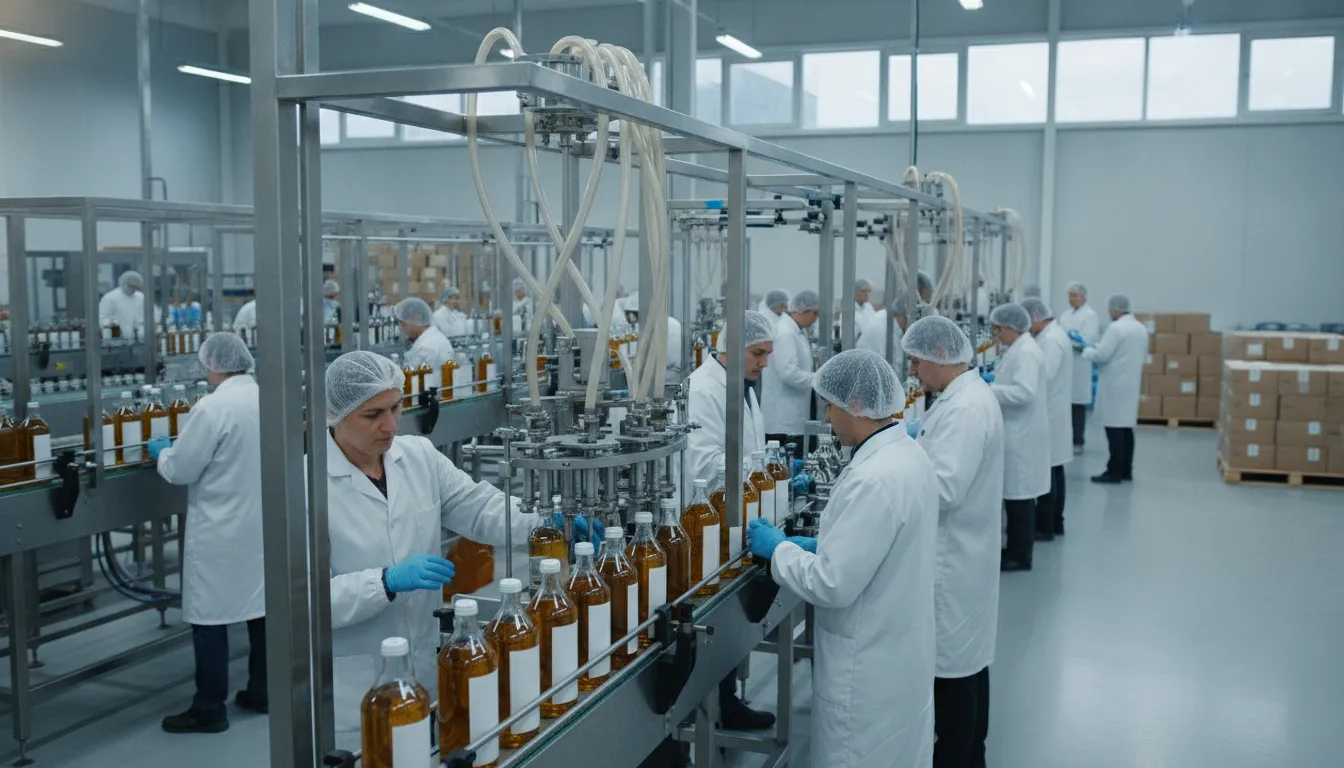
Buying a professional liquid filling machine can cost a growing brand fifty thousand dollars in upfront cash. This high cost prevents small food brands from scaling.
Schedule a free consultation to evaluate a contract packaging partner.
Contract packaging for food brands is a service where a company hires a third-party facility to fill, seal, and label its products. This setup gives scaling brands access to fast machinery, skilled labor, and strict safety rules without the cost of building a private plant. According to research from the University of Florida IFAS Extension, hiring a partner helps brands manage high production runs and launch new products. By handing off these tough packaging tasks, you avoid huge cash spending on costly warehouse space, labor, and custom machinery. This smart step ensures your food products meet strict retail safety rules while you focus your time and money on sales, marketing, and brand growth.
Before you choose a partner, you must understand how these food services work. Our co-packing and contract manufacturing guide provides a great background. To start, we must answer the main question: What Is Contract Packaging and How Does It Differ from Co-Packing? The path begins with
What Is Contract Packaging and How Does It Differ from Co-Packing?
Defining contract packaging
When you scale a food brand, you will reach a point where you need high-volume production. Building your own plant is slow and costs too much. Contract packaging is a business model where you hire a third-party site to handle your packaging. This lets you grow without buying high-cost machines. Many brands use contract packaging for food brands to grow fast and focus on sales.
A contract packager (often called a co-packer) takes your pre-made food product and places it into retail-ready packages. For instance, you might ship bulk spice mixes to the partner. The site then fills, labels, and seals them into retail bottles. They provide the labor, space, and technical skills to get your goods ready for store shelves. This service keeps your team focused on marketing and sales.
The difference between co-packing and contract manufacturing
Many people use the terms co-packing and contract manufacturing to mean the same thing, but they are different. A contract manufacturer makes your food products from raw ingredients using your specific recipe. They handle the cooking, mixing, or baking from start to finish. In contrast, a co-packer focuses only on the packaging step. They receive finished goods in bulk and place them into bags, pouches, or jars.
According to University of Florida research, contract manufacturing involves the full production process from raw components. Co-packing, or contract packaging, often starts with a completed product. Knowing this helps you find the right vendor for your business. If you need someone to cook your sauce, you want a manufacturer. If you only need your dry powder split into retail bags, a co-packer is the correct choice.
Why food brands outsource packaging
Food brands choose to outsource packaging to save time and money. Buying retail packaging lines, scale systems, and sealing tools requires a lot of capital. By outsourcing, you can use existing lines that are already set up and running. This reduces your startup costs and lowers your financial risk. It also helps you launch new products in weeks rather than months.
A specialized partner also brings technical skills and labor to the table. Managing a production staff is hard work that takes time away from growing your brand. Outsourcing lets you use a team that is already trained in food safety. These sites follow strict rules to stay FDA compliant. They keep your products safe while you focus on getting more sales and expanding your retail reach.
The Core Services in a Contract Packaging Engagement
Food brands often outgrow their own kitchens or small workspaces as they scale. At this stage, choosing the right contract packaging for food brands is the best way to grow without buying costly machines. A skilled partner can manage your entire packaging line from start to finish. This lets you focus on sales, ads, and growing your business.
Liquid and Dry Product Handling
The main job of a co-packer is to place your food products into safe, retail-ready packages, which for liquids means bottling and filling. A partner can handle hot-fill or cold-fill lines for sauces, dressings, and drinks. This is different from making foods from scratch, as noted in this co-packing and contract manufacturing guide. This process helps brands scale up without buying costly gear, making outside help a major benefit according to University of Florida research.
For dry products, contract packaging includes spice and powder manufacturing. This process needs special machines to prevent dust and keep moisture out. Workers weigh and seal goods into jars, bags, or pouches. Using high-speed lines ensures that each package has the exact same amount of product while preventing contact between other spices.
Labeling and Custom Packaging
After filling a package, it must be labeled with clear labels that are vital for food safety and branding. A co-packer applies these labels to bottles, jars, and bags with great care. They ensure ingredient lists and nutrition facts are easy to read. This work is a core part of your standard co-packing services.
Many food brands also use private labeling. In this setup, the partner uses approved recipes and packages them under your brand name. They can also pack custom boxes or multi-packs for retail shelves. This hand-packing step makes sure your products look great before they reach store shelves and helps your brand stand out in a crowded market.
Fulfillment and E-commerce Prep
The final step in the process is getting products ready for shipping. For online sellers, this includes kitting and FBA/FBM compliant prep. Amazon has strict rules for how items must be boxed and labeled. If your boxes do not meet these rules, Amazon can turn your goods away, but a good partner knows these rules and follows them.
A complete contract packaging partner also handles final product assembly and fulfillment. They store your finished goods and ship them to retail hubs or directly to buyers. This end-to-end support keeps your supply chain smooth. Working with one partner for pack and ship tasks saves time and cuts down on shipping costs.
How to Evaluate Contract Packaging for Food Brands
Choosing the right partner is a big step for any growing food business. When you look for a partner, knowing how to find a co-packer that fits your needs is key. It is not just about finding a plant with open time on their schedule.
You must check key details to keep your products safe and your business growing. Checking a partner takes time, but it protects your brand from big losses. You should focus on a few main parts to make the best choice.
Food safety and regulatory compliance
Following safety rules is the main point in your choice. Brands must strictly avoid plants that do not follow HACCP and FDA compliance. Any safety error can stop your product from reaching the market. The right partner must have an FDA compliant plant that follows good manufacturing rules.
If you sell acidified foods, the packager must have a specific process approval. Never trust a plant that makes vague safety claims or lacks clear files. A safe partner will gladly show you their records and logs.
According to a guide on food co-packing selection criteria from the University of Florida, safety and capacity are vital for scaling brands. You need to check their safety records and verify plant production capacity before signing.
Making sure the plant fits your specific product needs is just as important. Your team should ask for references and check their work with other brands.
Operational capacity and product fit
Your packager must have the exact tools for your specific product type. Some plants handle liquids, while others focus on dry powder packaging. A liquid plant might not have the dry mixing tools needed for spice packaging. Working with a team that knows your product format prevents line stops and waste.
You also need to check their plant capacity. Ask how many units they can run per hour. They must be able to scale up as your orders grow.
If you sell on online storefronts, make sure they can do custom prep to avoid fees. A partner with fast lines can easily meet sudden spikes in demand.
Production volume, timelines, and logistics
Every contract packager has set limits on orders and schedules. You must find a partner whose minimum order quantities fit your current sales. Some plants offer low limits, like 100 gallons for liquids or 400 pounds for dry products.
These low levels help new brands test the market without high costs. You do not want to buy more stock than you can sell in a few months.
Before signing any co-packing agreements, ask about their typical lead times. A first run may take four to eight weeks for new products. Repeat runs are often faster and should take about twenty business days. Make sure these timelines fit your retail launch dates to avoid empty shelves.
Finally, look at logistics support and updates. A good partner will help with shipping and storage. They must keep you updated at every step of the run. Simple, direct updates prevent errors and keep your store stocked.
Get a contract packaging quote for your liquid or dry product today.
Contract Packaging Costs: What Affects Your Price Per Unit
Whether your product is liquid or dry, your overall price depends on its form, volume, and setup fees. Outsourcing your packaging helps your business scale without buying costly machines. Knowing a clear co-packing cost breakdown helps you plan your budget. Many food brands use third-party sites to scale up without huge upfront costs. These benefits are noted by the University of Florida.
Liquid versus dry product format
The form of your product is a major cost driver. Liquid filling needs special pumps and sealers to prevent leaks. Dry powders need dust control and moisture care to keep products fresh. These factors change how much labor and time your run takes.
Liquids often need more cleaning time between batches to prevent cross-contamination. Dry products can be faster to change over, but they need tight humidity seals in the room. Each product format uses its own production line and speed to run.
| Cost Factor | Liquid Products | Dry Powders |
|---|---|---|
| Minimum Order | 100 gallons | 400 pounds |
| Key Equipment | Pumps, fillers, sealers | Auger fillers, dust hoods |
| Main Risk | Spills and leaks | Moisture and dust |
| Testing Need | Viscosity check | Flow and sift check |
Minimum order quantities and setup fees
Your total production volume strongly affects your overall cost per unit. Larger runs let you spread setup costs over more units. To help new food brands start, Co-Packing Express offers low minimum order quantities. These limits are 100 gallons for liquids and 400 pounds for dry products.
Before you run a full batch, you will need to pay for setup fees. Expert consulting costs $300 per hour to set up your project. You must also run a test batch, which costs between $2,500 and $3,000. These fees are not flexible, but they prevent costly mistakes on the main line.
A test batch lets the team check the seals, weight, and flow of your product. This step ensures the final packaging is correct before running thousands of units. Using a test run saves your brand from wasting costly raw ingredients.
Payment terms and production tolerance
The contract also sets the terms for billing and final yields. You must pay a 75% non-refundable deposit before work starts. You then pay the remaining 25% at the end of the run. This setup protects the plant when they buy raw supplies for your run.
Finally, every food production run has a standard tolerance of plus or minus 10%. The raw weight of ingredients can vary during mixing. This means your final unit count might be slightly higher or lower than your target. You will only pay for the exact volume that is packed.
Because of this variance, you should plan your supply chain with some wiggle room. For example, if you need exactly 10,000 retail pouches, the actual yield could be between 9,000 and 11,000 units. Knowing this helps you manage stock and retail orders.
Contract Packaging Timeline: From Quote to Delivery
Initial steps to launch
Launching a food product requires a clear path from concept to retail shelves. To start, you must know how the facility handles your specific product, as outlined by the University of Florida IFAS Extension. Setting up a timeline helps you avoid empty shelves and missed delivery windows. Before you start production, you should set clear terms in your co-packing agreements to govern the schedule and quality standards.
Many emerging brands face challenges when moving from a home kitchen or shared facility to co-packing. Working with a packaging partner can help you overcome these hurdles by providing professional equipment and labor. However, you need to prepare your recipe for larger batch sizes. This preparation ensures that your taste profile and texture remain consistent when production scales up.
The step-by-step production flow
The production journey follows six distinct stages to take your food recipe from a test batch to a commercial run.
- Initial quote and requirements. You share your recipe, packaging needs, and volume goals to get a price estimate.
- Test batch and sampling. The co-packer runs a small trial for a fee of $2,500 to $3,000 to verify the recipe and packaging fit.
- Process approval. You must get official process approval, especially for acid or acidified products, to meet safety regulations before any commercial run.
- Production scheduling. Your run is placed on the schedule, using flexible 24/7/365 scheduling to ensure rapid turnaround times.
- Quality control. Technicians check the batch weight, seal integrity, and pH levels during and after the packaging run.
- Delivery and pickup. Your finished product has final checks before it is loaded onto trucks for shipment to your warehouse or fulfillment center.
Expected lead times
When you plan a launch, you must account for standard industry lead times. For a new food product, the setup and first run typically take 4 to 8 weeks to complete. This time allows for test batches, packaging sourcing, and line calibration. Sourcing custom glass or plastic containers can also add to this initial timeframe. Sourcing raw ingredients of high quality is another factor that can shift your start date.
Once your product is established, repeat orders move much faster. Repeat runs usually take about 20 business days to schedule, produce, and ship. Knowing these timelines helps you maintain inventory and scale your business without delays. You should plan your order cycles early. This proactive planning keeps your products in stock on Amazon and retail shelves alike so you never miss a sale.
Why Food Brands Choose a Contract Packaging Partner in St. Petersburg, FL
Choosing the right site for your packaging hub is a key business move. Many growing businesses find that a partner in St. Petersburg, Florida, offers a major shipping edge. Co-Packing Express is based in this coastal city, giving end-to-end help to brands across the Southeast and the country. From this hub, you can reach 50% of the United States with two-day ground shipping. This quick transit helps food brands keep store shelves full and transport costs low. If you want to see how this setup fits into your overall growth plan, you can read our co-packing and contract manufacturing guide.
Strategic shipping and regional reach
A local partner in the Southeast makes shipping simpler. Florida has deep transit routes that link the state to major markets across the East Coast. By outsourcing your packing to an expert hub, you can save on freight costs and avoid shipping delays. This helps brands that sell on platforms like Amazon, where fast shipping is a must. Placing your stock in a Southern hub keeps you close to huge buyer markets.
Strict safety and compliance standards
When you choose contract packaging for food brands, safety is your top goal. Food brands must follow strict rules to protect their customers and their market standing. The plant in St. Petersburg is FDA-compliant and follows current Good Manufacturing Practices. It also maintains a HACCP-compliant plan to spot and prevent hazards before they reach the package. Academic studies from the University of Florida IFAS Extension show that food safety is a key factor when you select a partner. These strict standards ensure that every batch is safe, though you must get process sign-off for acidified foods.
Flexible setups for scaling brands
Scaling a food brand can be hard if you have to buy your own machines. Many co-packers have huge minimum order limits that shut out growing brands. In contrast, the St. Petersburg site offers low entry limits of 100 gallons for liquids and 400 pounds for dry products. This makes it much easier to scale your food product with a co-packer without big upfront costs.
This partner handles end-to-end work, including blending, bottling, custom labeling, and direct shipping. But you must note what the plant does not pack. The plant does not handle meat, poultry, fish, or potable alcohol. It also excludes refrigerated or frozen foods, as well as tin cans. By focusing on shelf-stable liquids and dry spices or powders, the site keeps its lines clean and fast for your brand.
Contact us to reserve your production slot and avoid costly out-of-stock delays.
Frequently Asked Questions
Why do food brands use contract packaging services?
Food brands use contract packaging to scale up production fast without buying expensive machines. According to research from the University of Florida IFAS Extension, outsourcing helps companies handle high volumes and launch new products fast. This lets brands focus on sales while a partner handles the physical labor and daily packing work.
What should food brands look for when choosing a contract packaging partner?
Brands must look for partners that follow strict safety rules. Ensure the facility is FDA compliant and adheres to current Good Manufacturing Practices. You should also check their layout for cross-contact risks, verify their production capacity, and confirm they have experience with your specific food type.
What are the standard minimum order quantities for food contract packaging?
Minimum order quantities vary widely across the food industry. Many large co-packers need tens of thousands of units per run. However, flexible partners like Co-Packing Express offer lower starting points. Their minimum limits are 100 gallons for liquid products and 400 pounds for dry products, making them highly accessible for growing brands.
How long does it take to launch a food product with a co-packer?
A typical launch timeline takes four to eight weeks for a new food product. This time allows for setup, test runs, and safety checks. For repeat orders, the process is much faster and usually takes about twenty business days. Planning ahead helps ensure all packaging materials and ingredients are ready on time.
Are you ready to evaluate a contract packaging partner?
Waiting to find a contract packaging partner risks missing key retail launch dates, which can cost your growing food brand valuable shelf space. Booking your food production slot early ensures that your stock is ready for peak shipping seasons, allowing your brand to avoid costly out-of-stock fees. A trusted packaging partner handles all your liquid or dry food product runs so that you can focus on marketing and growing your brand.
Ready to scale your food brand? Contact us today to get started. to schedule a free consultation to evaluate a contract packaging partner. Our St. Petersburg team is ready to help you plan your next run and guide your product from start to finish.
3 thoughts on “Contract Packaging for Food Brands: The Complete Guide”